
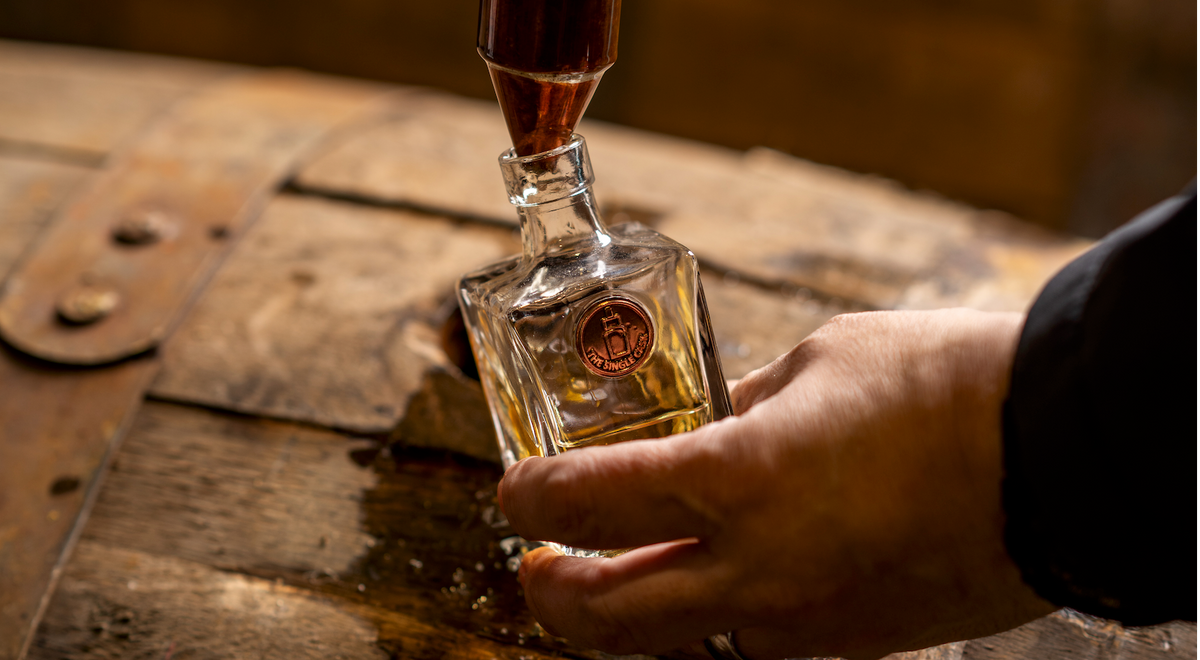
Owning a Whisky Cask: The Complete Guide
What does it mean to own a whisky cask?
Owning a whisky cask means buying an individual barrel of maturing Scotch, in your own name, while it sits in a bonded warehouse in Scotland. You are not buying a bottle, a share in a fund, or a promise of future stock. You are buying a specific, numbered cask of spirit, with your name recorded against it, that continues to mature under bond until you decide what to do with it.
It is a genuinely old idea. Before branded, distillery bottled single malt became the norm in the late twentieth century, most whisky moved through merchants, brokers, and private buyers who held casks under their own name. The Single Cask grew directly out of that tradition. Our director, Ben, spent several years as a distributor for Scotch whisky brands in Asia and worked as a cask broker alongside that, supplying independent bottlers and blenders. Every so often a cask would come along that he could not bring himself to sell on, and that instinct eventually led to the first Single Cask bar in Singapore.
If you have not yet decided what to buy, our guide to how to buy a whisky cask covers choosing a flavour profile, cask type, and distillery, and our whisky casks available page shows what we may currently be able to source. This guide picks up from there, covering what ownership itself actually involves.
How cask ownership actually works
When you buy a cask, ownership is recorded through a delivery order, a document issued by the bonded warehouse confirming that a specific cask, identified by its unique number, belongs to you. The warehousekeeper holds and insures the cask on your behalf, and no duty is paid while it remains under bond. This is the same system distilleries, blenders, and independent bottlers like us use every day, simply extended to an individual owner.
A genuine cask purchase should always give you three things: a delivery order in your name, confirmation from an HMRC approved warehouse that they hold the cask and recognise your ownership, and insurance covering the cask while it is in storage. If any of those three is missing or vague, that is worth questioning before you pay anything.
What happens to a cask while it matures
A cask does not sit still once it is filled. Two things happen to it every year, and both affect what it is eventually worth.
The whisky loses volume to evaporation, often called the angels' share. In a Scottish warehouse this typically runs at around two per cent a year, though it varies with climate, cask type, and where in the warehouse the cask is stored. A cask filled with 250 litres will hold meaningfully less by the time it is twenty years old, simply through natural loss.
The whisky also continues to interact with the wood, gaining colour, flavour, and character the longer it rests. This is why age and cask type matter so much to value. A first fill sherry cask and a refill bourbon cask from the same distillery, filled on the same day, can taste, and be worth, quite different amounts twenty years later.
Duty, VAT, and the cost of bottling
While a cask remains under bond, no duty is due. That changes the moment it is bottled or removed from bond, at which point UK Alcohol Duty becomes payable on the pure alcohol content, currently £33.99 per litre of pure alcohol as of February 2026, plus VAT. Duty rates are set by HMRC and reviewed periodically, so it is worth checking the current rate before finalising any bottling plan rather than relying on a figure that may have moved on.
Bottling itself carries its own costs too: glass, labels, corks or stoppers, and the physical process of decanting from cask to bottle. A single hogshead can yield well over two hundred bottles, so these costs are usually straightforward to plan for, but they are real and worth budgeting for rather than being a surprise further down the line.
How long should you hold a cask?
There is no fixed answer, and anyone who gives you one with total confidence is worth being cautious of. Most cask owners think in terms of ten to twenty years, long enough for genuine character to develop, but the right point to bottle or sell depends on the spirit itself, the cask type, and what you want from the whisky. Some casks are ready to shine at twelve years old. Others are still finding their best expression well beyond that. We monitor and sample casks throughout maturation and can advise honestly on when a particular cask is worth waiting on.
What you can do with a cask once it is ready
Owners generally choose one of two routes. The first is to bottle it, either entirely for personal use, as gifts, or under your own private label, which is something we handle in full at The Single Cask, from bottling through to labelling and design. The second is to sell the cask on, whole and still under bond, to another buyer, broker, or bottler. Selling whole in bond tends to be the simpler route if the goal is a straightforward exit, since it avoids duty, VAT, and bottling costs altogether, though the price achieved depends entirely on market interest at the time.
Why work with an independent bottler rather than a broker alone
Plenty of firms will sell you a cask and leave it at that. The advantage of working with an independent bottler like The Single Cask is that we are not just arranging a sale and stepping away. We hold our own HMRC approved bonded warehouse and full in house bottling facilities, so the same team looking after your cask during maturation can also bottle it when the time comes, under your own private label if you would like one.
We love sharing great whisky, whether that is one bottle at a time or a whole cask, and we have looked after some genuinely special casks over the years, keeping them safe from blending and chill filtration until they were ready to be bottled exactly as they were. If you would like to buy a whisky cask of your own, get in touch and we will talk you through what is available.
A note on risk. Owning a whisky cask is a long term, illiquid commitment, not a regulated financial product. There is no regulated market for maturing or matured casks, and the Scotch Whisky Association is clear that only a small proportion of Scotch whisky is traded this way. Values are not guaranteed and depend on the distillery, cask type, condition, maturation, and demand at the time of sale, and costs such as storage, insurance, duty, and bottling all reduce any eventual return. Always verify who owns the cask, that the warehouse is HMRC approved, and that you receive a proper delivery order and evidence of insurance before parting with any money. We are happy to talk through what genuine ownership and storage should look like. Get in touch if you would like to know more.
Frequently asked questions
Will a whisky cask increase in value?
It might, but there is no guarantee, and casks are not a regulated financial product. Some casks do become more valuable as they mature, reflecting rarity, cask type, and demand, but others do not, and running costs such as storage, insurance, and eventual duty all reduce any potential gain. Treat cask ownership primarily as owning a genuinely unique, maturing spirit, with any increase in value as a possible bonus rather than a certainty.
How do I know I actually own the cask?
You should receive a delivery order in your name, naming the specific cask by number, and the bonded warehouse holding it should confirm in writing that they recognise your ownership. Ask to see evidence that the warehouse is HMRC approved and that the cask is insured. If a seller cannot provide these, that is a reason for caution.
What is the angels' share?
The angels' share is the whisky lost to evaporation each year while a cask matures in a warehouse. In Scotland this typically runs at around two per cent a year, though it varies with climate, cask type, and storage conditions, and it means a cask holds progressively less liquid the longer it is left to mature.
Do I have to pay duty while my cask is maturing?
No. Duty is only payable when whisky is removed from bond, typically at the point of bottling, and is charged on the pure alcohol content at the current UK Alcohol Duty rate, plus VAT. While a cask remains under bond in an HMRC approved warehouse, no duty is due.
Can I sell my cask instead of bottling it?
Yes. Many owners choose to sell their cask whole and still under bond, either back to a broker, to another private buyer, or to a bottler, rather than bottling it themselves. This avoids duty, VAT, and bottling costs, though the price achieved depends on market interest and the cask's own characteristics at the time of sale.
Work with The Single Cask
Buy a whisky cask, bottle under your own label, or store casks in our HMRC approved bonded warehouse in Fife.
Read more

How to Taste Whisky Without Overthinking It
No rules, no exam. Here's a relaxed, practical guide to how to taste whisky properly: glassware, nosing, mouthfeel and the aroma trick most people miss.
Read more
Cask Strength Whisky: What It Means and How to Drink It
What does cask strength whisky actually mean, why does it vary bottle to bottle, and how should you drink it? A practical guide from The Single Cask.
Read more


Leave a comment
This site is protected by hCaptcha and the hCaptcha Privacy Policy and Terms of Service apply.