
What Does an Independent Whisky Bottler Do? A Complete Guide
What is an independent whisky bottler?
An independent whisky bottler is a company that buys casks of whisky from a distillery, matures them (or finishes them in a different cask), and bottles the spirit under its own name rather than the distillery’s. An independent bottler doesn’t distil anything itself. Its expertise lies in selecting, ageing, and bottling individual casks that show a distillery’s character in a way the official releases rarely do.
This isn’t a new idea. Before branded, distillery-bottled single malt became the norm in the late twentieth century, most whisky reached consumers through independent merchants and bottlers, who bought maturing stock from distilleries and sold it under their own name. Firms such as Gordon & MacPhail, founded in 1895, and Cadenhead’s, founded in 1842, have been doing this for well over a century. The Single Cask continues that same tradition today.
What does an independent whisky bottler actually do?
The process usually runs in five stages.
Sourcing. We buy individual casks directly from distilleries, brokers, or bonded warehouses, choosing each one for quality, cask type, and character rather than volume.
Storage and maturation. Every cask is kept in an HMRC approved bonded warehouse, where it continues to mature (or is finished in a different cask) under bond, with no duty paid until it is bottled or sold.
Sampling and selection. We taste and assess each cask regularly and judge it on its own merits. There is no fixed house recipe to hit, so a cask is bottled when it is genuinely ready, not on a schedule.
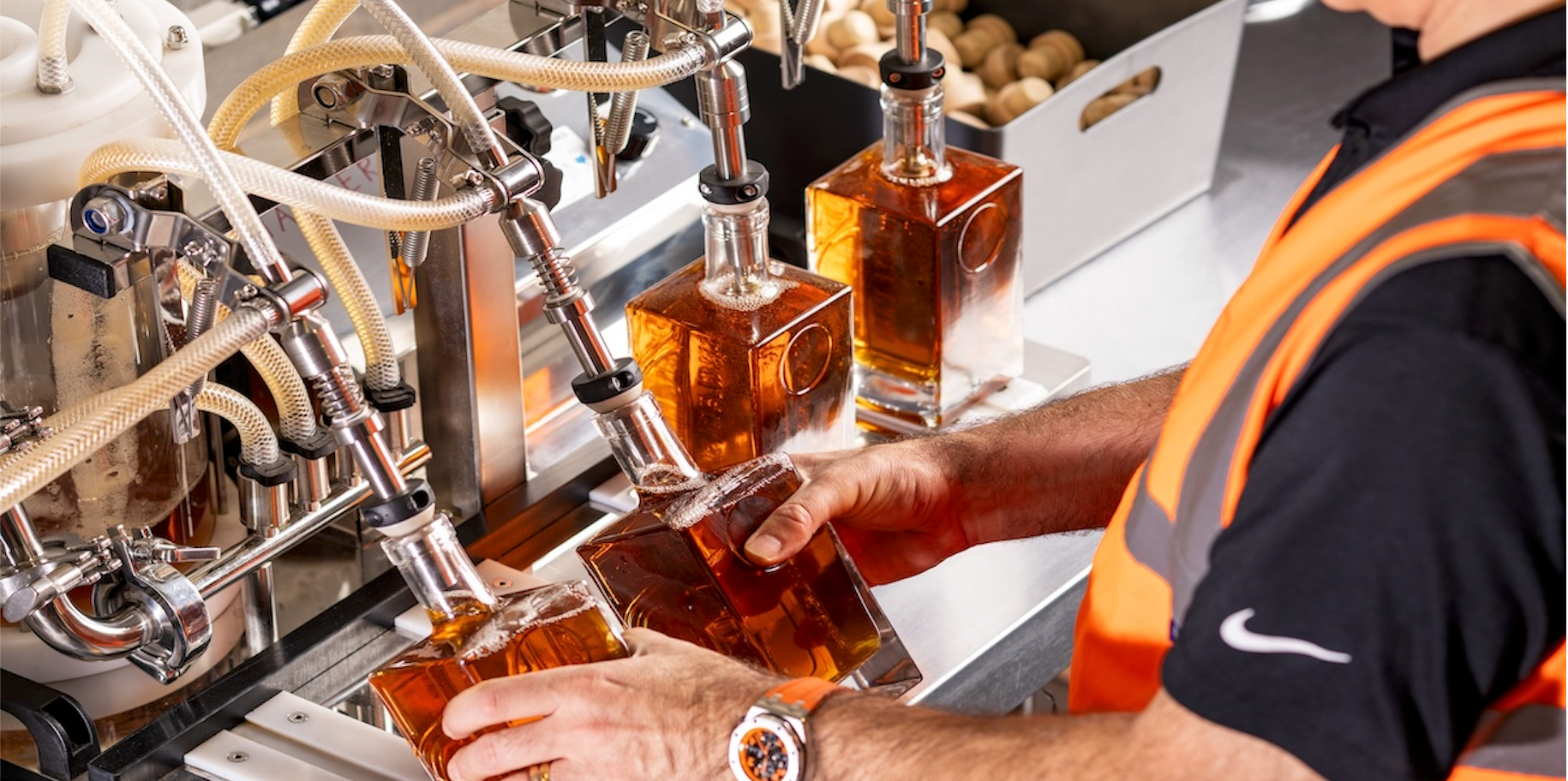
Bottling. Once a cask is ready, it is bottled, often as a single cask release, frequently at cask strength, and usually without added colouring or chill filtration.
Labelling and release. The bottle carries the independent bottler’s own branding, along with the distillery of origin where we’re permitted to name it, plus the cask type, distillation date, and bottling date.
This is the real distinction from distillery led production. A distillery such as Macallan or Glenfiddich blends dozens or hundreds of casks together to produce a consistent flavour profile, batch after batch, year after year. An independent bottler takes the opposite approach and lets each individual cask speak for itself, variation and all.
Independent bottler versus distillery bottling
| Distillery (official) bottling | Independent bottling | |
|---|---|---|
| Goal | Consistency across every batch | The character of one specific cask |
| Typical source | Blended from many casks | Usually a single cask |
| Colouring | Often added (E150a caramel) | Usually none |
| Chill filtration | Common, for clarity and shelf stability | Usually skipped, to preserve flavour |
| Strength | Often diluted to around 40 to 46% ABV | Frequently bottled at cask strength |
| Availability | Ongoing and repeatable | Limited. Once a cask is gone, that whisky is gone for good |
| Price relative to age | Higher, reflecting brand and marketing | Often better value for a comparable age statement |
Neither approach is better outright. They are aiming at different things. Distillery bottlings offer a reliable, familiar house style, while independent bottlings offer a snapshot of one cask’s own journey, which tends to be more distinctive, more variable, and often more interesting to a curious drinker.
Why buy from an independent whisky bottler?
You get individuality, not uniformity. Two casks filled on the same day at the same distillery, in the same type of wood, will still mature differently. One might turn out lighter and higher in strength, the other darker and softer, purely because of the cask itself and where it sat in the warehouse. Independent bottlers embrace that variation instead of engineering it away.
You get access to distilleries that rarely bottle their own single malt. Some distilleries sell most of what they make to blenders and independent bottlers and release little or nothing under their own name. Buying independent is often the only way to try these as a single malt at all.
You get transparency. A reputable independent bottler states the distillation date, bottling date, cask number, and cask type on the label, information that is often missing from mainstream distillery releases.
You get better value at higher strength. Because independent bottlings are frequently cask strength and non chill filtered, you get more flavour and more spirit for a price that is often competitive with, or lower than, an equivalent age official release.
It is genuinely limited. Once a single cask is bottled, that is it. There is no next batch. If you find one you love, it is worth buying more than one bottle.
A note on tasting cask strength whisky
Because independent bottlings are often released at cask strength, sometimes 55 to 60% ABV or higher, they reward a little patience. Adding a splash of water is not cheating. It can open up aromas that stay locked away at full strength. We would always encourage trying a dram neat first, then experimenting, rather than assuming a lower strength distillery release is automatically the correct way to drink whisky.
How The Single Cask approaches independent bottling
At The Single Cask, we buy, mature, and bottle single casks from distilleries across Scotland, and we release each one on its own terms rather than to match a house style. We are not chasing consistency. We look for casks with genuine character and bottle them as close to how we found them as possible, typically at cask strength and without colouring or chill filtration.
We also go a step further than most independent bottlers. Because we hold our own HMRC approved bonded warehouse and full bottling facilities, you can buy a whisky cask directly from us and have it stored, matured, and eventually bottled under your own private label. It is the same process we use for our own releases, available to you as an individual owner.
Frequently asked questions
What is the difference between an independent bottler and a distillery?
A distillery distils spirit and usually blends multiple casks together to create a consistent branded product. An independent bottler buys spirit that has already been distilled, matures or finishes it by the cask, and bottles it under its own label, usually from a single cask, without trying to match a fixed house style.
Is independent bottled whisky as good as official distillery bottlings?
It can be very good indeed. Because independent bottlers select individual casks for their quality and character, and often bottle at cask strength without colouring or chill filtration, many enthusiasts consider independent releases more characterful than the standard official release from the same distillery.
Why do some independent bottlings not name the distillery?
Some distilleries do not allow independent bottlers to use their name or trademark on the label, usually for contractual or brand protection reasons. In these cases, bottlers use the region, character clues, or a house naming convention instead. Where we are able to confirm and name the distillery, we always do.
What does cask strength mean on an independent bottling?
Cask strength, sometimes called natural strength, means the whisky is bottled at the same ABV it reached naturally in the cask, without being diluted with water. This is typically higher than the 40 to 46% ABV of most standard releases, often 50 to 65% ABV, and is common practice among independent bottlers.
Can I buy my own cask from an independent bottler?
Yes. Many independent bottlers, including The Single Cask, sell individual casks directly to private buyers and businesses. You can buy a whisky cask outright, have it matured in a bonded warehouse, and choose when to bottle it, including under your own private label.
Work with The Single Cask
Buy a whisky cask, bottle under your own label, or store casks in our HMRC approved bonded warehouse in Fife.
Read more
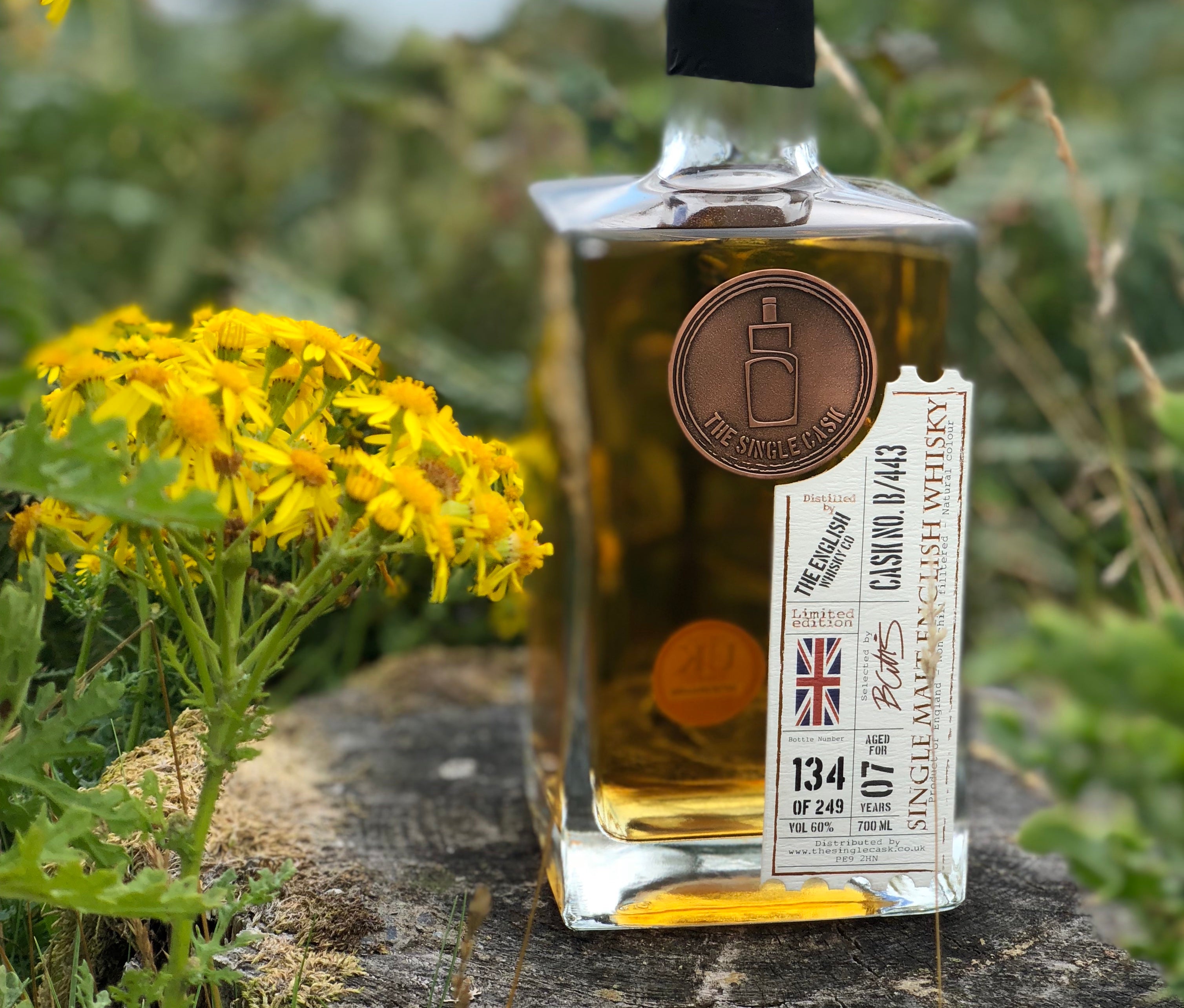
Celebrating St. George's Day with English whisky
by Sorren Krebs There is an interesting conception that only Scotland can produce good whisky! Whisky is being produced all around the world by countries including Sweden, Germany, India, Taiwan ...
Read more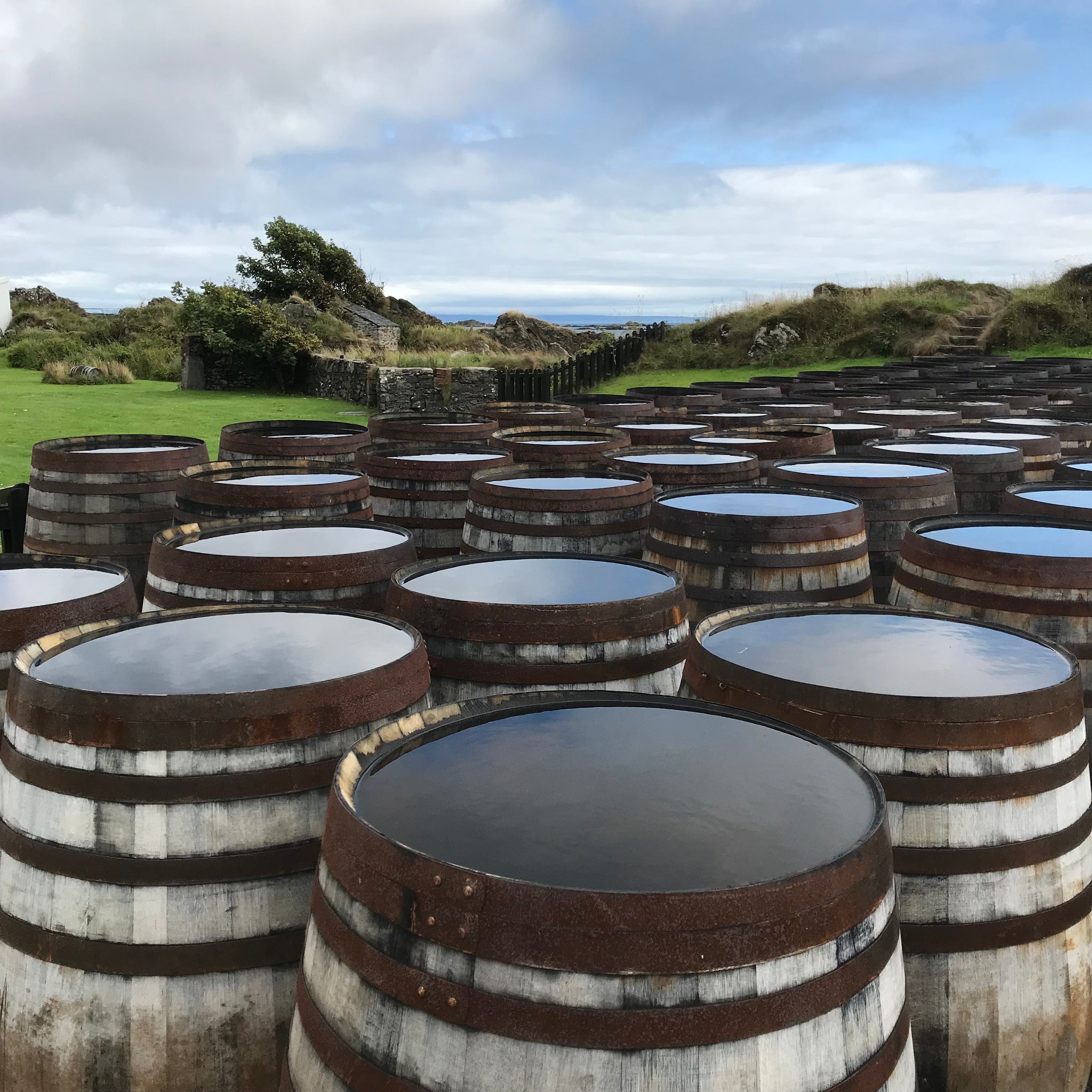
In this article we look at how water is involved in each stage of the distillation of whisky, what kind of water is used, and why it matters.
Read more


,%20and%20bottles%20the%20s...)
Leave a comment
This site is protected by hCaptcha and the hCaptcha Privacy Policy and Terms of Service apply.