
Dufftown Distillery: The Speyside Malt Hiding Inside Bell's and The Singleton
Around 4,000 people live in Dufftown, and between them they share six working distilleries, which is why the town's boast has long been that it makes more whisky per head than anywhere on Earth. Only one of those distilleries actually carries the town's name, and it is the one most whisky drinkers know least about. Dufftown distillery has spent most of its 130 years quietly filling casks for Bell's, and it now sits behind The Singleton, a brand that sells millions of bottles without many people ever asking which distillery is inside.
That anonymity is exactly what makes Dufftown interesting to an independent bottler. We have bottled it three times, and each cask showed a side of the make that the blenders never let you see. Here is the full story of the distillery, how it works, what it tastes like, and what it means for anyone thinking about a cask of their own.
Dufftown at a glance
| Region | Speyside, on the Dullan Water at the southern edge of Dufftown, Moray |
| Founded | 1895 to 1896, in a converted meal mill, as Dufftown-Glenlivet |
| Owner | Diageo (via Arthur Bell & Sons from 1933, Guinness from 1985) |
| Capacity | Typically quoted at around 6 million litres of pure alcohol a year, although figures of 4 million appear in some sources |
| Stills | Six: three wash (c. 13,100 litres), three spirit (c. 15,300 litres), plain, steam heated |
| Water source | Jock's Well, a spring in the Conval Hills |
| Fermentation | Around 75 hours in twelve stainless-steel washbacks |
| Malt spec | Unpeated, from Diageo's central maltings |
| Style | Malty, nutty and gently spicy, with green fruit and a dry finish |
| Visitor centre | No, a working production site not open to the public |

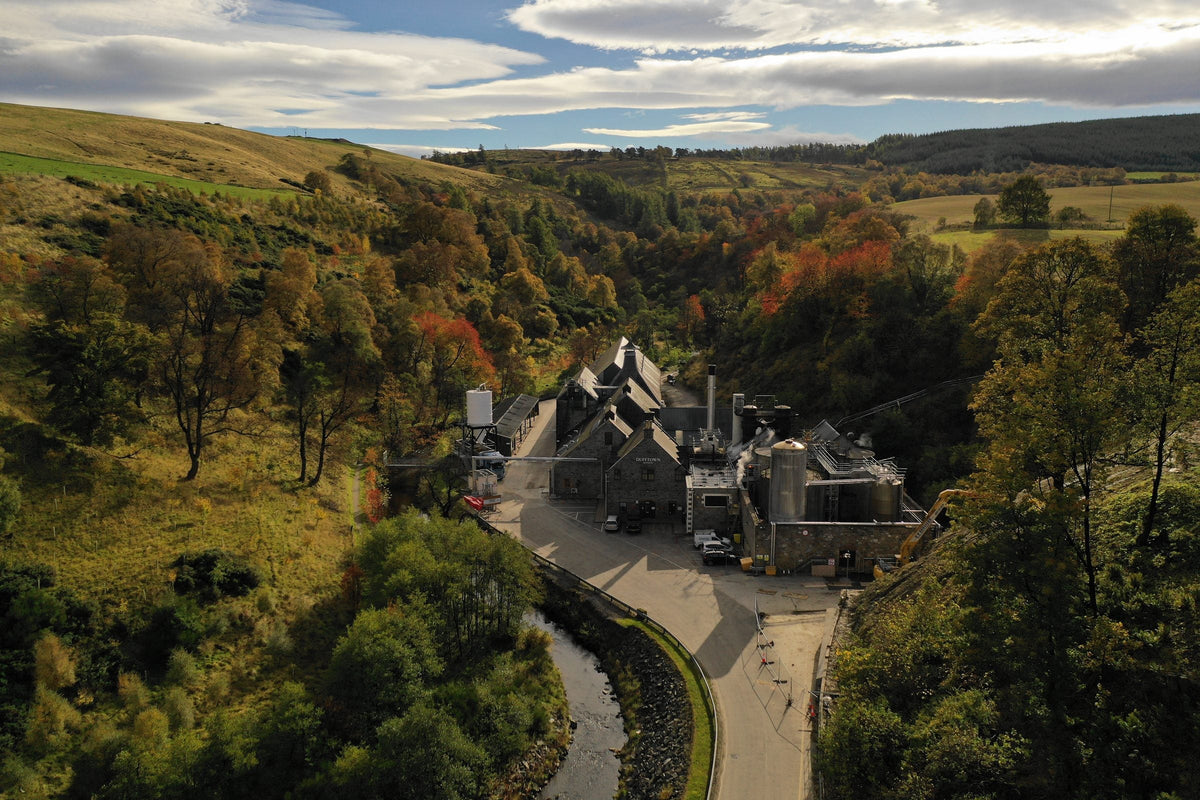
Dufftown from above
Dufftown does not welcome visitors, so the closest most people will get to the still house is our drone footage. It shows the distillery tucked into its wooded glen beside the Dullan Water, with the town's other stillhouses scattered across the hills behind it.
History of Dufftown
Dufftown was one of the last distilleries out of the traps in the Victorian whisky boom. In 1895 a group of Liverpool and Dufftown businessmen, Peter Mackenzie, Richard Stackpole, John Symon and Charles MacPherson, bought an old meal mill on the Dullan Water and converted it into a distillery, which they called Dufftown-Glenlivet in the fashion of the day. The first spirit ran in 1896, and by 1897 P. Mackenzie & Co, who already owned Blair Athol in Pitlochry, had taken it over outright.
Their timing was awful. The Pattison crash of 1898 to 1899 wiped out the boom, and dozens of the new distilleries built alongside Dufftown never recovered. Dufftown survived, and it kept going through the lean years partly by finding a market across the Atlantic. Diageo's own account of the distillery says it was one of only around fifteen Scottish distilleries still working when American Prohibition ended in 1933.
That was also the year Arthur Bell & Sons of Perth bought Mackenzie's two distilleries, and Dufftown's modern life began. Bell's was on its way to becoming the biggest-selling blended Scotch in Britain, and it needed a reliable, malty Speyside heart. Dufftown became exactly that. Almost everything the distillery made for the next half century went into the blend, and as Bell's sales climbed the distillery grew with them: from two stills to four in 1968, when the floor maltings were closed, six in 1974 and eight by 1979. Bell's even built a second distillery next door, Pittyvaich, in 1975 to keep up with demand. Pittyvaich never earned much affection, was closed in 1993 and demolished in 2002. Its short life is a reminder that even in whisky, not every distillery gets a second act.
Guinness bought Bell's in 1985, merged it with Distillers Company Limited to form United Distillers two years later, and that business became Diageo in 1997. For a while Dufftown was Diageo's largest malt distillery, a title it held until Roseisle opened in 2010. Somewhere along the way the still count came back down to six, though the three spirit stills are, unusually, larger than the wash stills.
The biggest shift in Dufftown's identity came in 2006, when Diageo relaunched the distillery's single malt as The Singleton of Dufftown, aimed at the UK and Europe, with sibling Singletons from Glen Ord for Asia and Glendullan for the United States. It was a clever piece of marketing: one brand, three distilleries, three continents. It also meant that a Singleton bought in Frankfurt and a Singleton bought in Taipei are entirely different whiskies, which still catches people out.
The Jock's Well water dispute
Dufftown's water comes from Jock's Well in the Conval Hills, and in the 1890s that spring was worth fighting over. Mortlach, the town's oldest distillery, had drawn on the same water and did not welcome a new neighbour. Local lore, repeated in Diageo's own brand material, has it that rival distillery managers would divert the stream in the middle of the night to keep the water flowing to their own mash tuns. However much of that is embroidery, the dispute was real and it is one of the few genuine Speyside water feuds that ended with the newer distillery keeping its supply.
How Dufftown makes its whisky
Dufftown is a big, efficient distillery run to a clear brief. Water from Jock's Well goes into a stainless-steel full-lauter mash tun, one of the larger tuns in Speyside, mashing around 11 to 13 tonnes of unpeated malt at a time and running roughly 23 mashes a week. The wort is run deliberately clear, which matters: cloudy wort carries more solids into the washback and gives a heavier, nuttier spirit, while clear wort points the flavour towards fruit and grass.
Fermentation happens in twelve stainless-steel washbacks of about 53,000 litres each, and it is long, a minimum of around 75 hours. That is a good deal longer than the 48 hours or so that many big blending distilleries settle for, and it is where a lot of Dufftown's estery, green-apple character is made. Both the clear wort and the long ferment date from changes Diageo made in the 2000s. Under Bell's the distillery made a heavier, nuttier, more cereal-driven spirit; today's make is lighter and grassier, and the change was made to suit the blenders rather than single malt drinkers.
Distillation runs through six plain, pear-shaped stills in three pairs, steam heated and fitted with shell-and-tube condensers. The three wash stills each hold around 13,100 litres and the three spirit stills around 15,300 litres. New make comes off at around 67 to 68% and is filled at 63.5%, the standard Diageo filling strength. Most casks are ex-bourbon American oak, with a proportion of ex-sherry European oak; Diageo describes the Singleton recipe as a "secret blend" of the two. Eight warehouses on site hold in the region of 100,000 casks, in both dunnage and racked storage.
What does Dufftown taste like?
The honest answer is that it depends which era of Dufftown you are drinking. Older spirit, distilled through the Bell's years and into the 1990s, is dense and malty: barley toffee, hazelnuts, a dry, almost biscuity spice, sometimes with a slightly meaty edge that people who love Mortlach will recognise in a gentler form. It is not a glamorous profile, but in a good refill hogshead at 15 to 20 years it becomes generous and satisfying.
Modern Dufftown, distilled since the switch to clear wort and long fermentation, is lighter and fresher. Expect green apple, pear drops, cut grass and a clean malty sweetness, with the nuttiness pushed to the background and a peppery, drying finish. In first-fill bourbon wood it takes on vanilla and honey quickly; in sherry casks the malt and nut character comes back and you get raisins, brown sugar and baking spice over that green core. Diageo's official Singleton bottlings lean into the sweeter, smoother end of this, using a high proportion of sherry-seasoned oak. Independent casks tend to show more of the spirit's spine.
The best way to describe Dufftown, then, is versatile rather than distinctive: it takes cask influence gracefully, which is why our two sherry-finished casks and our one bourbon cask tasted like three different whiskies.
Dufftown and independent bottlers
For a distillery of its size, Dufftown does not appear on independent shelves nearly as often as you would expect. The reason is simple: Diageo needs almost all of it. Only a small fraction of output has ever gone into single malt, and even that fraction is now spoken for by The Singleton, which is one of the biggest-selling single malt brands in the world.
Casks do escape, though. Gordon & MacPhail bottled Dufftown for years, including a well-known 8 year old, and Signatory, Douglas Laing, Cadenhead's and the Scotch Malt Whisky Society have all released single casks. Official bottlings outside the Singleton range are scarce and mostly historic: the Flora & Fauna 15 year old, a couple of Rare Malts Selection releases from 1975 vintage spirit, a Centenary 20 year old, and a 17 year old in Diageo's 2020 Special Releases. Because so few independent casks come to market, a good one gets noticed.
The distillery's low profile also means it is rarely the whisky people set out to buy. That cuts both ways for a bottler like us. It keeps prices for casks and bottles reasonable, and it means we have to work harder to persuade customers to try it. Once they do, the reaction is usually surprise that something this good has been hiding inside Bell's all along.
The Single Cask and Dufftown
We have bottled Dufftown three times, all from spirit distilled in 2008, and between them they make a neat case study in what cask choice does to a versatile malt.
The first was cask 700404, a 10 year old from ex-bourbon American oak, bottled at a cask strength of 55.7% with an outturn of just 86 bottles. It was Dufftown with nothing to hide behind: fresh, malty and clean, the sort of dram that shows you what the new make is really made of.
Then we did something a little more ambitious. We took the same 2008 spirit and split it into two quarter casks for finishing, one refill Pedro Ximénez and one refill Oloroso, and bottled both at 13 years old as our Signature Series casks 65A and 65B. Cask 65A, the PX finish, came out at 58.6% with 142 bottles, and our tasting notes read malt, oak, white pepper, rancio and white wine on the nose, then raspberries, raisins, nutmeg, cinnamon and green tea on the palate, with a long finish of raspberries, raisins and white pepper. Cask 65B, the Oloroso finish, was bottled at 58.3% with 134 bottles: rancio and red fruits up front, then oak, malt, brown sugar, wine gums and allspice, finishing long on red fruit and brown sugar. Same distillery, same vintage, same age, and yet two clearly different whiskies. That is the whole argument for single casks in one pair of bottles.
All three are now sold out, which tells you something about how Dufftown lands once people actually taste it. We keep an eye out for more; when a cask of the right quality comes our way, our newsletter subscribers hear first.

Collectability and cask ownership
Dufftown is not a name that sets auction rooms alight, and it is worth being clear about that. Standard Singleton bottlings change hands for modest sums, and most independent releases sell for what they cost in the shop or a little more. There are exceptions at the top: The Singleton of Dufftown 54 Year Old, distilled in 1966 and released through Diageo's rare-and-exceptional programme, has sold for well into five figures at auction, and the 1975 Rare Malts, the Flora & Fauna 15 year old and the Centenary bottling all have a collector following. But these are the tail, not the body, of the market.
For cask ownership, that lack of hype is arguably a virtue. Dufftown casks, when they can be found, are usually priced as a solid Speyside make rather than a name brand, the spirit matures reliably in both bourbon and sherry wood, and the distillery's scale means there is a long track record of how it behaves at 10, 15 and 20 years. It is a sensible whisky to own if what you want is good liquid to bottle under your own label one day rather than a trophy. The flip side is equally plain: without brand pull, resale value depends almost entirely on the quality and age of the cask itself.
As with any cask, ownership involves risk and values can go down as well as up; this is not financial advice. If you are weighing it up, start with our guide to whisky cask sizes and types, because the difference between a barrel, a hogshead and a quarter cask matters more for a malt like this than the distillery name on the cask end.
Visiting Dufftown
Dufftown distillery has no visitor centre and does not run tours. If you want to see it, the walk out along the Dullan Water from the town centre passes close to the site, and Speyside Tours runs a guided Dufftown distilleries walk that takes in the outside of all the town's distilleries. The town itself is the better visit anyway: Glenfiddich and The Balvenie both offer tours a mile up the road, the Whisky Shop Dufftown is one of the best specialist retailers in Scotland, and the clock tower in the square once served as the town jail.
Dufftown FAQs
Who owns Dufftown distillery?
Diageo. The distillery passed from its founders P. Mackenzie & Co to Arthur Bell & Sons in 1933, to Guinness in 1985, and into Diageo when it was formed in 1997.
Is The Singleton made at Dufftown?
Partly. The Singleton is a brand rather than a distillery, and it comes from three: Dufftown (sold mainly in the UK and Europe), Glen Ord (Asia) and Glendullan (the United States). The bottle label tells you which distillery is inside.
Is Dufftown whisky peated?
No. Dufftown uses unpeated malt and makes a malty, fruity, gently spicy Speyside spirit intended above all for Bell's and other Diageo blends.
Can you visit Dufftown distillery?
No. It is a working production site with no visitor centre. Glenfiddich and The Balvenie, in the same town, both offer tours.
What does Dufftown taste like?
Malty and nutty with green apple, cut grass and a peppery, dry finish. In sherry casks it picks up raisins, brown sugar and baking spice; in bourbon wood it leans towards vanilla and honey.
Can you buy a cask of Dufftown?
Occasionally. Diageo keeps most of its output, so independent casks are scarce, but they do come up. Ask us and we will tell you what is available and what a fair price looks like.
Own a piece of Dufftown
Dufftown is the kind of whisky that rewards people who look past the label. It has been quietly doing the hard work inside Bell's for ninety years, and when it is left alone in a good cask it turns out to be a generous, characterful Speyside malt at a price its more famous neighbours cannot match.
If you would like to know when we next bottle it, or you are thinking about buying a whisky cask of your own, from Dufftown or any distillery we work with, get in touch. We will tell you plainly what is available, what it costs and what it tastes like, because we taste everything we sell.
Work with The Single Cask
Buy a whisky cask, bottle under your own label, or store casks in our HMRC approved bonded warehouse in Fife.
Read more
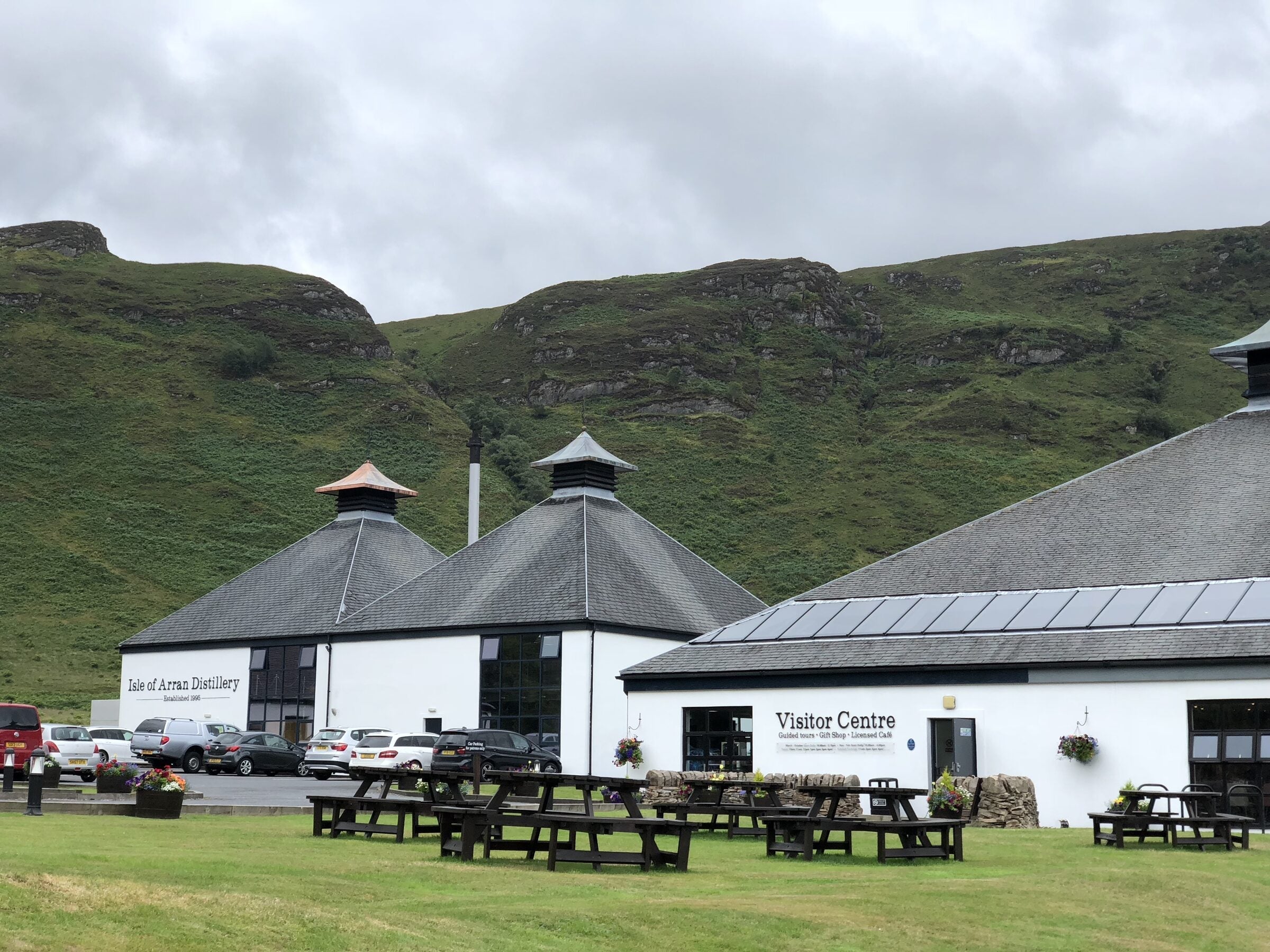
Arran Distillery: The Island That Waited 158 Years for Legal Whisky
Harold Currie, a pair of golden eagles and a north-coast loch gave Arran its first legal distillery since the 1830s. Our guide to Lochranza covers its history, stills, casks, flavour, visiting, and...
Read more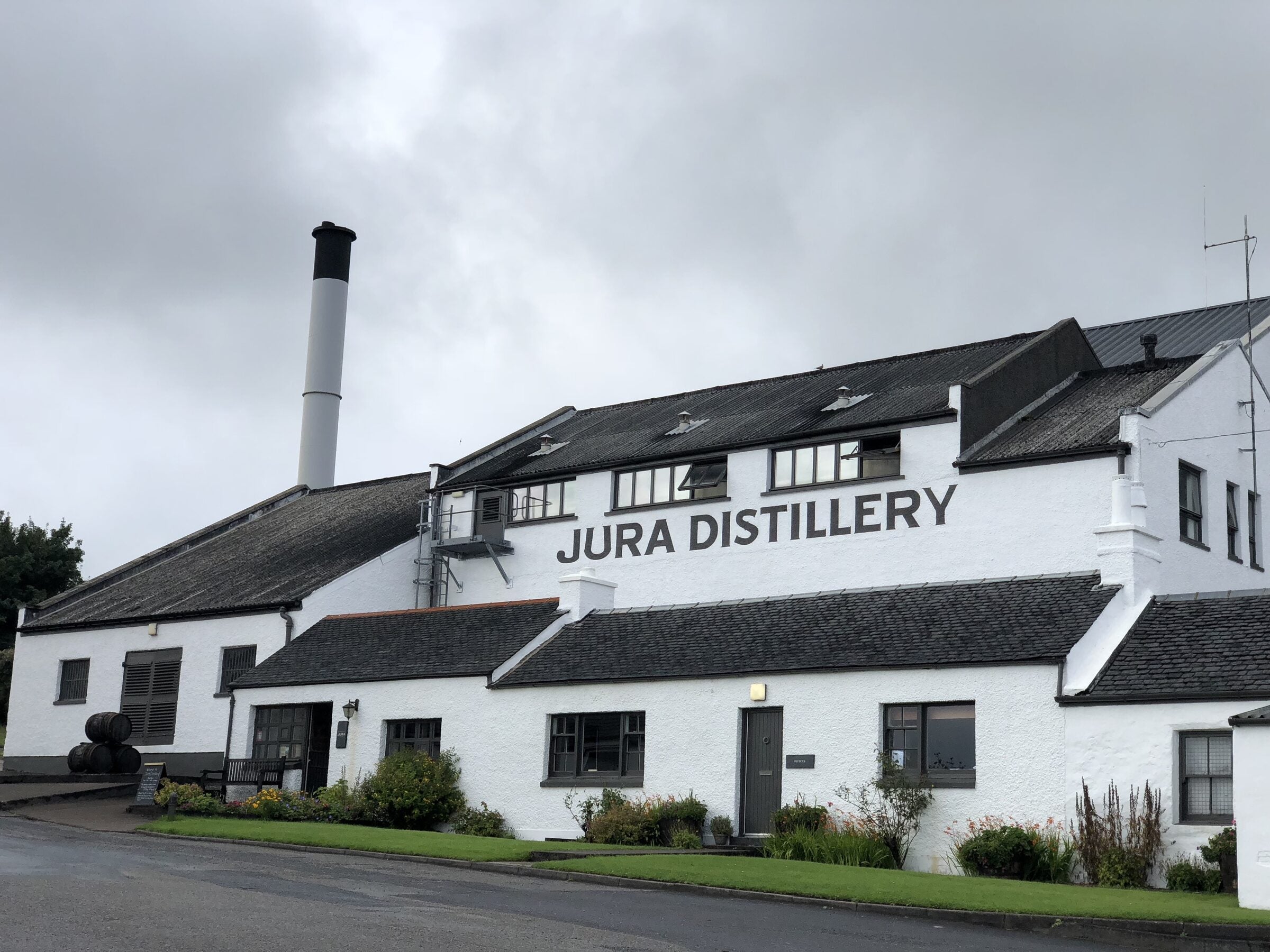
Jura Distillery: The Island Malt Rebuilt to Save a Community
Rebuilt in 1963 to keep an island alive, Jura makes a light, fruity spirit from some of the tallest stills in Scotland. Our guide covers its history, production, flavour, casks and visiting, plus t...
Read more


