
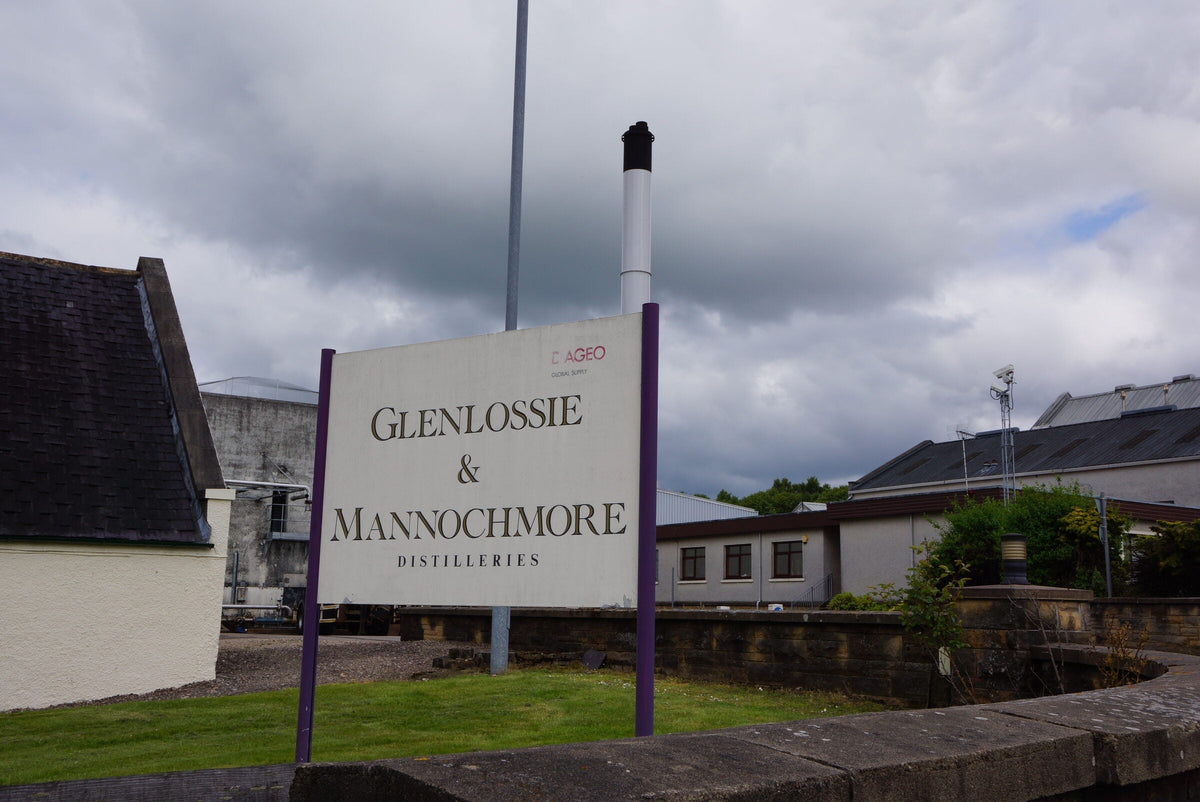
Glenlossie Distillery: The Top-Class Malt Almost Nobody Bottles
In 1974 the blending industry drew up a private classification of Scotland's malts, and only a dozen earned the top grade. Glenlossie was one of them. Half a century on, most whisky drinkers still could not point to it on a map, and plenty have never seen a bottle carrying its name.
That gap between reputation and recognition is the whole Glenlossie story. The blenders who buy its spirit rate it among the best in Speyside; the public almost never gets to check their working. For independent bottlers, and for anyone thinking about owning a cask, that makes it one of the most quietly interesting names in the region. We have bottled four casks of it, all born in the same year, so we can also tell you first-hand what the fuss is about.
Glenlossie at a glance
| Region | Speyside, at Thomshill, about three miles south of Elgin |
| Founded | 1876, by John Duff and partners |
| Owner | Diageo (part of DCL, then SMD, since 1919/1930) |
| Capacity | Typically quoted at around 3 million litres of pure alcohol a year, with recent output nearer 2 million |
| Stills | Six: three wash, three spirit, the spirit stills fitted with purifiers |
| Water source | The Bardon Burn, shared with neighbouring Mannochmore |
| Fermentation | Long, typically quoted at around 75 hours, in eight wooden washbacks plus two external stainless steel ones added in 2019 |
| Malt spec | Unpeated, largely from Diageo's Burghead maltings near Elgin |
| Style | Light, grassy and fresh, with a surprisingly oily texture |
| Visitor centre | No, a working production and warehousing site |

History of Glenlossie
Glenlossie was built in 1876 by John Duff, a man whose fingerprints are all over Speyside. Duff had managed GlenDronach before striking out on his own, and he would go on to found Longmorn in 1894 and BenRiach in 1898. For his first distillery he chose a site at Thomshill, about three miles south of Elgin and less than a mile from the River Lossie, which gave the place its name. He did not build it alone: his partners included Alexander Grigor Allan, H. Mackay, John Hopkins, George Thomson and Charles Shirres, a roll-call of local legal, banking and merchant interests.
Duff left the partnership in 1896, and the remaining partners restructured the business as the Glenlossie-Glenlivet Distillery Company, largely rebuilding the distillery in the process. For its era it was a strikingly modern plant: originally driven by a waterwheel, it converted to steam power in 1919 and to electricity by around 1960, and a railway siding once linked it to the outside world.
The Distillers Company Limited (DCL) bought Glenlossie in 1919, and in 1930 it passed into the Scottish Malt Distillers fold and the Haig stable, a blending relationship that has defined it ever since. Between those two dates came the most dramatic night in its history: a serious fire in 1929 that caused extensive damage. The blaze was fought with, among other things, a horse-drawn Shand Mason steam fire engine built in 1862, a machine that could raise steam in about five minutes. It survives, and you can still see it on display at Dallas Dhu distillery near Forres.
The modern era has been about scale. The stillhouse grew from four stills to six in 1962, and in 1971 a second, larger distillery, Mannochmore, was built on the same site to feed demand for Haig. The two shared warehouses and, until 2007, even shared a workforce, with production alternating six months at each. The site also housed a dark grains plant, turning draff and pot ale into cattle feed for the surrounding district. Today Thomshill is one of Diageo's great maturation hubs, with warehousing for a cask population usually put at around 200,000, some say a quarter of a million.
How Glenlossie makes its whisky
Glenlossie draws its water from the Bardon Burn, which it shares with Mannochmore next door, and mashes unpeated malt that comes largely from Diageo's Burghead maltings on the Moray coast. Fermentation happens in eight wooden washbacks, joined in 2019 by two external stainless steel ones, and it is long, typically quoted at around 75 hours. Long fermentations build fruity, grassy complexity in the wash, and Glenlossie's green, fresh character starts here.
The stillhouse holds six stills, three wash and three spirit, and the spirit stills carry the detail that defines this distillery: purifier pipes fitted between the lyne arms and the condensers. A purifier catches the heavier vapours rising off the still and sends them back into the pot to be distilled again, so only the lightest spirit gets through. The result should, in theory, be a featherweight. What actually comes off the stills is one of Speyside's quiet contradictions: a light, grassy spirit with a distinctly oily, textured mouthfeel that blenders prize because it carries flavour through a blend without shouting.
It was exactly this combination that earned Glenlossie its ranking, in 1974, as one of only around a dozen top-class blending malts in Scotland. Nearly everything it makes goes into blends, historically Haig Gold Label above all, which is why bottles bearing the distillery's own name are so scarce.
What does Glenlossie taste like?
Fresh is the word that keeps coming up. New-make Glenlossie is grassy and green, and maturation in good wood layers cereal sweetness, cut hay, soft floral notes and lemony citrus over that fresh core. The texture is the surprise: for such a light flavour profile, the spirit is oily, almost waxy, coating the mouth in a way you would expect from a much heavier make. The official Flora and Fauna 10 year old shows the house style plainly: gentle, malty and floral, with that slippery weight underneath.
Give it an active sherry cask and something more interesting happens. The grassy freshness stops sherry sweetness becoming cloying, while the oily texture soaks up spice, so sherried Glenlossie tends towards red fruit, pepper and green tea rather than the usual raisins-and-Christmas-cake register. We know this first-hand, because it is precisely what we did with our own casks.
Glenlossie and independent bottlers
Diageo has never seriously marketed Glenlossie as a single malt. The Flora and Fauna 10 year old, launched in 1990, and the occasional Manager's Dram remain the only regular official outlets, which leaves the field to the independents. Gordon & MacPhail, Signatory Vintage and Douglas Laing have all bottled it over the years, and the Scotch Malt Whisky Society has released it more than 120 times, a striking count for such an obscure name and a fair signal of how good the casks tend to be.
For independent bottlers this is the classic Speyside opportunity: a malt the blenders grade as highly as any in the region, available at workhorse prices because the public has never been taught to ask for it. Its neighbours in the Elgin cluster, Linkwood, Glen Elgin and Miltonduff, share the same broad fate, but Glenlossie's texture gives it a character all its own in a lineup.
The Single Cask and Glenlossie
We did not just bottle a Glenlossie; we bottled a family of them. All four of our releases came from spirit distilled in 2008, matured and finished in octaves, the small 50-litre casks that concentrate wood influence and let sister casks develop genuinely different personalities from the same starting point.
Cask 12476A was an oloroso sherry octave, bottled at 12 years old and a cask strength of 56.8%, an outturn of just 79 bottles. It showed the distillery character most clearly: oatmeal porridge and gentle grassiness on the nose, then a malty, creamy, savoury palate with an unexpected flick of Szechuan pepper. Cask 12476A's page is still on the site if you want the full notes.
Its siblings went the Pedro Ximénez route. Cask 12476B, finished in a first-fill PX octave and bottled at 12 years old and 56.1% (72 bottles), layered pencil shavings, rancio, green tea and red fruits over the malt. Cask 12476C stayed longer, emerging at 13 years old and 56.5% with red fruits, cherries and white pepper. And cask 12477, also a first-fill PX octave at 13 years old and 55.3%, carried our Family Series label, its forest of trees representing the ever-growing family of whisky drinkers, which felt right for a parcel of casks that were themselves a family.
All four are now sold out, which tells its own story about how quickly good Glenlossie goes when it is actually offered as a single malt. If you would like first refusal on any future Glenlossie casks we secure, tell us and we will keep you posted.

Collectability and cask ownership
Glenlossie is not a trophy name, and its auction results are modest, which cuts both ways. Bottles rarely fetch headline prices, so nobody should buy Glenlossie expecting Macallan-style appreciation. On the other hand, entry costs are low for a malt of this blending pedigree, the Flora and Fauna bottling has a quiet cult following among Speyside completists, and independent releases sell through steadily because the liquid is reliably good.
For cask buyers the appeal is straightforward: top-class spirit, in the blenders' own historical grading, at prices set by obscurity rather than quality, with a texture that responds beautifully to sherry wood and to the smaller cask formats we favour. The honest counterpoint is that the resale market for Glenlossie is thin, so a cask here is best suited to someone whose plan is ultimately to bottle and drink or share it rather than to trade it. As with any cask, ownership involves risk and values can go down as well as up, and nothing here is financial advice. If you are weighing up formats, our guide to cask sizes and types explains why an octave matures so differently from a hogshead.
Glenlossie FAQs
Who owns Glenlossie distillery?
Diageo. The distillery joined the Distillers Company Limited in 1919, passed to Scottish Malt Distillers in 1930, and came to Diageo through the mergers that followed.
Is Glenlossie peated?
No. Glenlossie distils an unpeated, grassy Speyside spirit, made distinctive by purifiers on the spirit stills that keep it light while the make retains an unusually oily texture.
Can you visit Glenlossie distillery?
No. Glenlossie is a working production and warehousing site with no visitor centre or tours. The 1862 fire engine that once fought its 1929 fire can be seen at Dallas Dhu distillery near Forres, which is open to visitors.
What does Glenlossie taste like?
Fresh cut grass, cereal, hay, soft floral notes and lemon, carried on an oily, mouth-coating texture. In sherry casks it leans towards red fruits, green tea and white pepper.
Why is Glenlossie so rare as a single malt?
Almost all of it goes into blends, historically Haig above all. The Flora and Fauna 10 year old is the only regular official bottling, so independent bottlers are the main way to taste it.
Can you buy a cask of Glenlossie?
From time to time, yes. Casks reach the independent market in small numbers, and we have bottled four ourselves. Ask us and we will tell you plainly what is available and what it should cost.
Own a piece of Glenlossie
The blenders decided fifty years ago that Glenlossie belonged in Scotland's top rank. The public never got the memo, and for whisky drinkers that is good news: it keeps this malt affordable in a region where reputation usually prices people out. Our four sister casks from 2008 showed what patient spirit and careful wood can do here, and we would happily do it again.
If you are curious about buying a whisky cask, from Glenlossie or any distillery we work with, or about bottling a cask under your own label, get in touch. We will give you a straight answer about availability, cost and what the whisky is actually like, because we taste everything we sell.
Work with The Single Cask
Buy a whisky cask, bottle under your own label, or store casks in our HMRC approved bonded warehouse in Fife.
Read more
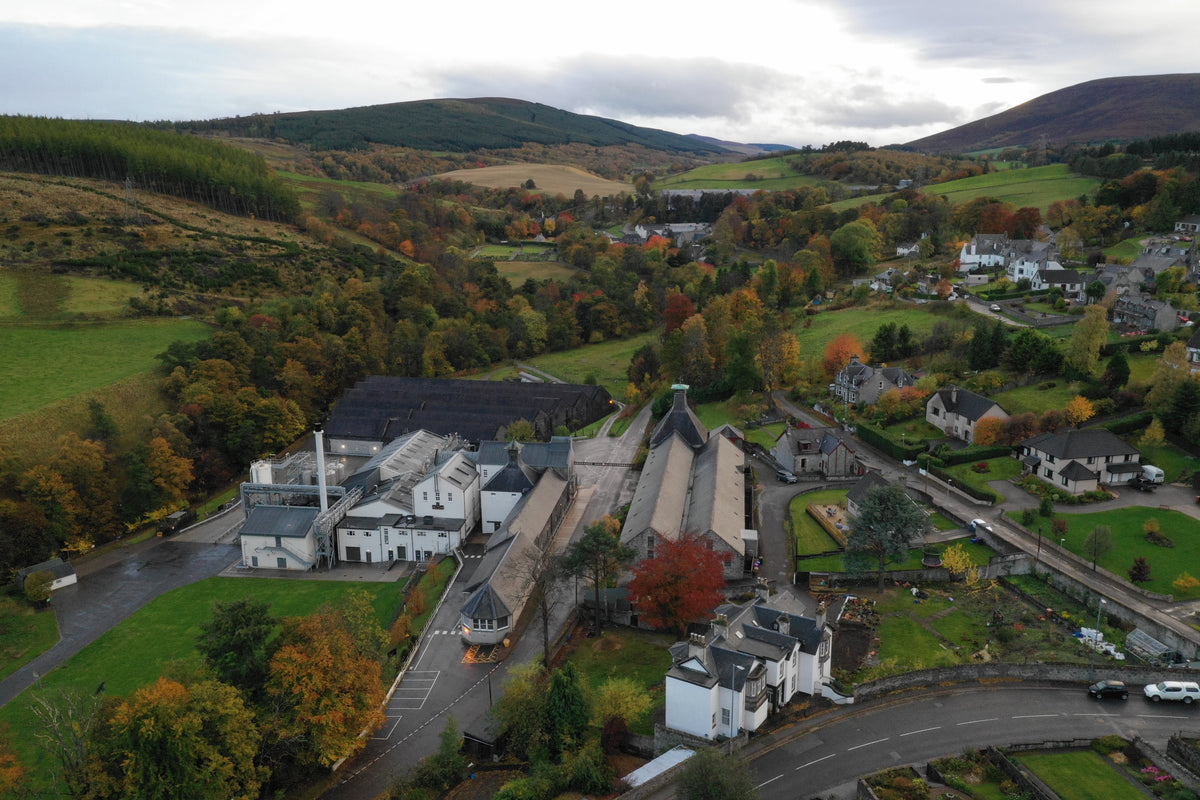
Mortlach Distillery: Speyside's Beast of Dufftown
Six mismatched stills, worm tub condensers and a nickname it never tried to shake off: Mortlach is Speyside's meatiest whisky, and one of the region's longest-standing favourites among independent ...
Read more
Tobermory Distillery: One Island, Two Whiskies
One distillery, two whiskies: unpeated Tobermory and heavily peated Ledaig, made on Mull's colourful harbour front since 1798. Our guide covers the history, the S-shaped stills, what both malts tas...
Read more


