
The Macallan Distillery: History, Whisky & Cask Ownership
The Macallan is the most valuable single malt Scotch whisky brand in the world, and comfortably the most collected. Licensed in 1824 on the Easter Elchies estate above the River Spey near Craigellachie, the distillery built its reputation on two stubborn habits: distilling through curiously small stills that produce a heavy, oily spirit, and maturing that spirit in sherry-seasoned oak commissioned years in advance from Jerez in Spain. Today it is the flagship of Edrington, produces around 15 million litres of pure alcohol a year from a £140 million distillery opened in 2018, and sets the price ceiling for the entire whisky market. A single bottle of Macallan 1926 sold for just under £2.2 million in 2023.
That last figure explains why this Speyside distillery matters well beyond the liquid. Macallan is whisky's blue-chip stock: the name that anchors every serious auction, most major collections, and nearly every conversation about cask ownership. This guide covers the history, the production details that shape the spirit, why independent bottlings of Macallan have all but disappeared, and what buying or selling a Macallan cask actually involves.
The Macallan at a glance
| Region | Speyside (Craigellachie, Moray) |
| Founded | 1824, by Alexander Reid |
| Owner | Edrington |
| Capacity | c. 15 million litres of pure alcohol per year |
| Stills | 36 (12 wash, 24 spirit) |
| Water source | Boreholes and springs on the Easter Elchies estate |
| Fermentation | Around 60 hours, in stainless steel washbacks |
| Style | Unpeated; rich, oily, dried-fruit character |
| Cask policy | Sherry-seasoned European and American oak, commissioned and seasoned in Jerez |
| Visitor centre | Yes; the 2018 distillery and visitor experience |
History of The Macallan
Alexander Reid was a barley farmer and schoolteacher who took out one of the earliest distilling licences under the 1823 Excise Act, setting up in 1824 on land he leased at Easter Elchies. There was nothing glamorous about it. Speyside farmers had been distilling illicitly for generations, and Reid simply made it legal. The site had one obvious advantage: it sat beside a cattle-droving ford across the Spey, which meant a steady stream of thirsty passing trade.
The distillery changed hands several times through the nineteenth century until 1892, when Roderick Kemp, an Elgin businessman who had previously co-owned Talisker, bought it and renamed it Macallan-Glenlivet. Kemp invested in the buildings and, more importantly, in a policy of maturing in sherry wood. His family trust controlled the distillery for the better part of a century, an unusually long stretch of stability that let Macallan build deep stocks of well-aged, sherry-matured whisky while competitors sold theirs young to blenders.
Highland Distilleries took full control in 1996, and Edrington, the Glasgow-based group whose principal shareholder is the charitable Robertson Trust, acquired Highland Distillers in 1999. Under Edrington, Macallan moved decisively upmarket: limited editions, designer decanters, and a pricing strategy pitched at luxury goods buyers rather than whisky drinkers alone.
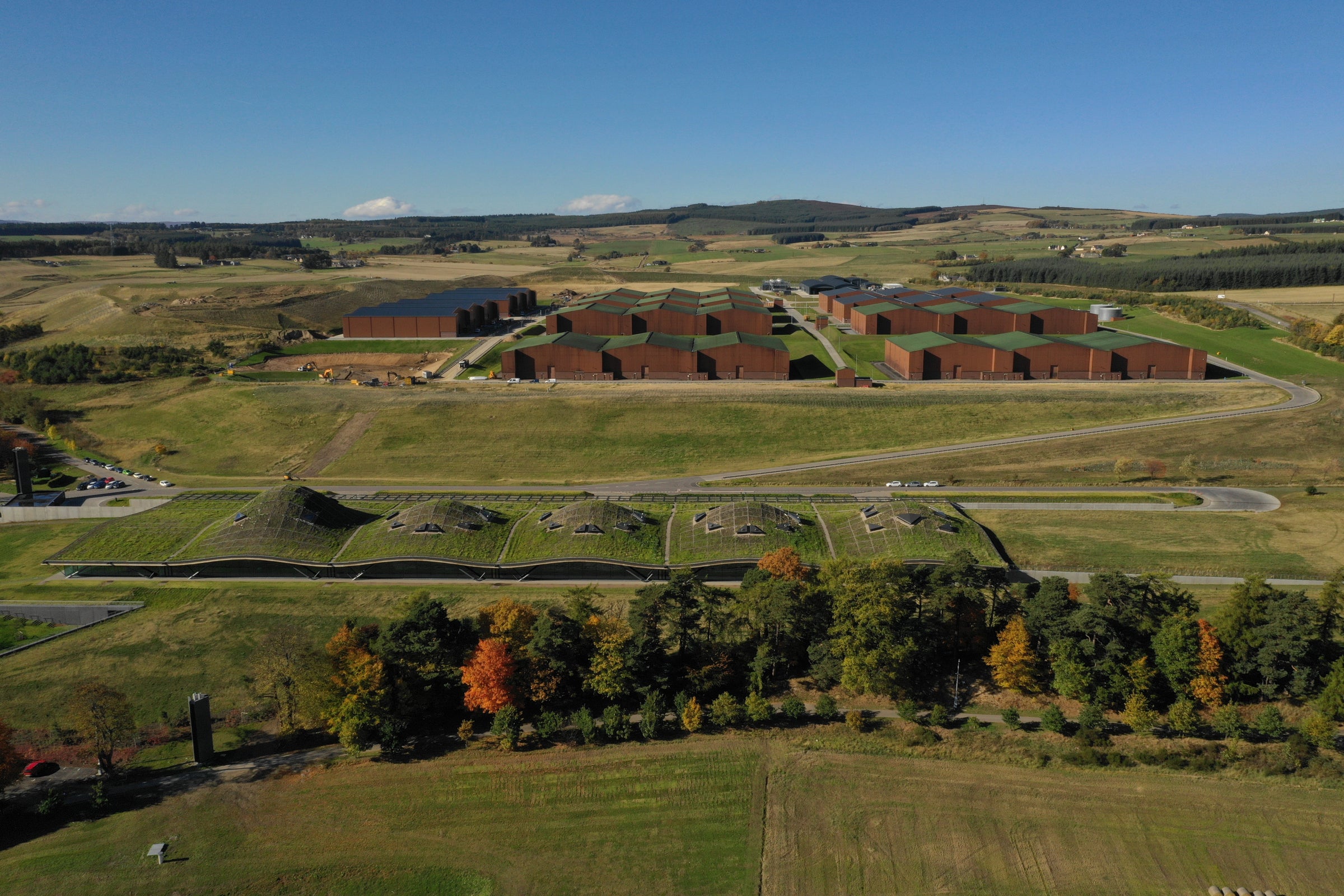
The boldest statement came in 2018, when Edrington opened an entirely new £140 million distillery a short walk from the old one. Designed by Rogers Stirk Harbour + Partners, it is cut into the hillside beneath an undulating timber roof planted with wildflower meadow, and it looks more like a Bond villain's conservatory than a Scottish distillery. The architecture world approved: the building won the RIAS Andrew Doolan Award for the best building in Scotland in 2019 and was shortlisted for the Stirling Prize the same year. The Victorian distillery next door was retired from production.
The Macallan from above
Our drone captured the striking grass-roofed 2018 distillery from the air, set into the hillside above the Spey.
How The Macallan makes its whisky
Strip away the marketing and Macallan's spirit character comes down to still geometry. Its 24 spirit stills hold roughly 3,900 litres each and stand about four metres tall, among the smallest in Speyside. Marketing has long called them the "curiously small stills", and they even appeared on the back of the Bank of Scotland £10 note. Small, squat stills give the rising vapour a short journey to the condenser, so heavier, oilier compounds that would fall back in a taller still make it through into the new-make spirit. The result is a thick, fruity, robust distillate built to stand up to decades in active sherry casks.
The cut is unusually strict, too. Macallan takes only around 16 per cent of the spirit run, one of the narrowest cuts in the industry, keeping just the fraction its distillers consider worth maturing. Twelve wash stills of around 13,000 litres feed the spirit stills, and the 2018 distillery arranges all 36 stills in circular clusters beneath that grass roof, with room to expand. Total capacity is about 15 million litres of pure alcohol a year, which puts Macallan among Scotland's largest malt distilleries by volume, a fact its luxury positioning tends to keep quiet.
Fermentation runs around 60 hours in stainless steel washbacks, and process water is drawn from boreholes and springs on the Easter Elchies estate itself rather than from the Spey below.
Then there is the wood, which is where Macallan spends serious money. The company commissions its casks years ahead of need: European oak from northern Spain and American oak from the United States, air-dried, coopered in Jerez, and seasoned with oloroso sherry before shipping to Speyside. Almost no other distillery controls its sherry-cask supply chain to this degree, and Macallan bottles at natural colour, so every shade of mahogany in the glass comes from that oak.
What does The Macallan taste like?
The house style is unpeated, weighty and driven by sherry oak. Expect dried fruits, raisin, fig, orange peel, ginger, clove and dark chocolate, carried on an oily, mouth-coating texture that comes straight from those small stills. Older sherry-matured expressions add polished leather, walnut and a long, drying spice.
The core range splits along cask lines. Sherry Oak (12, 18, 25 and 30 years old) is the classic, matured entirely in sherry-seasoned oak. Double Cask blends sherry-seasoned American and European oak for a sweeter profile of vanilla, butterscotch and citrus. Rare Cask sits above them, drawing on a high proportion of first-fill sherry butts. If you enjoy the sherried Speyside style and want to explore how neighbours handle it, our guides to Glenfarclas and Glen Grant make useful comparisons.
The Macallan and independent bottlers
Here is an uncomfortable truth for an independent bottler to admit: genuine independent Macallan is close to extinct. Historically, casks flowed to brokers and merchants like any other malt, and Gordon & MacPhail bottled Macallan for decades under its Speymalt label. Those older indie bottlings now trade at strong prices precisely because the tap has been turned off. Edrington, protective of a brand worth more than any other in Scotch, no longer lets casks reach the open market with the name attached.
What does still circulate is the "teaspooned" version. When a distillery sells casks it does not want bottled under its name, a teaspoon of another single malt is added, technically making the contents a blended malt and stripping it of the right to the distillery name. Teaspooned Macallan is widely understood in the trade to circulate under the name Westport. The liquid is overwhelmingly Macallan, but it can never say so on the label, and it prices accordingly. For collectors, that gap between what a bottle is and what it can legally claim to be creates one of the more interesting value plays in whisky, if you know what you are looking at.
The Single Cask has never bottled Macallan, and we would be suspicious of any independent bottler who claims easy access today. Our single cask releases come from distilleries whose owners still permit it. You can browse all of our distillery guides, including near neighbours like Craigellachie, just across the river from Easter Elchies.
Collectability and cask ownership
Macallan does not just lead the secondary whisky market; for practical purposes it is the secondary whisky market's benchmark. In October 2019 a bottle of The Macallan Fine & Rare 1926 sold at Sotheby's in London for £1.45 million, then a world record. In November 2023 another bottle from the same legendary cask, the 1926 Valerio Adami 60 Year Old, sold at Sotheby's for £2.187 million, which remains the highest price ever paid for a bottle of whisky at auction. Casks follow the same pattern: in April 2022 a 1988 Macallan refill butt became the first whisky cask to fetch over £1 million at auction, selling through Whisky Hammer for around £1.02 million, while a 1991 cask was reported sold privately in 2021 for $2.33 million.
Why Macallan? Deep stocks of genuinely old sherry-matured whisky, three decades of deliberate luxury positioning, global brand recognition, and scarcity that is partly real and partly engineered. When a new collector enters the market anywhere from Singapore to San Francisco, Macallan is usually the first name they learn.
Now the cold water. Whisky values can fall as well as rise, and after the frenzied peak of the early 2020s parts of the rare whisky market corrected sharply. Casks are an unregulated asset: no FSCS protection, no ombudsman, and a market that has attracted its share of mis-sellers quoting fantasy valuations. Owning a cask also carries running costs that glossy brochures skip: warehouse rent, insurance, regauging, and eventually duty, bottling and packaging if you take it to glass. The exit matters as much as the entry, and an old cask is only worth what a verifiable buyer will pay for it.
This is exactly where a broker with skin in the game earns its keep. The Single Cask operates its own bonded warehouse in Scotland, and we help clients buy whisky casks and sell whisky casks, Macallan included when genuine casks surface. We deal in documented provenance, delivery orders and realistic numbers, not hypothetical appreciation curves.
Visiting The Macallan
The 2018 distillery doubles as one of Scotland's most striking visitor attractions, and it is worth seeing for the building alone: the timber-gridshell roof, the still houses arranged in rings, and a wall of archive bottles that will make any collector's pulse quicken. Tours and tastings run at a range of price points, from introductory experiences to in-depth sessions for enthusiasts.
Book well in advance through The Macallan's own website, particularly between May and September, as places sell out weeks ahead. The distillery sits on the Easter Elchies estate just outside Craigellachie, in the thick of Speyside's densest cluster of distilleries, so a visit slots neatly into a wider whisky itinerary.
The Macallan FAQs
Who owns The Macallan?
The Macallan is owned by Edrington, the Glasgow-based spirits group, which acquired parent company Highland Distillers in 1999. Edrington's principal shareholder is the charitable Robertson Trust.
Why is Macallan so expensive?
A combination of costly sherry-seasoned oak commissioned in Jerez, limited stocks of genuinely old whisky, deliberate luxury positioning by Edrington, and huge global demand from collectors. Record auction results feed the prestige, which in turn feeds retail prices.
Can I buy a cask of Macallan?
The distillery does not sell casks to the public, so genuine Macallan casks only surface on the secondary market, infrequently and at serious prices. A reputable broker can source and verify them. The Single Cask offers exactly this service, alongside guidance on storage, insurance and exit options.
Is Macallan peated?
No. The Macallan's house style is unpeated. Its character comes from small stills, a narrow spirit cut of around 16 per cent, and maturation in sherry-seasoned oak rather than from peat smoke.
What is the rarest Macallan?
The Macallan 1926 60 Year Old, drawn from a single cask that yielded just 40 bottles in 1986. The Valerio Adami-labelled example sold at Sotheby's in November 2023 for £2.187 million, the world record for any bottle of whisky sold at auction.
Where is The Macallan made?
On the Easter Elchies estate near Craigellachie in Moray, in the Speyside whisky region of Scotland. Since 2018 production has run through a purpose-built £140 million distillery designed by Rogers Stirk Harbour + Partners.
Buy or sell a Macallan cask with The Single Cask
The Single Cask is an independent bottler with our own bonded warehouse in Scotland and a whisky bar in Singapore, and we broker casks for clients on both sides of a deal. If you are looking to acquire a Macallan cask, we can search the market, verify provenance and handle the paperwork; if you already own one, we can value it honestly and find a buyer, or help you take it to bottle instead. Our guide to the four steps to bottling your own whisky explains that route, and our independent bottling services cover everything from regauge to label.
Whether it carries the Macallan name or a teaspooned one, a cask is only as good as its documentation. Contact us for a straightforward conversation about buying, selling or bottling, with no fantasy valuations attached.
Work with The Single Cask
Buy a whisky cask, bottle under your own label, or store casks in our HMRC approved bonded warehouse in Fife.
Read more
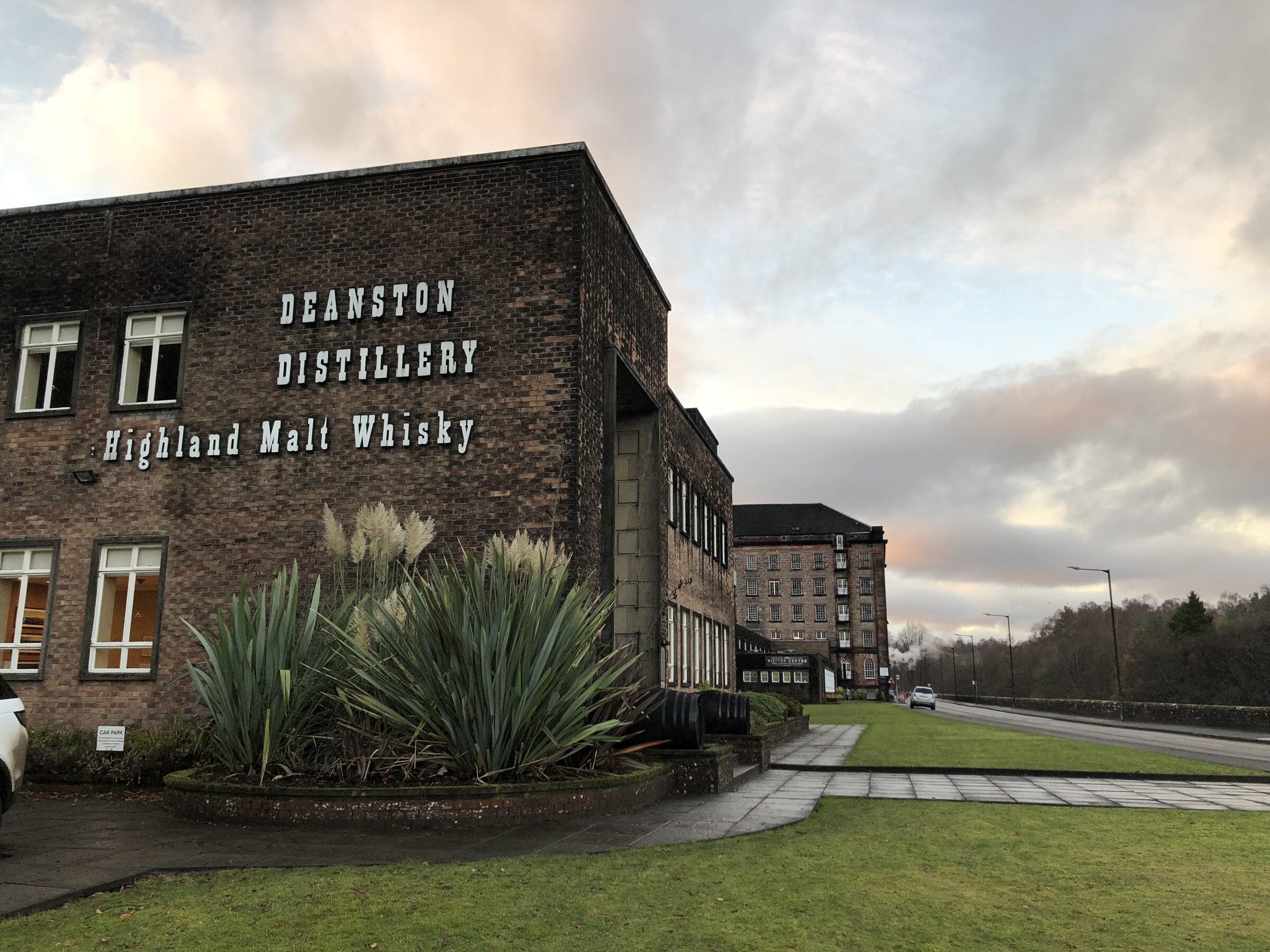
Deanston Distillery: The Cotton Mill That Powers Its Own Whisky
Deanston guide: from Europe's largest water wheel to a self-sufficient hydro-powered distillery, whisky matured in old cotton mill vaults, what it tastes like, and our own three single cask bottlings.
Read more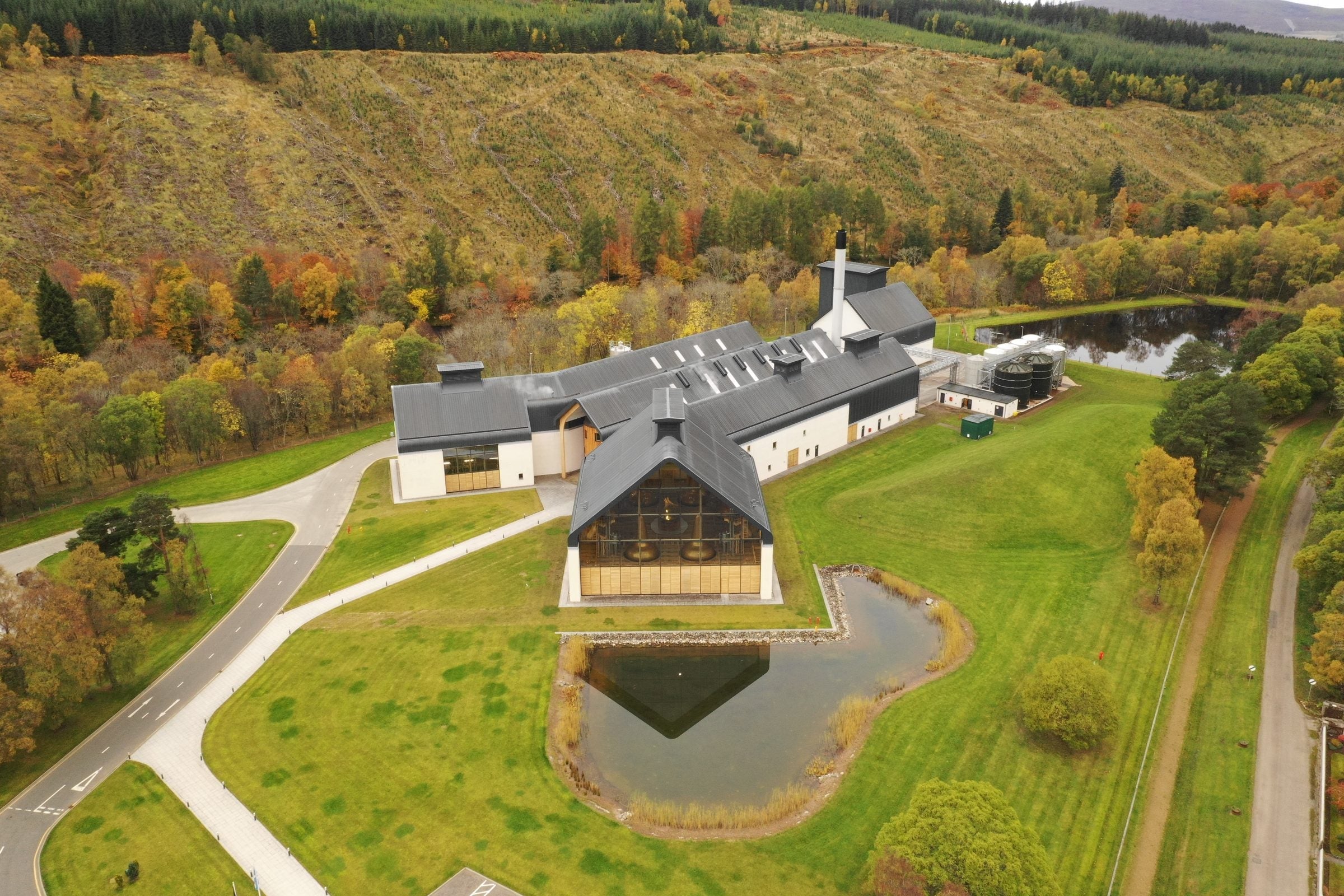
Dalmunach Distillery: Speyside's £25 Million Newcomer
Built on the bones of the lost Imperial distillery, Dalmunach is one of Speyside's most striking modern distilleries. We bottled one of the first independent Dalmunach casks, here is the full story...
Read more


