
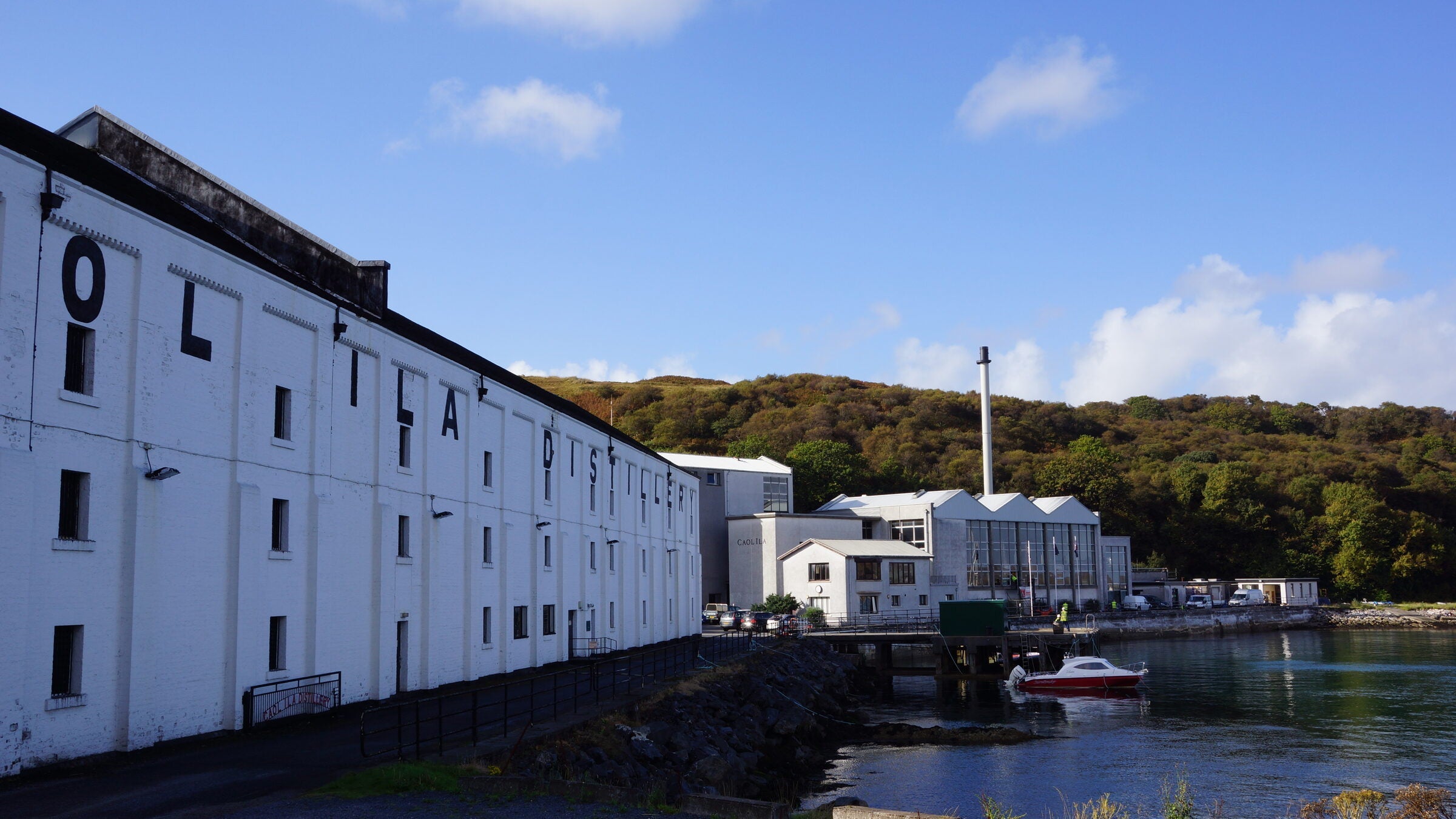
Caol Ila Distillery: Islay's Quiet Giant
Caol Ila is the biggest distillery on Islay by a comfortable margin, around 6.5 million litres of pure alcohol a year, yet for most of its 180-year existence it has been the island's least famous name. Ask a casual drinker for an Islay malt and you will hear Laphroaig, Ardbeg, perhaps Bowmore. Caol Ila, hidden at the foot of a steep brae outside Port Askaig, quietly out-produces the lot of them, and roughly 95 per cent of what it makes vanishes into blends. If you have ever drunk a Johnnie Walker Black Label, you have drunk Caol Ila.
That blend-first history is exactly why blenders and independent bottlers prize it. Because so much spirit is laid down every year, Caol Ila casks reach the open market in numbers no other Islay distillery can match, and the quality is unusually even. It is our house distillery: The Single Cask has bottled more than 40 individual casks of Caol Ila, more than from any other distillery, at ages from 4 to 15 years, almost all from ex-bourbon hogsheads and barrels. We know this spirit the way a chef knows their own stock. Here is everything we have learned.
Caol Ila at a glance
| Region | Islay, north-east coast, near Port Askaig |
| Founded | 1846, by Hector Henderson |
| Owner | Diageo |
| Capacity | c. 6.5 million litres of pure alcohol, the largest on Islay |
| Stills | Six: three wash, three spirit |
| Water source | Loch nam Ban |
| Fermentation | Long, typically quoted at 55 to 60 hours |
| Malt spec | Heavily peated (c. 35ppm) from Port Ellen Maltings, with occasional unpeated runs |
| Style | Fragrant, medium-bodied peat: pear, grass, brine, gentle bonfire smoke |
| Visitor centre | Yes, rebuilt and reopened August 2022 |

Caol Ila from above
Our drone flew over Caol Ila to capture its glazed still house on the Sound of Islay, looking across to the Paps of Jura.
History of Caol Ila
Hector Henderson, a Glasgow businessman with distilling interests, founded Caol Ila in 1846. His site selection was ruthlessly practical: dependable water running off the hill from Loch nam Ban above, and a shore deep enough to land barley and coal and to ship spirit out. The name, Gaelic for ‘Sound of Islay’, describes the address rather than any poetic ambition.
Henderson did not last long. By 1854 the distillery had passed to Norman Buchanan, who also owned the Isle of Jura distillery across the strait, and in 1863 it was bought by Bulloch Lade & Co, the Glasgow blending house that built Caol Ila’s reputation over the following half-century. When Bulloch Lade went into liquidation in 1920, the distillery drifted, as much of the industry did, towards the Distillers Company, which took a controlling stake in 1927; Scottish Malt Distillers assumed full ownership in 1930.
The building you see today is not Victorian. In 1972 the old distillery was demolished in its entirety and rebuilt to a design by George Leslie Darge, whose signature glazed curtain wall turned the new still house into a picture window on the Sound of Islay. Production resumed in 1974 with six stills and industrial-scale ambitions. Through DCL’s long evolution into Diageo, Caol Ila’s core job has never changed: it is the smoky backbone of Johnnie Walker, Black Label in particular, with around 95 per cent of output destined for blending. That is why the single malt stayed obscure for so long, and why there is so much of it in warehouses today.
How Caol Ila makes its whisky
Caol Ila’s malted barley comes from Port Ellen Maltings in the south of the island, peated to the mid-30s ppm, the same specification as Lagavulin. That surprises people, because the two whiskies barely seem related in the glass. The difference is made entirely inside the distillery.
Fermentation is long, typically quoted at 55 to 60 hours, which builds the fruity, grassy esters that peat-forward distilleries can lose in the rush. Then the stills take over. Caol Ila runs six of them, and they are big: wash stills of roughly 19,000 litres and spirit stills of around 12,000. Run unhurried, they give the vapour generous copper contact, and the spirit cut is taken higher than at the south-shore distilleries, so the heaviest, tarriest phenols never make it into the new-make. What comes off the spirit still is smoky, certainly, but the smoke arrives wrapped in pear, cut grass and citrus rather than creosote.
Process water rises from limestone at Loch nam Ban and runs down the hill to the distillery. And then there is the view: Darge’s glass wall means the still house looks straight across the Sound of Islay to the Paps of Jura, arguably the finest view in Scotch whisky, enjoyed daily by six copper stills that could not care less.
What does Caol Ila taste like?
Classic Caol Ila from ex-bourbon wood offers fresh pear and green apple, cut grass, juniper, olive brine and lemon oil, with smoke that sits closer to a driftwood bonfire than a tar kettle. There is usually a savoury edge, oyster brine, a whiff of smoked ham, and a crisp, appetising finish. It is the Islay malt for people who find Ardbeg a bit shouty, and the reason blenders lean on it: all the coastal character, none of the bullying.
Since 1999 the distillery has also run periodic unpeated batches, sometimes described as ‘Highland-style’ Caol Ila, which have surfaced in Diageo’s limited releases over the years. Without peat the spirit shows its skeleton, grassy, waxy, citric, and makes a persuasive argument that the distillate itself, not just the malt spec, is high quality.
Our tasting panel has now worked through more than 40 casks of the stuff, so we can add detail the brand ambassadors won’t. At 4 to 7 years old it is bright, ashy and briny; young Caol Ila carries its peat confidently and makes a superb aperitif dram. In our experience, refill hogsheads at 12 to 13 years hit a sweet spot where the smoke softens into beach bonfire and the pear fruit comes through; first-fill bourbon barrels get there faster but can tip towards vanilla if left too long. By 15 years the smoke is a seasoning rather than a headline, and waxy, honeyed notes take over.
Caol Ila and independent bottlers
Browse any independent bottler’s list, ours included, and Caol Ila will be there. It is the most widely available independently bottled Islay malt by some distance, a function of simple arithmetic: the distillery makes more spirit than anyone else on the island, most of it is filled for blending, and casks have historically been traded, swapped and sold in volumes the boutique distilleries cannot match.
In the trade it has earned the nickname ‘Mr Consistent’, and the nickname is deserved. We have rejected fewer Caol Ila samples than from any comparable distillery. What typically comes to market is refill and first-fill ex-bourbon, hogsheads and barrels above all, with the occasional sherry butt or wine-finished cask for variety. If hogshead versus barrel means little to you, our guide to whisky cask sizes and types explains what the wood does.
The Single Cask and Caol Ila
Every independent bottler ends up with a house distillery, usually by accident. Ours is Caol Ila, and it was no accident. We have bottled more than 40 individual Caol Ila casks, more than from any other distillery, at ages from 4 to 15 years, mostly from ex-bourbon hogsheads and barrels, matured and bottled through our own bonded warehouse in Scotland. What do we look for? Casks where the wood has framed the spirit rather than smothered it: brine and pear intact, smoke integrated, enough strength left to give the dram its shoulders. If you are interested in a cask of Caol Ila, whether to buy, sell, or bottle under your own label, get in touch and we will talk you through what we currently have and what is coming.

Collectability and cask ownership
Islay is the engine of the collectable whisky market, and demand for peated malt has run ahead of supply for years. Caol Ila casks are among the most frequently traded from the island, and young peated stock is popular with cask buyers for a practical reason: peated spirit shows well young. A five-year-old Speyside can taste like a promise; a five-year-old Caol Ila tastes like a whisky.
Official releases help sentiment too. Well-aged Caol Ila has appeared repeatedly in Diageo’s annual Special Releases, and limited distillery bottlings give collectors an official ladder to climb, which in turn supports interest in independent bottlings and casks.
A cask of Caol Ila is a genuinely enjoyable thing to own. It is not a savings account. Values can fall as well as rise; the cask market is unregulated, so due diligence on ownership, provenance and storage matters; and holding a cask means years of storage and insurance costs, plus duty, VAT and bottling costs at exit. Buy because you want the whisky, and treat any gain as a bonus. For the honest version of the numbers, start with our buy a whisky cask page, and when the time comes to move one on, we handle that too via sell a whisky cask.
Visiting Caol Ila
The distillery sits a few minutes from Port Askaig, down a steep brae to the shore of the Sound of Islay. It reopened to visitors on 25 August 2022 after a multi-million-pound revamp, the final piece of Diageo’s £185 million ‘Four Corners of Scotland’ investment in the homes of Johnnie Walker, alongside Glenkinchie, Cardhu and Clynelish.
The new experience includes a bar with floor-to-ceiling windows over the water, cask-draw tastings, and tours from around £21. Even the whisky-indifferent get value: on a clear day the view across to the Paps of Jura justifies the ferry fare by itself. Planning a fuller pilgrimage? Our guides to Bowmore and Bruichladdich cover the neighbours.
Caol Ila FAQs
How do you pronounce Caol Ila?
‘Cull EE-la’, with the stress on the ‘ee’. It is Gaelic for ‘Sound of Islay’, the strait between Islay and Jura that the distillery overlooks. Nobody will mind if you get it wrong the first time.
Is Caol Ila heavily peated?
Yes, the standard malt is heavily peated to around 35ppm, the same specification as Lagavulin. Big stills and a higher spirit cut mean the whisky tastes gentler and more fragrant than that number suggests. The distillery also produces occasional unpeated ‘Highland-style’ runs.
Who owns Caol Ila?
Diageo, which also owns Lagavulin and Port Ellen on Islay. Caol Ila’s main job within Diageo is supplying smoky malt for the Johnnie Walker blends, particularly Black Label.
Can I buy a cask of Caol Ila?
Yes. Caol Ila casks come to the independent market more often than any other Islay malt, and we source them regularly for clients. Start with our buy a whisky cask page or contact us to ask what is currently available, and remember that cask values can fall as well as rise.
Why do independent bottlers love Caol Ila?
Volume and consistency. It is Islay’s largest distillery, most of its output is filled for blending, and casks are traded in meaningful numbers, so good stock is obtainable and the spirit is dependable. It matures beautifully in ex-bourbon wood and shows its character young.
Caol Ila vs Lagavulin: what’s the difference?
They start from the same peated malt from Port Ellen Maltings, but Caol Ila’s large stills and higher cut point produce a lighter, grassier, more coastal spirit, while Lagavulin’s slow distillation and, in the flagship 16 year old, sherry-cask influence give a deeper, richer, more medicinal dram.
Own a piece of Caol Ila
You do not need to charter a ferry to get closer to this distillery. The simplest route is a bottle from our current range, see our Caol Ila bottlings. The more ambitious route is a cask of your own: we source Caol Ila regularly, mature it in our bonded warehouse, and when it is ready we can bottle it under your own label, see four steps to bottling your own whisky and our private label whisky service, or start at buy a whisky cask. Questions? Contact us, we can talk about Caol Ila all day, and frequently do. More profiles like this one live in our distillery guides.
Work with The Single Cask
Buy a whisky cask, bottle under your own label, or store casks in our HMRC approved bonded warehouse in Fife.
Read more

Glenfiddich Distillery: History, Whisky & Casks
Glenfiddich made the world drink single malt, yet independent bottlings of it are almost non-existent. Our guide covers the history, production, collectability and the curious case of Wardhead.
Read more
The Glenlivet Distillery: The Malt That Made Speyside Legal
The Glenlivet guide: George Smith's pistol-carrying 1824 gamble, the 1884 court case over the name, lantern-shaped stills, what the whisky tastes like, and a clear-eyed look at Glenlivet casks and ...
Read more


