
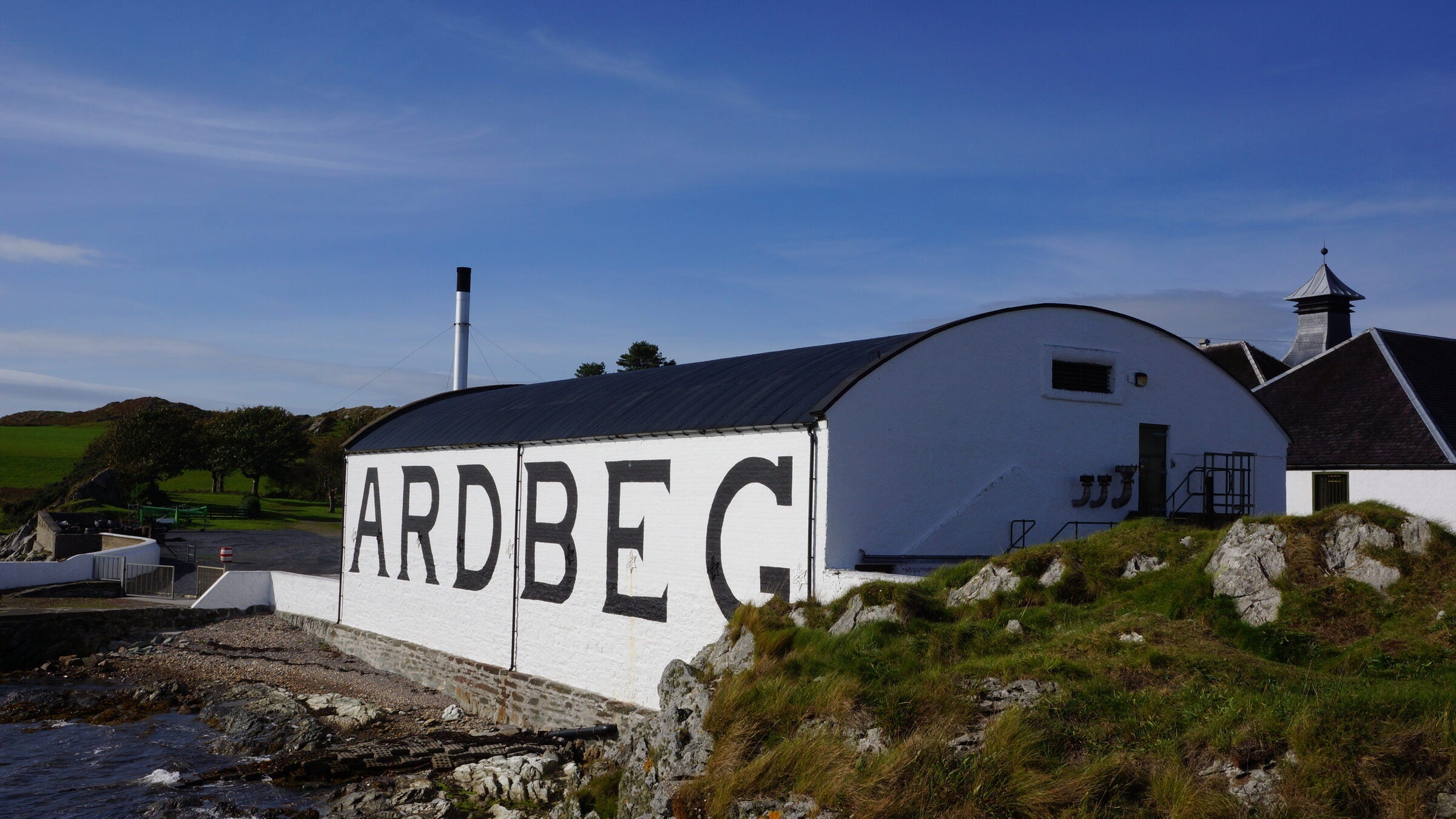
Ardbeg Distillery: The £16 Million Comeback
In July 2022 a single cask of 1975 Ardbeg sold to a private collector for £16 million, the most expensive cask of whisky ever traded. Twenty-five years earlier the entire distillery, buildings, warehouses, stock and name, had changed hands for £7 million. No distillery in Scotland tells the story of whisky's crash and comeback quite like Ardbeg, and none inspires quite the same devotion.
The whitewashed buildings at the end of the Islay coast road produce what many consider the peatiest of the great Kildalton malts, yet Ardbeg has never been a blunt instrument. A purifier on the spirit still strips out the heavier vapours before condensing, giving the spirit a lighter, citrus-edged sweetness that cuts through all that tar and smoke, which is why the faithful, more than a few of whom have the distillery's name tattooed somewhere about their person, insist there is nothing else like it. Here is the full story, including an honest account of what it takes to own a cask.
Ardbeg at a glance
| Region | Islay, easternmost of the three Kildalton distilleries beyond Port Ellen |
| Founded | 1815 by John McDougall; illicit distilling is commonly said to have taken place on the site before then, though no primary record has been publicly identified to confirm a specific date |
| Owner | The Glenmorangie Company, part of LVMH since 2004 |
| Capacity | Roughly doubled by the 2021 stillhouse; typically quoted at around 2.4 million litres of pure alcohol a year |
| Stills | Four since 2021 (two wash, two spirit), the spirit stills carrying Ardbeg's famous purifier pipe |
| Water source | Loch Uigeadail and Loch Airigh Nam Beist in the hills above the distillery |
| Fermentation | Long, around 66 to 71 hours in Douglas fir washbacks |
| Malt spec | Heavily peated, typically quoted at 50 to 55 ppm, from Port Ellen Maltings |
| Style | Intensely smoky yet citric and sweet; tar, brine, lime and cocoa |
| Visitor centre | Yes, opened 1998, with the well-loved Old Kiln Café |
Ardbeg from above
Ardbeg sits where the coast road runs out, the last of the three Kildalton distilleries, and from the air you can see why sailors used its kiln pagodas as a landmark. Our drone flew the shoreline to capture the huddle of white buildings between the rocks and the peat hills behind.
History
The name comes from the Gaelic An Àird Bheag, the small headland, and whisky was likely being made on it before anyone asked permission: illicit distilling is commonly cited as having taken place here from as early as 1794, a date repeated across many published distillery histories, though we have not been able to trace it back to a primary excise or estate record, so it is best read as a widely held tradition rather than a documented fact. What is well documented is that illicit distilling was rife across this stretch of Islay through the late eighteenth century, with parliamentary papers recording dozens of stills confiscated on the island around 1799. John McDougall put the Ardbeg business on a legal footing in 1815, and his family ran it for the better part of 150 years, a remarkable stretch of continuity in an industry that changed hands constantly. By the time Alfred Barnard toured Scotland's distilleries in the 1880s, Ardbeg was among the biggest producers on Islay, making around 300,000 gallons a year with some 60 workers, and its own school on site for the village children.
The twentieth century was less kind. Distillers Company and Hiram Walker took minority stakes in 1959, Hiram Walker assumed full control in 1979, and then came the industry-wide crash: Ardbeg was mothballed in 1981, just as the whisky loch was at its deepest. Allied Distillers restarted the stills on an intermittent basis from 1989, but the distillery limped along at a fraction of capacity and closed again in 1996. For a while it looked entirely plausible that Ardbeg would follow Port Ellen, its neighbour along the coast, into silence for good.
The rescue came in February 1997, when The Glenmorangie Company bought the distillery for £7 million, a price that included maturing stock, and one that looks almost comical against the £16 million a single 1975 cask fetched in 2022. Glenmorangie restarted production that summer, opened the visitor centre and Old Kiln Café in 1998, launched the modern Ardbeg Ten in 2000 and founded the Ardbeg Committee the same year, a worldwide supporters' club that now numbers well into six figures. When LVMH bought Glenmorangie in 2004, Ardbeg came with it, and the luxury group has invested steadily since: a new stillhouse, unveiled in 2021 on the site of an old warehouse, doubled the stills from two to four and roughly doubled capacity. Demand, by all accounts, still runs ahead of supply.
Two smaller stories say a lot about the brand's confidence. In 2011 Ardbeg sent vials of new-make spirit and oak to the International Space Station to study maturation in microgravity, the samples returning to earth in 2014. And in 2008 Jim Murray's Whisky Bible named Ardbeg Ten its World Whisky of the Year, with Uigeadail taking the same title the following year, not bad for a distillery that had been all but dead a decade earlier.
How Ardbeg makes its whisky
Ardbeg's soft, peat-stained water rises in Loch Uigeadail and Loch Airigh Nam Beist in the hills behind the distillery, two names whisky drinkers will recognise from the labels they later inspired. The malt comes along the road from Port Ellen Maltings, peated heavily to a specification typically quoted at 50 to 55 ppm, among the highest of any established Islay distillery.
From there, everything is calibrated to stop all that smoke becoming a bludgeon. Fermentation is long, around 66 to 71 hours in Douglas fir washbacks, building the fruity, acidic backbone beneath the peat. The celebrated trick is on the spirit stills: a purifier pipe fitted to the lyne arm catches the heavier vapours and returns them for another pass, refining the spirit while preserving an oily, textural quality. It is the purifier that gives Ardbeg its signature paradox, ferocious smoke wrapped around a sweet, citric, almost delicate core. The spirit is filled mostly into ex-bourbon casks, with sherry wood reserved for the likes of Uigeadail, and a good deal of it still matures on site in dunnage and racked warehouses within earshot of the sea.
What does Ardbeg taste like?
Pour Ardbeg Ten next to its Kildalton neighbours and the family resemblance is obvious but the accent is unmistakable. Where Lagavulin is broad and baritone and Laphroaig leads with iodine and hospital gauze, Ardbeg is the sharp one: tarry rope and bonfire smoke shot through with lime, green apple and pear, then black pepper, dark chocolate and espresso, finishing long, ashy and saline. The Ten shows the house style at its clearest, huge peat at ten years old, yet somehow zesty rather than heavy. Uigeadail folds in sherry-cask raisin and treacle depth; Corryvreckan, drawn partly from French oak, is darker, peppery and muscular; An Oa rounds the edges for newcomers. The occasional Supernova bottlings push the peating far beyond even the standard spec, for those who want to know where the far end of the scale lies.
Ardbeg and independent bottlers
There was a time when independent Ardbeg was almost commonplace. During the Hiram Walker and Allied years, casks flowed out to brokers and blenders, and the great independent houses bottled 1970s Ardbeg that has since become the stuff of legend, the very stock from which that £16 million cask came. Those days are over. Since the 1997 rescue, and especially under LVMH, casks of Ardbeg have been kept on a very short lead, and the trickle that does reach the independent market almost never carries the distillery's name.
Instead, the whisky travels under cover. Bottlers use pseudonyms, most commonly variations on "Kildalton", after the parish the distillery calls home, for casks that cannot be labelled with the A-word for trademark and contractual reasons. Seasoned Islay drinkers know exactly how to read these labels: a heavily peated south-coast single malt from the right vintage, at the right price, wearing a polite disguise. It is one of the whisky trade's more enjoyable open secrets, and it is precisely how we came to bottle it ourselves.
The Single Cask and Ardbeg
We have bottled this distillery once, and true to form we could not put its name on the label. Our Kildalton 15 year old, cask 5262 was distilled in 2005, matured in a single hogshead for fifteen years and bottled for our Signature Series at a cask strength of 54.2%, natural colour, no chill filtration, exactly as we bottle everything. It sold through quickly, which will surprise nobody who knows what "Kildalton" means, and it remains one of the bottlings we are asked about most often.
Casks like 5262 do not come along on any schedule. When peated Islay stock of this pedigree surfaces at honest money we move quickly, and it tends to reach our mailing list and cask customers before it ever reaches the website. If a heavily peated south-coast Islay cask is what you are after, telling us now is considerably more effective than waiting for the next one to appear in stock.

Collectability and cask ownership
Ardbeg sits in the very top tier of collectable Scotch. The Committee Releases and annual Ardbeg Day bottlings sell out in hours and trade briskly on the secondary market; discontinued expressions like Airigh Nam Beist and the early Supernovas have become minor cult objects; and 1970s distillery bottlings command five-figure sums at auction. The 2022 sale of Cask No. 3, a 1975 butt bought by a private collector for £16 million, remains the highest price ever paid for a single cask of whisky anywhere in the world.
It is worth being clear-eyed about what that headline does and does not mean for cask buyers. That price reflected a unique survivor from a silent era at a legendary distillery, not the going rate for peated Islay stock, and nobody should buy a cask expecting it. Modern Ardbeg casks are extremely scarce on the open market, which is why most opportunities in this style come via undisclosed or teaspooned parcels; provenance checking matters enormously, and if an offer seems too good to be true it usually is. Above all, remember that cask ownership involves risk and values can go down as well as up, and nothing on this page is financial advice. If you are weighing up a first purchase, our plain-English guide to cask sizes and types is the sensible place to start, and we are always happy to give a straight opinion on anything you have been offered, including by other people.
Visiting Ardbeg
Ardbeg is the last stop on one of the great whisky roads: the three miles east from Port Ellen past Laphroaig and Lagavulin, with the distillery's pagodas marking the end of the tarmac. The visitor centre runs tours and tastings year round, and the Old Kiln Café, set in the former malting kiln, has a fair claim to being the best lunch on Islay, no small thing on an island where a bowl of soup can require planning. Ardbeg Day, held on the final Saturday of the Feis Ile festival each spring, turns the courtyard into one of the great parties in whisky, complete with its own festival bottling. If you have the legs for it, the walk up to Loch Uigeadail repays the effort with the whole Kildalton coast spread out below.
Ardbeg FAQs
Who owns Ardbeg distillery?
The Glenmorangie Company, which rescued Ardbeg from closure in 1997 for £7 million and has been part of the French luxury group LVMH since 2004.
How peaty is Ardbeg?
Very. The malt is peated to a specification typically quoted at 50 to 55 ppm, among the highest of the established Islay distilleries, though long fermentation and the purifier pipe keep the spirit citric and balanced rather than simply brutal.
Why do independent bottlings of Ardbeg say "Kildalton"?
Casks of Ardbeg cannot usually be sold under the distillery's trademarked name, so independent bottlers use cover names, most often variations on Kildalton, the parish where the distillery stands. Our own 2005 bottling was released as Kildalton 15 year old for exactly this reason.
Can you buy a cask of Ardbeg?
Rarely, and almost never under the distillery's name. Genuine parcels do surface as undisclosed or teaspooned casks, but they are scarce and provenance matters enormously. Ask us before committing to anything, we are happy to give an honest view.
What happened when Ardbeg closed?
Ardbeg was mothballed in 1981 during the industry downturn, ran only intermittently from 1989 and closed again in 1996. Glenmorangie bought and revived it in 1997, and the scarcity of whisky distilled during those silent decades is a large part of why old Ardbeg fetches such extraordinary prices today.
Can you visit Ardbeg distillery?
Yes. The visitor centre opened in 1998 and runs tours and tastings year round, alongside the Old Kiln Café. Ardbeg Day, on the last Saturday of Feis Ile, is the biggest event in the distillery's calendar.
Own a piece of Ardbeg
You cannot often buy a cask with Ardbeg's name on it, but the whisky itself does reach private hands more often than the label suggests, and we have bottled it before. If a heavily peated Kildalton-coast cask belongs in your plans, read our guide to buying a whisky cask, then get in touch and tell us what you are looking for. We taste everything we buy, we bottle at natural strength and colour, and when the next cask 5262 crosses our path, the people who asked first will hear about it first.
If you're an independent bottler building out an Islay or Kildalton-coast portfolio, sourcing genuinely provenanced casks like this is exactly the kind of work we do day to day: see how we source, store and bottle for independent bottlers.
Work with The Single Cask
Buy a whisky cask, bottle under your own label, or store casks in our HMRC approved bonded warehouse in Fife.
Read more
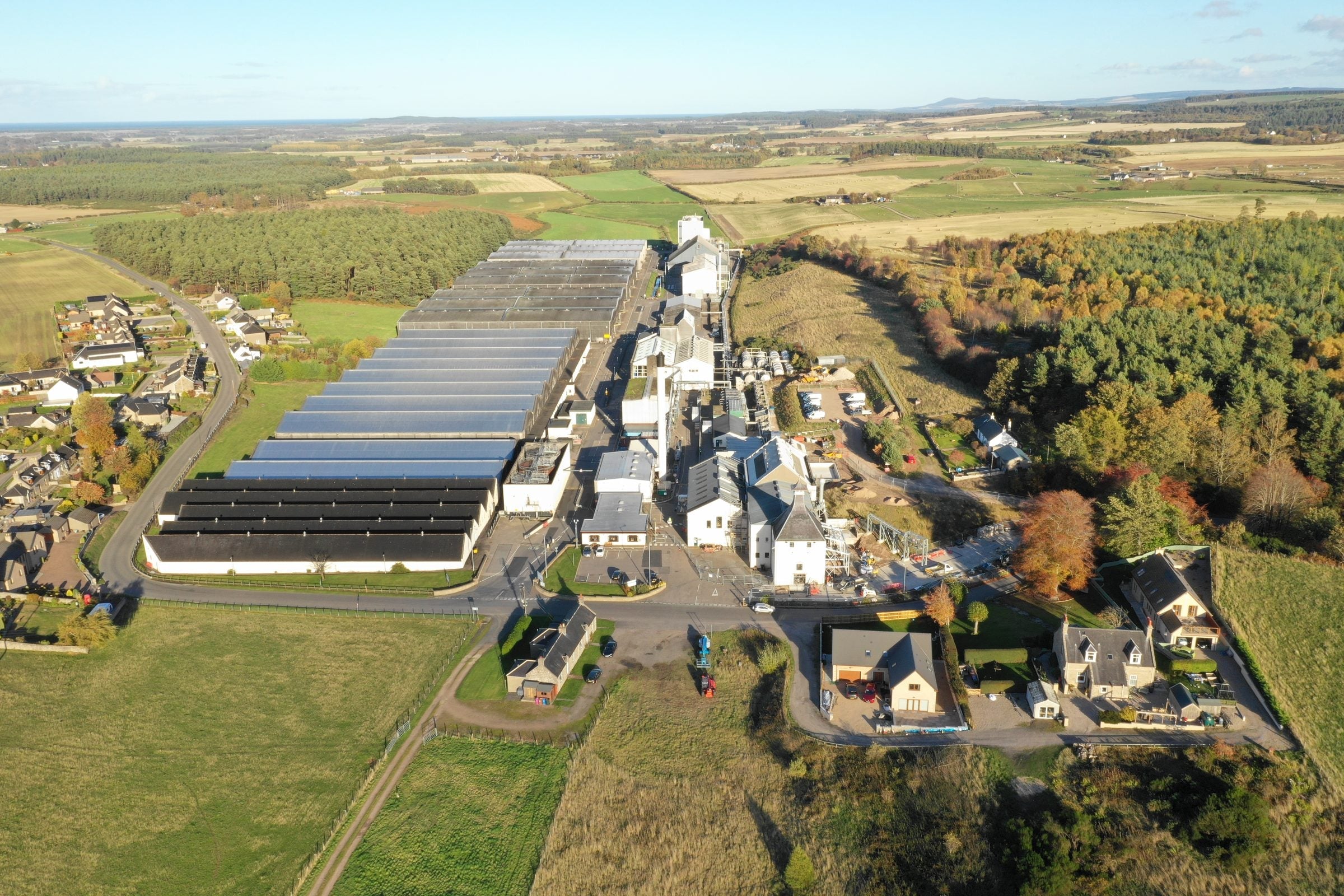
Mannochmore Distillery: The Quiet Speysider Behind the Black Whisky
Mannochmore made Loch Dhu, the notorious black whisky, but its real story is a light, floral Speyside spirit that blenders have trusted for fifty years. We have bottled more than a dozen casks of i...
Read more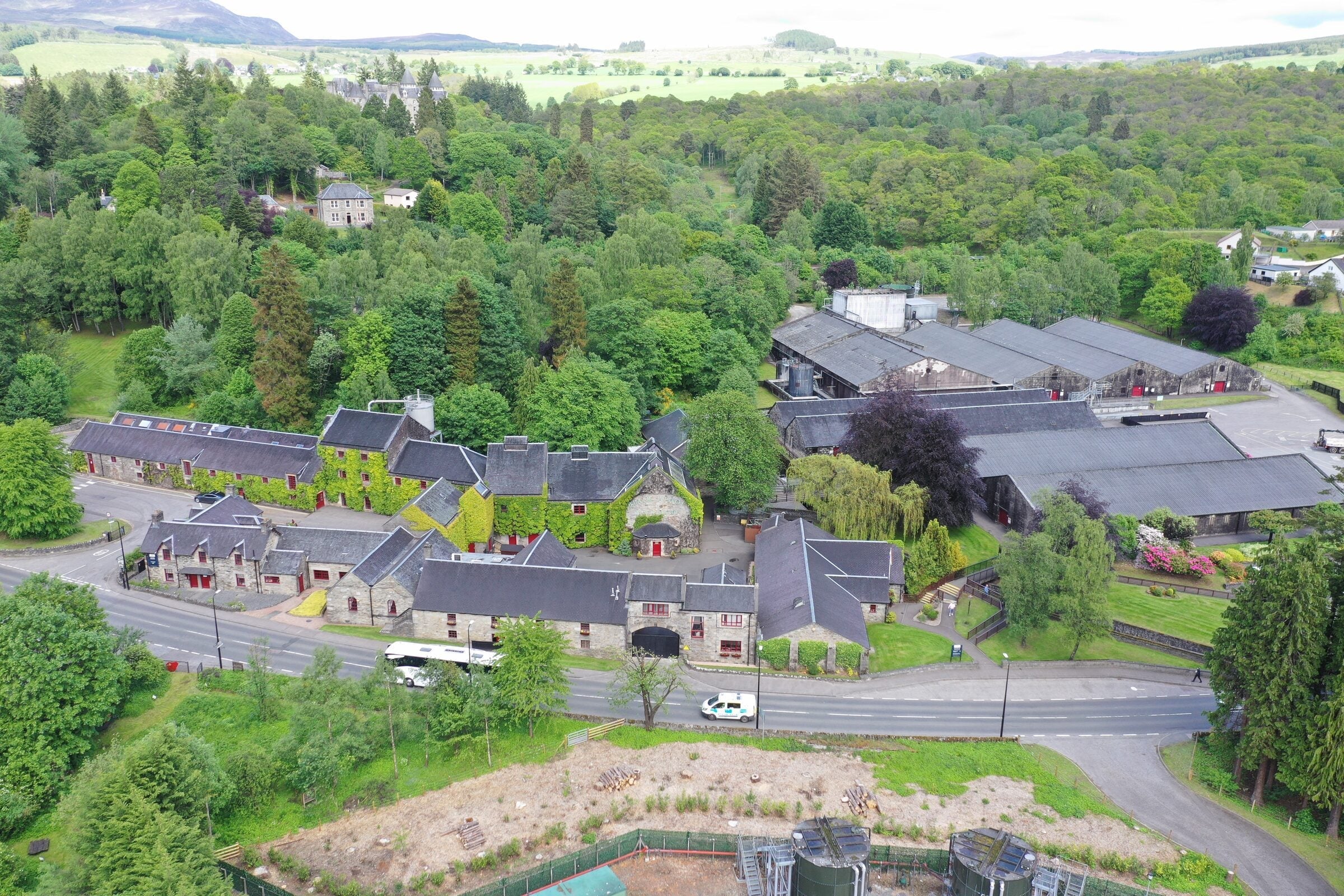
Blair Athol Distillery: The Highland Heart of Bell's
Everyone has tasted Blair Athol; almost nobody knows it. Here is the story of the Pitlochry distillery behind Bell's, its nutty, sherry-loving malt, our dozen-plus single cask bottlings of it, and ...
Read more


