
Glen Grant Distillery: The Major's Tall Stills and Italy's Favourite Malt
James Grant, the man everyone in Rothes called "The Major", was the first person in the Scottish Highlands to own a motor car and the man who wired his own distillery for electric light before most Scottish towns had it. He also designed a set of stills so distinctive, tall, slender, fitted with purifying chambers that nobody else was using, that they still define the taste of Glen Grant a century and a half later. Few distillers have left so personal a fingerprint on a whisky.
Glen Grant is also, almost uniquely among Speyside names, a genuine mass-market phenomenon: it has spent decades as one of the best-selling single malts on earth, powered largely by a devoted following in Italy that most British drinkers barely know exists. This guide covers the Grant family's remarkable run, how the whisky is made, what it tastes like, and our own experience bottling it.
Glen Grant at a glance
| Region | Speyside (Rothes, Moray) |
| Founded | 1840, by brothers John and James Grant |
| Owner | Gruppo Campari, since 2006 |
| Capacity | Around 6.2 million litres of pure alcohol a year |
| Stills | 8, tall and slender, fitted with distinctive purifiers |
| Water source | Private springs and the Black Burn |
| Fermentation | Around 48 hours in wooden washbacks |
| Malt spec | Unpeated, at less than 1ppm |
| Style | Light, clean and apple-fresh, with barley sweetness and a floral lift |
| Visitor centre | Yes, with Victorian gardens laid out by "The Major" himself |

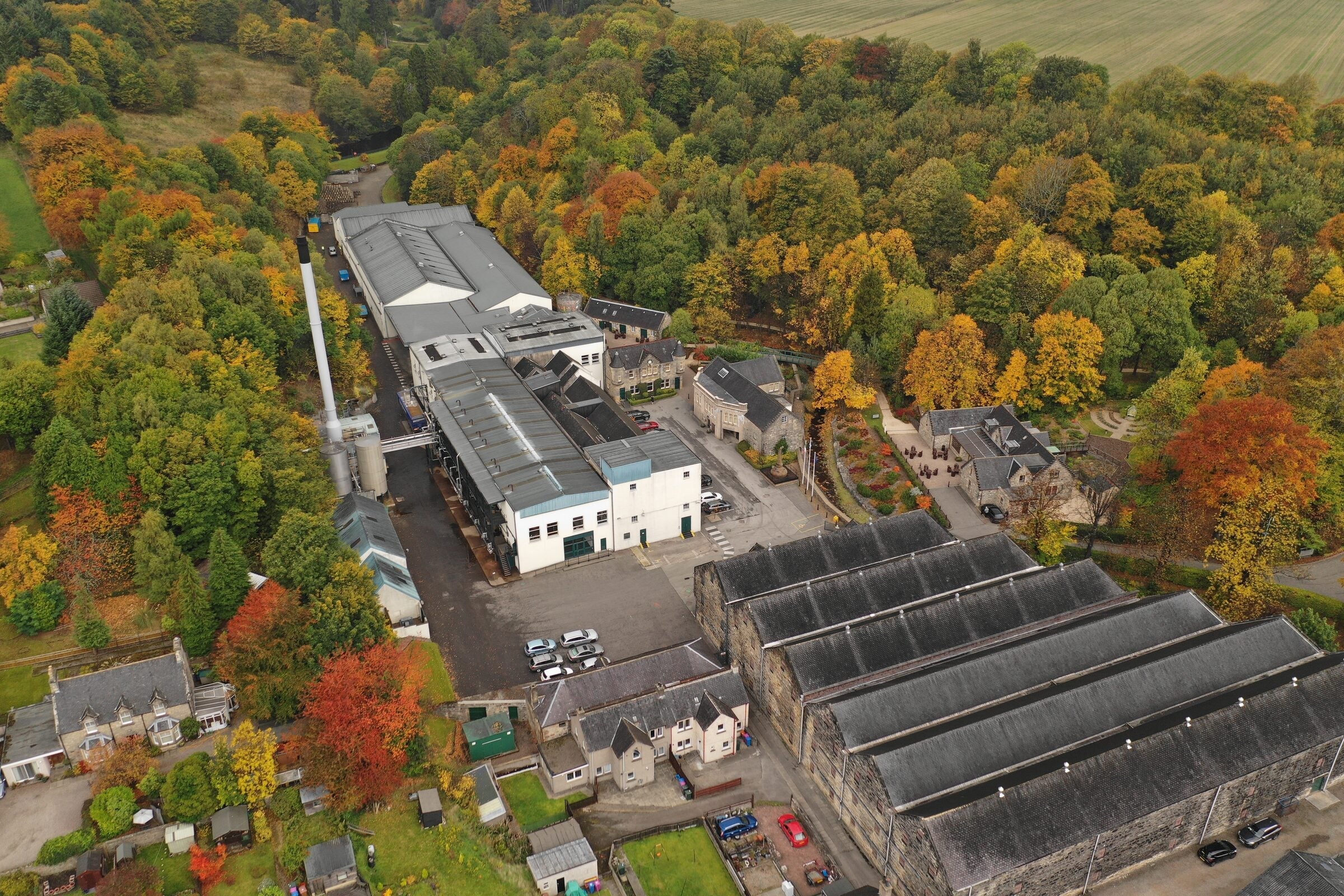
Glen Grant from above
Rothes has more distilleries than almost anywhere else in Scotland, and Glen Grant sits right at its heart, its whitewashed still house and pagoda visible for miles around. Our drone footage takes in the famous gardens too, the sweep of lawns and woodland that "The Major" laid out more than a century ago and that the distillery still maintains today.
History of Glen Grant
Brothers John and James Grant were, by most accounts, former illicit distillers who decided the legal route made better business sense, and in 1840 they built Glen Grant at Rothes, a location chosen with a shrewd eye for logistics: good water, good barley country, and the port of Garmouth nearby for trade. The distillery prospered steadily under the founders, but it was James's nephew, also James, who turned Glen Grant into a legend.
Inheriting the business and the "Glengrant" name from his uncle John in 1872, "The Major", as he was universally known, proved to be one of the great characters of Victorian whisky. He was restlessly inventive: the first man in the Highlands to own a motor car, the first to install electric light at his distillery, and the designer of the tall, slender stills with distinctive purifying chambers that remain Glen Grant's signature to this day, engineering choices that strip the spirit back to something exceptionally clean and light. He also poured his energy into the grounds around the distillery, building elaborate Victorian gardens complete with an orchard, a waterfall and a small safe cut into the rock behind it, where he is said to have kept whisky hidden so that any visitor who followed him on his evening walk might be offered a dram straight from the source. That blend of engineering seriousness and personal generosity became something of a house trait, one that later custodians of the distillery have worked hard to preserve even as ownership passed through increasingly large corporate hands. When The Major died in 1931, having built one of the most famous distilleries in the world, his grandson Douglas Mackessack took over.
The corporate story since has been one of steady consolidation: The Glenlivet and Glen Grant Distilleries Ltd merged with Hill Thomson and Longmorn Distilleries in 1972 to form The Glenlivet Distillers Ltd, which passed through Seagram to Chivas Brothers, before Gruppo Campari, the Italian drinks giant, bought Glen Grant outright in 2006. That Italian ownership makes a certain historical sense: Glen Grant has been enormously popular in Italy for decades, at various points outselling every other single malt on the market there, a piece of whisky trivia that surprises most people who have never encountered it outside a Speyside tasting.
How Glen Grant makes its whisky
Everything about Glen Grant's process is built to preserve The Major's original vision of a clean, fresh, apple-bright spirit. The eight stills are unusually tall and slender for Speyside, each fitted with a purifier, a small chamber in the neck that returns heavier vapours to the pot rather than letting them pass into the spirit. The result is a new make of real purity: light, fruity and precise, made from unpeated malt at less than 1ppm and fermented for around 48 hours in traditional wooden washbacks.
Water comes from private springs and the Black Burn near the distillery, and warehousing is a mix of traditional dunnage and racked storage. Master distiller Dennis Malcolm, who was born at the distillery in 1946 and has worked there since 1961, longer than almost anyone else in the Scotch industry, oversees a production philosophy that has changed remarkably little since The Major's day: keep the spirit light, keep the stills as they were built, and let long, patient maturation do the rest.

What does Glen Grant taste like?
Fresh green apple is the calling card, crisp and slightly tart, alongside pear, barley sugar, light honey and a floral, almost herbal lift. The purifier-driven stills keep the spirit remarkably free of heaviness even at higher strength, which is why Glen Grant ages so gracefully in both refill and first-fill casks: the fruit stays bright well into its second and third decades, gaining vanilla, baked apple and gentle spice rather than turning oaky or dull.
The core range spans everything from lightly aged, easy-drinking expressions built for the Italian and wider European market through to serious single cask releases at real age, and independent bottlers regularly find exceptional, long-matured Glen Grant that rewards real patience. It is a distillery that proves purity and complexity are not opposites.
What makes this especially interesting for cask buyers is how differently Glen Grant behaves depending on the wood. In refill casks, the spirit barely changes character for years, staying crisp and appley long after other Speyside malts would have rounded off into simple sweetness; that longevity is precisely why so many exceptional old bottlings exist. In first-fill sherry or bourbon oak, the same spirit takes on colour and richness far faster, gaining dried fruit, toffee and baking spice while somehow keeping that core freshness intact underneath. Few distilleries offer such a clear demonstration of what cask choice actually does to a whisky.
Glen Grant and independent bottlers
Because so much Glen Grant is produced and comparatively little is held back for prestige official releases, casks circulate steadily through the broker market, and the distillery is a longstanding favourite of independent bottlers who prize its clean, long-lived spirit. Gordon & MacPhail, based just up the road in Elgin, have an especially deep Glen Grant history, and the whisky's reputation for exceptional old age, malts from the 1950s and 1960s occasionally surface and sell for serious money, has made it a name collectors watch closely even though everyday bottlings remain genuinely affordable.
The distillery's location in Rothes puts it in immediate company with some of Speyside's other great independent-bottler favourites. Drinkers who enjoy exploring Craigellachie's meatier style or Glenfarclas's sherried richness often come to Glen Grant as the lighter, more precise counterpoint: proof that Rothes alone can offer almost the full range of what Speyside whisky can be.
The Single Cask and Glen Grant
We have bottled two Glen Grant single casks, both from the mid-1990s and both showing just how well this distillery's clean spirit carries real age. The first, cask 67813, is a 20 year old distilled in 1996 and bottled at 50.0%. The second, cask CA1695, is a 22 year old from the 1995 vintage, bottled at a cask strength of 52.0% for our Signature Series with an outturn of 85 bottles: cinnamon rolls, brioche and baklava on the nose, a rich, buttery palate with a hint of earthy spice, and a subtly floral, malty finish. Both casks show the pattern that makes older Glen Grant so compelling: the apple-fresh new make character never disappears, it simply gathers weight and warmth around it.

Collectability and cask ownership
Glen Grant occupies an unusual position for a distillery of its size and fame: everyday bottlings remain genuinely accessible, while well-aged examples, particularly pre-1970s releases and rare independent bottlings, command serious prices at auction. That gap between mass-market visibility and connoisseur-grade scarcity at the top end gives the auction market real depth without pricing out newcomers.
Cask ownership follows a similar logic: Glen Grant's clean, purifier-driven spirit is exceptionally well suited to long maturation, which is precisely what makes patient casks so rewarding, and precisely why they should be approached carefully. Whisky cask ownership is unregulated, values can go down as well as up, storage and insurance cost money every year, and nothing in this article is financial advice. Verifiable provenance and honest paperwork matter more than a famous name, so start with our guide to cask sizes and types and deal only with sellers who will show you the documents.
Visiting Glen Grant
Glen Grant is one of Speyside's essential visits, and not only for the whisky. The Major's Victorian gardens, restored and reopened to the public, are a genuine attraction in their own right: woodland paths, an orchard, a waterfall and the little rock-cut safe where he is said to have kept a dram waiting for thirsty visitors. The distillery sits in the middle of Rothes, one of Speyside's most densely packed whisky towns, making it easy to combine with a visit to Craigellachie or other nearby names on the same trip.
Glen Grant FAQs
Who owns Glen Grant?
Glen Grant has been owned by Gruppo Campari, the Italian drinks group, since 2006. It is Campari's only single malt Scotch whisky brand. Before that it passed through Seagram and Chivas Brothers, having originally been built and run by the Grant family.
What does Glen Grant taste like?
Light, clean and apple-fresh, with pear, barley sugar, honey and a floral lift. The distillery's tall, purifier-fitted stills keep the spirit remarkably pure even at real age, so older Glen Grants gain warmth and complexity without losing that bright fruit character.
Why is Glen Grant so popular in Italy?
Glen Grant has been marketed heavily in Italy for decades and became, at various points, the best-selling single malt in the country, a rare example of a Speyside distillery achieving genuine mass-market status outside Britain. Campari's 2006 purchase built on that existing relationship.
Can you visit Glen Grant distillery?
Yes. The visitor centre in Rothes includes tours, tastings and the distillery's celebrated Victorian gardens, laid out by James "The Major" Grant in the nineteenth century and open to the public today.
Is Glen Grant peated?
No. Glen Grant uses unpeated malt at less than 1ppm. Its character comes from the distillery's distinctive tall, purifier-fitted stills rather than smoke.
Can I buy a cask of Glen Grant?
Yes, more readily than many famous Speyside names, since Glen Grant produces a large volume and casks circulate through brokers regularly. As always, verify provenance and paperwork through a reputable specialist before committing.
Own a piece of Glen Grant
Glen Grant proves that a whisky can be both a global bestseller and a connoisseur's secret, depending on which bottle you reach for. If our two single casks have shown you the quieter, more patient side of this distillery, the next step is a cask of your own. The Single Cask helps clients buy whisky casks with verified provenance, store them in our bonded warehouse and bottle them under their own label when the whisky is ready.
Read first, buy second: our guides set out the costs and the risks in plain English, and when you are ready for a straight conversation about owning a cask of Glen Grant or any other Speyside malt, contact us.
Work with The Single Cask
Buy a whisky cask, bottle under your own label, or store casks in our HMRC approved bonded warehouse in Fife.
Read more
The English Whisky Co: The Norfolk Farm That Brought Whisky Back to England
The English Whisky Co. guide: how the Nelstrop family built England's first whisky distillery in a century at Roudham, Norfolk — the Forsyths stills, Breckland water, peated and unpeated styles, ou...
Read more
Clynelish Distillery: The Waxy Highland Malt Beside a Legend
Clynelish guide: the distinctive waxy character no other distillery replicates, the shared history with the legendary Brora next door, what it tastes like, and our own cask-strength bottling.
Read more


