
Article: Dalwhinnie Distillery: The Highest, Loneliest Still in Scotland
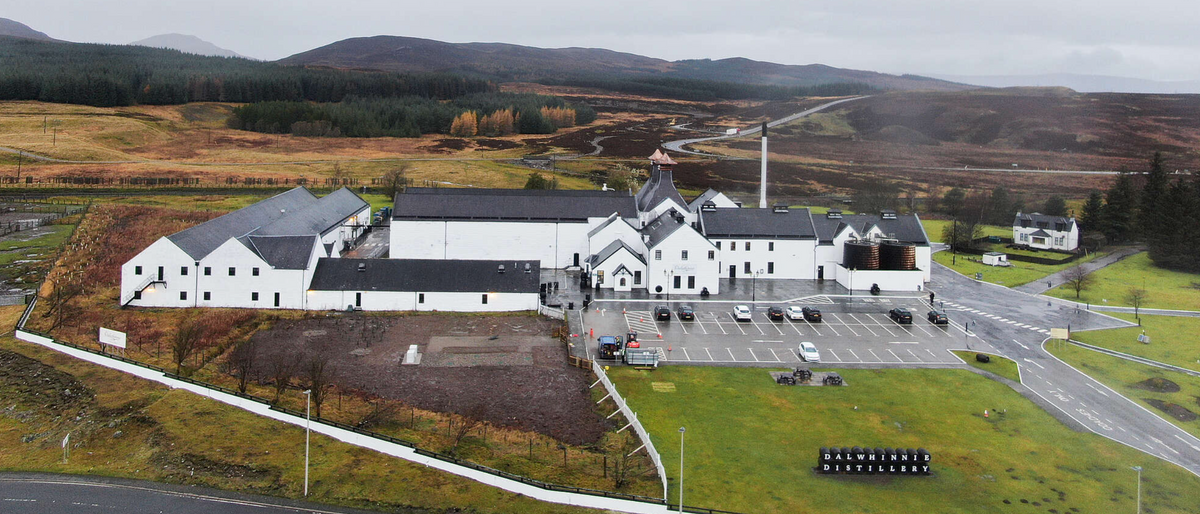
Dalwhinnie Distillery: The Highest, Loneliest Still in Scotland
Dalwhinnie sits in the middle of nowhere on purpose. At 326 metres above sea level it is the highest distillery in Scotland, built where the main road and railway between the Lowlands and the Highlands cross a bleak, exposed stretch of moor near the Grampian watershed. The location is hard on the people who work there and, historically, it was hard on the business too. The original venture went bankrupt within months of its first distillation in 1898. It has kept making whisky for well over a century since, and today it stands as one of Scotland's six original Classic Malts, though that says more about Diageo's marketing than about Dalwhinnie ever being an easy place to run.
Dalwhinnie at a glance
| Region | Highland |
| Founded | 1897, first distilled February 1898 |
| Founders | John Grant, George Sellar and Alexander Mackenzie, as the Strathspey Distillery |
| Altitude | 326m (1,070ft), the highest distillery in Scotland |
| Owner | Diageo (since 1997) |
| Stills | 1 wash, 1 spirit, among the smallest pairs working in Scotland |
| Classic Malts status | Since 1989 |
| Visitor access | Yes, Diageo-run visitor centre |

History of Dalwhinnie
John Grant, George Sellar and the architect Alexander Mackenzie financed the original Strathspey Distillery for around £10,000, and production started in February 1898. Their timing was dreadful. They opened at the peak of the 1890s whisky boom, and the venture was in liquidation within months as the market turned. A. P. Blyth bought it later in 1898, renamed it Dalwhinnie and tried to steady it, before the American firm Cook and Bernheimer bought it at auction in 1905. It did not return to Scottish ownership until 1919, when Sir James Calder's Macdonald Greenlees took it on. By then Dalwhinnie whisky had become a core component of James Buchanan's Black & White blend, and that blend is what kept the distillery alive through its most precarious early decades.
Distillers Company Ltd acquired Macdonald Greenlees in 1926, folding Dalwhinnie into the conglomerate that came to own most of Speyside and the Highlands. A fire closed the distillery for four years from 1934, and wartime barley restrictions shut it again in the early 1940s. Ownership passed to United Distillers in 1987 and then to Diageo in 1997. The turning point for Dalwhinnie's public profile came in 1989, when United Distillers chose it to represent the Highlands in the new Classic Malts range, the marketing push that turned half a dozen obscure single malts into recognisable names almost overnight.

How Dalwhinnie makes its whisky
Dalwhinnie runs one of the smallest still pairs working in Scotland, a 17,000 litre wash still and a 14,000 litre spirit still, which is part of why the distillery has such modest output despite its fame. Its condensers have an unusually well documented history. The distillery ripped out its traditional worm tubs for modern shell-and-tube condensers during a 1987 modernisation, then put worm tubs back in a 1995 refit to restore the heavier, more characterful spirit they produce. Water comes from the lochans and burns around the distillery, and the altitude and cold climate mean maturation behaves differently here than in a lowland warehouse. It runs slower, and by Diageo's own account that is part of what gives Dalwhinnie its honeyed, heather-and-heath character.
Dalwhinnie and independent bottlers
Most of Dalwhinnie's output has always gone into Diageo's own single malt and into blends, Buchanan's Black & White among them, so you see it less often as an independent single-cask release than many of its Highland neighbours. It does turn up now and then through established independent bottlers such as Signatory Vintage and Cadenhead's, but availability is thinner than the name recognition would suggest. Dalwhinnie is a Diageo flagship first and an independent bottler's distillery a distant second.
Dalwhinnie and The Single Cask
We don't hold a Dalwhinnie cask ourselves. Diageo keeps tight control of where this one goes, and independent stock is uncommon. If it is the light, honeyed, classically Highland character you are after, our Royal Brackla 9 Year Old (cask 300166) is a closer and more accessible match than it might look on paper. Royal Brackla is another historically blend-focused Highland distillery with a similarly gentle, approachable profile, and we can trace its stock back directly.

Plan a bottling inspired by Dalwhinnie
Dalwhinnie survived bankruptcy, fire and wartime restrictions, and through all of it casks of whisky kept quietly maturing somewhere remote while the world around them changed. If you want a more direct hand in what happens to a cask of your own, start with our whisky casks available page, or read about buying a whisky cask and the four steps to bottling your own whisky. For something under your own name, our private label whisky service covers that end to end. For more on the Highland region, see our guides to Royal Brackla and Ardmore.
We bottle whisky from casks we own ourselves, and we also supply casks to independent bottlers and to private customers who want a bottling under their own name. If you are an independent bottler looking for stock, or you have always wanted a cask of your own, talk to us about what we have in the warehouse. Where we don't hold the distillery featured in a guide, we say so rather than dress something else up as a substitute.
If you have questions about any of this, or about Dalwhinnie in particular, our contact page is the fastest way to reach us.
Frequently asked questions
Is Dalwhinnie the highest distillery in Scotland?
Yes. At 326 metres (1,070 feet) above sea level it holds that title, built where the road and rail routes north cross an exposed stretch of moor near the Grampian watershed.
Can I visit Dalwhinnie distillery?
Yes. Diageo runs a visitor centre on site as part of the Classic Malts range.
Who owns Dalwhinnie now?
Diageo, since 1997. Before that it belonged to United Distillers from 1987 and to the Distillers Company Ltd, which acquired it in 1926.
Why is Dalwhinnie one of the Classic Malts?
United Distillers chose it in 1989 to represent the Highland region in the original six-strong Classic Malts range, a marketing initiative that turned several obscure single malts into recognisable names.
What does Dalwhinnie whisky taste like?
Light, honeyed and heathery. Diageo attributes much of that to cold, high-altitude maturation and the 1995 return of its worm tub condensers.
Does The Single Cask sell a Dalwhinnie cask?
Not at the moment. Diageo keeps tight control of Dalwhinnie stock, so we point customers toward our Royal Brackla 9 Year Old as a comparable, accessible Highland alternative.
Work with The Single Cask
Buy a whisky cask, bottle under your own label, or store casks in our HMRC approved bonded warehouse in Fife.
Read more
Convalmore Distillery: The Speyside Ghost That Became a Rival's Warehouse
Convalmore closed in 1985 and was bought by its Dufftown neighbour William Grant & Sons for warehouse space in 1992. History, the 1909 fire, tasting notes and how to find a bottle today.
Read more


