
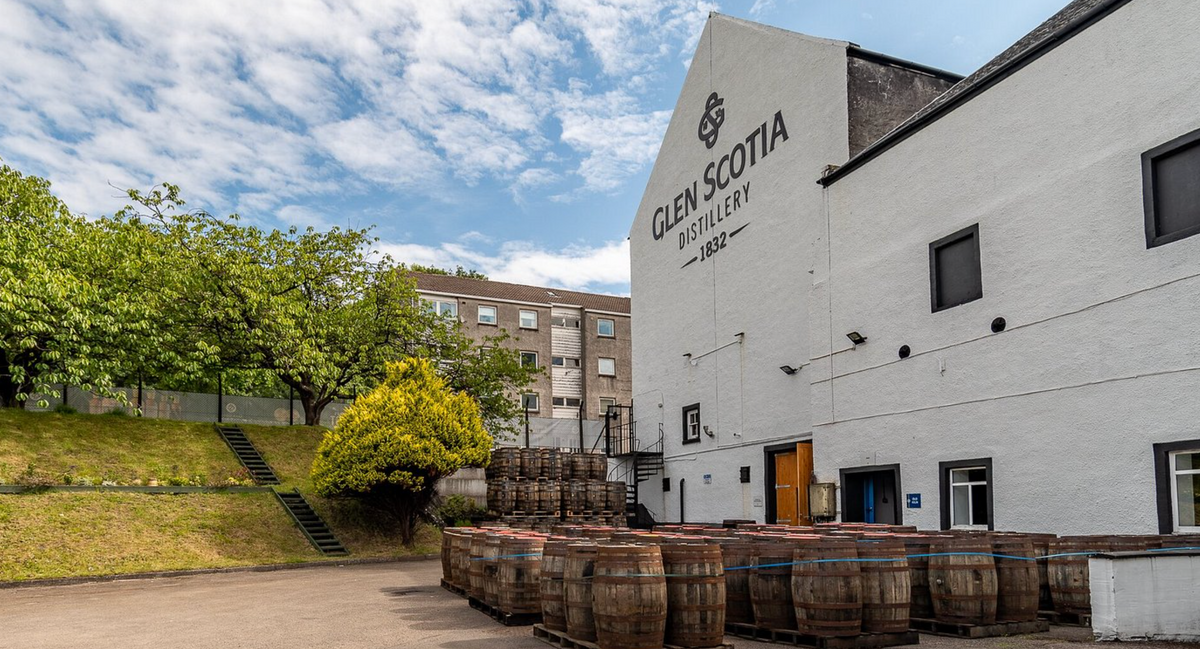
Glen Scotia Distillery: Campbeltown's Quiet Survivor
Campbeltown once had more than thirty working distilleries and called itself the whisky capital of the world. Today it has three. Glen Scotia is one of them, and the fact that it is still distilling on the same stretch of High Street where it started in 1832 says more about its history than any tasting note could.
Glen Scotia at a glance
| Region | Campbeltown, Kintyre Peninsula, Argyll |
| Founded | 1832, as "Scotia" |
| Founders | Stewart & Galbraith and Company |
| Owner | Loch Lomond Group (since 2014) |
| Status | Working, one of three distilleries left in Campbeltown |
| Style | Unpeated, medium and heavily peated expressions, toffee and maritime character |

History of Glen Scotia
Stewart & Galbraith and Company founded the distillery as "Scotia" in 1832, in a town that was then one of the busiest whisky-producing centres in Scotland. Stewart & Galbraith ran it for almost sixty years before Duncan MacCallum bought it in 1891 and built the long malting-floor frontage that still faces High Street today.
The twentieth century was unkind to Campbeltown's whisky trade, and Glen Scotia went through more owners than most surviving distilleries ever do: Bloch Brothers in 1933, Hiram Walker and Sons in 1954, A. Gillies in 1955, and a merger into Amalgamated Distilled Products in 1970. Production stopped between 1942 and 1945 during the Second World War and restarted once the war ended. A management buyout in 1987 led by Ian Lockwood kept the distillery going under the name Gibson International, and the Loch Lomond Group bought it in 2014, investing in the brand, capacity, warehousing and a visitor centre.

How Glen Scotia makes its whisky
Glen Scotia makes its spirit using unpeated, medium-peated and heavily peated malt, giving the range more stylistic breadth than a single-town distillery usually has room for. The result leans into the classic Campbeltown profile: toffee sweetness, a maritime edge from the town's coastal position, and a trace of smoke running underneath. The Victoriana expression is built as a modern take on the richer, more intensely flavoured Campbeltown malts of the Victorian era, before the industry's twentieth century collapse thinned the style out.
In 2021 Glen Scotia was named producer of the World's Best Whisky at the San Francisco World Spirits Competition and Best Scottish Whisky Distillery at the Scottish Whisky Awards in the same year, the first distillery to hold both titles at once.

Glen Scotia and independent bottlers
Campbeltown's shrunken distillery count has made every surviving name there more collectible, and Glen Scotia is no exception. Independent bottlers release it regularly, usually as single cask expressions that show off the peated and unpeated sides of the distillery's output separately, since the official range tends to blend the two.
Glen Scotia and The Single Cask
We don't currently hold a Glen Scotia cask. If you're specifically after a Campbeltown character, the best way to find out what we do hold from that region right now is to get in touch directly, since our Campbeltown stock changes as casks come in and sell.
Plan a bottling inspired by Glen Scotia
Glen Scotia's survival through five changes of ownership and the collapse of an entire regional industry around it is a reminder that a distillery's whisky can outlast the business built on top of it. If that kind of resilience appeals to you as a theme for your own bottling, start with our whisky casks available page, or read about buying a whisky cask and the four steps to bottling your own whisky. For something under your own name, our private label whisky service covers that end to end. For more on the Campbeltown region, see our guide to Springbank.
We hold a wide range of casks to sell to independent bottlers and private customers, drawn from many different distilleries, finished in a variety of wood types from sherry and port casks to bourbon and rum, with real differences in yeast and production style from one distillery to the next. If you are an independent bottler looking for stock, or you have always wanted a cask of your own, talk to us about what we currently hold in the warehouse. Where we don't hold the exact distillery featured in this guide, we say so honestly, and we're usually able to point you toward something close in style from what we do have.
If you have questions about any of this, or about Glen Scotia in particular, our contact page is the fastest way to reach us.
Frequently asked questions
Why are there so few distilleries left in Campbeltown?
Campbeltown had more than thirty distilleries at its peak but collapsed through the twentieth century due to overproduction, falling demand and the Prohibition-era loss of its American export market. Only three distilleries, including Glen Scotia, survived.
Who owns Glen Scotia now?
The Loch Lomond Group, since 2014.
Is Glen Scotia peated or unpeated?
Both. The range includes unpeated, medium-peated and heavily peated expressions.
Can I visit Glen Scotia distillery?
Yes, Glen Scotia has a visitor centre on High Street in Campbeltown, developed after the Loch Lomond Group's 2014 investment.
What does Glen Scotia taste like?
A classic Campbeltown profile of toffee sweetness and maritime character, with a smoky edge in the peated expressions.
Does The Single Cask sell a Glen Scotia cask?
Not at the moment. Contact us directly for our current Campbeltown stock.
Work with The Single Cask
Buy a whisky cask, bottle under your own label, or store casks in our HMRC approved bonded warehouse in Fife.
Read more
Dallas Dhu Distillery: History, Whisky and Its Unlikely Revival
Dallas Dhu is one of the strangest success stories in Scotch whisky. It has spent more of its life as a museum than as a working producer, and now, after more than four decades of silence, it is be...
Read more
BenRiach Distillery: Sixty-Five Years of Silence, Then Three Styles at Once
BenRiach sat silent for 65 years after its 1900 closure, kept alive only by its maltings. Revived in 1965, it now makes classic, peated and triple-distilled Speyside malt side by side.
Read more


