
Article: Loch Lomond Distillery: Eleven Whiskies, One Address
Loch Lomond Distillery: Eleven Whiskies, One Address
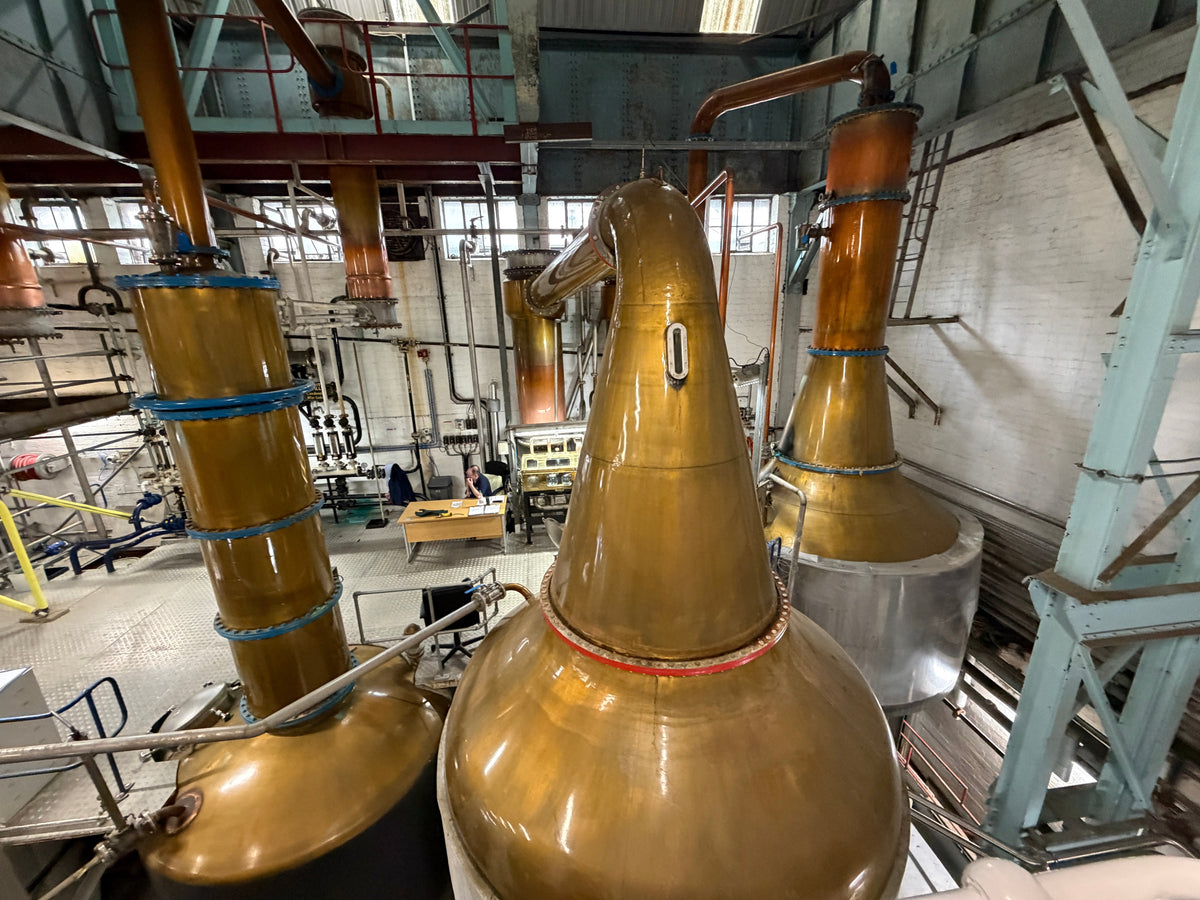
Most distilleries make one whisky. Loch Lomond makes eleven. Walk through the gates at Alexandria, on the southern edge of the loch that gives the place its name, and you will find swan neck pot stills standing next to straight neck pot stills standing next to continuous copper columns, all drawing on the same water, the same malt store, sometimes the same washbacks, and turning out spirit that ends up under half a dozen different names depending on which still made it and how heavily the barley was peated. Two of those names, Croftengea and Inchfad, are ones we have bottled ourselves, and neither tastes anything like what most people picture when they hear "Highland malt".
Loch Lomond at a glance
| Region | Highland, Alexandria, Dunbartonshire, on the southern shore of Loch Lomond |
| Founded | Usually dated to 1964 or 1965, with production starting shortly after; at least one respected source gives 1966 |
| Owner | Loch Lomond Group, backed by Hillhouse Capital since 2019, following a 2014 management buy-in |
| Capacity | Around 3 to 5 million litres of malt spirit a year, plus roughly 20 million litres of grain spirit |
| Stills | Eleven in total: traditional swan neck pot stills, unique straight neck pot stills (with and without cooling rings), and continuous copper column stills |
| Water source | Borehole |
| Fermentation | A minimum of 70 hours for malt spirit, 60 hours for grain |
| Malt spec | Mostly unpeated, with seasonal peated runs at around 25ppm and 50ppm or more feeding the smokier styles |
| Style | Varies enormously by still and peating level, from light and fruity to heavily peated and maritime |
| Visitor centre | No, the distillery is a working production site and is not currently open to the public |
History
Loch Lomond's roots run through Littlemill, the old Bowling distillery whose owner, the American chemist and distiller Duncan Thomas, wanted somewhere to put his experiments in still design into full production. Loch Lomond was built in the mid 1960s, funded partly by the Chicago drinks firm Barton Brands, and it took the unusual step of installing straight neck pot stills, a design Thomas had already trialled at Littlemill, alongside a small set of conventional pot stills. Barton took full control in 1971 and ran the site until the wider industry downturn of the early 1980s forced a closure in 1984.
Ownership changed hands twice in quick succession after that: Inver House bought the distillery in 1985, then sold it on almost immediately to Glen Catrine Bonded Warehouse in 1986, the company that has run it, under various corporate names, ever since. Production resumed in 1987, and the distillery kept adding capability rather than simply reopening as it had been. Grain whisky production started in 1993, making Loch Lomond the only site in Scotland producing both malt and grain spirit side by side by 1994, and further stills went in during 1999 and again in 2016. When Littlemill itself finally closed for good in 1997 and burned down in a 2004 fire, much of its whisky heritage, and reportedly some of its stock, passed to Loch Lomond, tying the two distilleries together even after one of them stopped existing.
A 2014 management buy-in, led by chief executive Colin Matthews with backing from the private equity firm Exponent, brought in a team of former Diageo executives to run the business as the Loch Lomond Group. A further ownership change followed in 2019, when Hillhouse Capital, an Asia-based investment fund, backed a secondary buyout that kept the existing management in place. Throughout all of this the distillery has stayed, by its own description, self-sufficient: rather than buying in grain spirit to build blends the way most whisky companies do, Loch Lomond makes its own malt, its own grain, and blends the two under one roof.
How Loch Lomond makes its whisky
The detail that sets Loch Lomond apart from almost every other Scotch distillery is its stills, and specifically the straight neck pot stills that Duncan Thomas brought over from Littlemill. Where a conventional pot still narrows into a swan-like curve on its way to the condenser, Loch Lomond's straight neck stills run long and largely uninterrupted, maximising the copper contact and reflux the vapour experiences before it turns back to liquid. The distillery runs these in two configurations, one fitted with cooling rings for a lower, gentler collection strength of around 65% ABV, and one without them for a higher, cleaner cut closer to 85%, alongside conventional swan neck pot stills and continuous copper column stills used for both malt and grain spirit.
Between the different still types and a deliberate range of peating levels, from entirely unpeated barley up to heavily peated malt at 50 parts per million or more, Loch Lomond can produce genuinely different spirit characters from the same site on the same day. Water comes from a borehole rather than a hillside spring, fermentation runs comparatively long, a minimum of 70 hours for malt wash and 60 for grain, and none of the resulting spirit types are traded away to other distillers. Loch Lomond built its whole operation around not needing anyone else's whisky, and the range of house styles it makes is the direct result.
One distillery, several single malts
What comes off those eleven stills is bottled under several different names depending on style rather than one single "Loch Lomond" label covering everything. The core Loch Lomond range itself is the lighter, more conventional style. Inchmurrin and Inchmoan sit at different points on the peating scale, named, like several of the distillery's brands, after islands in the loch itself. Craiglodge and Old Rosdhu round out the lighter end. Then there are the two names we know best, because we have bottled both.
Croftengea is, in the distillery's own words, the most heavily peated of its eleven distillates, a genuinely smoky spirit made at a site most drinkers would never associate with peat at all. Inchfad sits alongside it as another peated style, though the distillery has largely stopped bottling it under its own name in recent years, which is part of why an independent single cask matters here: it may be one of relatively few ways left to taste it properly. Between them, Croftengea and Inchfad show a side of Loch Lomond that the mainstream range barely hints at, closer in spirit to a west coast peated malt than to anything the "Highland" region label usually suggests.
What does Loch Lomond taste like?
There is no single answer, which is rather the point of a distillery built this way. The core unpeated range leans light, malty and fruity, in keeping with the gentle collection strength off the cooling ring stills. Croftengea and Inchfad sit at the opposite end entirely: think bonfire smoke and maritime brine rather than orchard fruit, closer to an Islay dram in character even though the water and the barley never go near the sea. Our own two Croftengea casks showed that range within a single name. Cask 71, finished two years in an ex-wine barrique, layered peat around sweet orange, honey, raisin and black pepper, while cask 209, matured straight in ex-bourbon American oak, ran more maritime and savoury: sea salt, oysters, tarry rope and camphor alongside the peat. Our Inchfad, bottled young at just four years old from an ex-bourbon barrel, was a different animal again, smoky barbecued pineapple and sweet malt with white pepper and cinnamon running through the palate and finish. Three casks from the same distillery, three genuinely different whiskies.
Loch Lomond and independent bottlers
Loch Lomond's various malts turn up reasonably often on the independent market, more so than many similarly sized distilleries, and Croftengea and Inchfad specifically have built a following among indie bottlers and collectors who know to look past the "Loch Lomond" name on the label. Cadenhead's has released standard Loch Lomond single malt under its own vintage-dated labels, and specialists including North Star Spirits have bottled Inchfad, with a 15 year old 2007 vintage among the more recent examples to reach the market. It is not a distillery that floods the independent scene the way a major blending workhorse does, but it is far from closed off either, and its unusual house styles give bottlers something genuinely different to work with when a cask does come up.
 The Single Cask and Loch Lomond
We have bottled Loch Lomond spirit three times, all of it from the distillery's peated side. Cask 71 was a 12 year old Croftengea, distilled in 2007 and finished for two years in an ex-wine barrique before bottling at cask strength, 55.7%, for an outturn of 100 bottles. Cask 209 was an 11 year old Croftengea from the same 2007 distillation, matured entirely in ex-bourbon American oak and bottled at a punchier 60.2%. Both are sold out now, and we are straightforward about that rather than suggesting otherwise.
The third, and the one with the story behind it, was an Inchfad bottled at just four years old, distilled in 2016 and released at cask strength of 61.4% from an ex-bourbon barrel, with all profits from its 197 bottles donated to NHS charities during 2020. It was one of the first releases we put together once our warehouses reopened after lockdown, a small, direct way of saying thank you to frontline workers, and it happens to also be a genuine record of what young Inchfad tastes like: smoked pineapple and malt rather than the raisin and orange of the older Croftengea casks. That release, too, is long sold out.
 Collectability and cask ownership
Loch Lomond is not a distillery with the kind of headline auction history that Speyside or Islay names attract, but its peated sub-brands, Croftengea and Inchfad especially, have a genuine and growing following among collectors who like whisky that does something unexpected. Part of the appeal is scarcity: with the distillery bottling less under these names itself than it once did, an independent single cask can be one of the more reliable ways to taste them properly, which tends to support demand when one does surface.
As with any cask, that demand is not a guarantee of anything. Values can move down as easily as up, and nothing here should be read as financial advice, only as an honest account of what we have seen this distillery's whisky do on the rare occasions it has reached us or the wider independent market. If cask ownership is new territory, our guide to whisky cask sizes and types is a sensible place to start before going further.
Loch Lomond FAQs
Who owns Loch Lomond distillery?
The Loch Lomond Group, backed since 2019 by the Asia-based investment fund Hillhouse Capital, following a 2014 management buy-in led by chief executive Colin Matthews.
Why does Loch Lomond make so many different whiskies?
The distillery runs eleven stills of different designs, including its own unique straight neck pot stills, and varies peating levels across its malt intake. Combining still type with peating level produces genuinely different spirit characters, bottled under names including Loch Lomond, Inchmurrin, Inchmoan, Craiglodge, Croftengea and Inchfad.
Is Loch Lomond whisky peated?
Mostly not, but not entirely either. The core range is unpeated, while Croftengea and Inchfad are made from heavily peated malt and carry real smoke and maritime character, closer to a west coast peated style than to a typical Highland malt.
What are straight neck stills?
A distinctive pot still design, unique to Loch Lomond in Scotland, with a long, largely uninterrupted neck that maximises copper contact and reflux. The distillery runs both a cooling ring version, for a lower collection strength, and a version without, for a higher one.
Can you visit Loch Lomond distillery?
No, it is a working production site and is not currently open to the public.
Can you buy a cask of Loch Lomond, Croftengea or Inchfad?
Occasionally, through independent bottlers and specialist brokers. Croftengea and Inchfad casks in particular do reach the market from time to time, as our own three releases show. Ask us and we will tell you honestly what is realistically available.
Plan a bottling inspired by Loch Lomond
A cask specifically from Loch Lomond, Croftengea or Inchfad is not something we can promise on demand. These are not the biggest names on the independent cask market, and the peated styles that make them interesting come from a smaller slice of an already varied production run. That said, casks do surface through brokers and specialist bottlers with some regularity, as our own history with this distillery shows, so it is worth telling us if a Loch Lomond style cask is specifically what you are after.
If what draws you in is the peated, maritime character of Croftengea and Inchfad rather than the name on the label, we can also point you towards other peated casks, from Islay, Campbeltown or elsewhere, that share that smoky, briny profile. That works whether you are planning a single cask for your own collection, a private label bottling for a bar or retailer, or a small run for an event or company gift.
Either way, tell us the flavour or style you are chasing, roughly how many bottles you need, your approximate budget, a preferred bottling date, and whether the project is for a drinks brand, a retailer, a hospitality business, a company, a whisky club or purely private use. Let us know too if you will need help with naming, label design, storage or the bottling run itself. We will come back with an honest view of availability, sensible alternatives where a named distillery is not realistic, a rough idea of likely bottle yield, the main costs and stages involved, and a practical route from choosing a cask to holding finished bottles. Have a look at buying a whisky cask and our four steps to bottling your own whisky for the basics, or if you already have a brand in mind, our page on private label whisky covers how that works. When you are ready, get in touch and we will talk it through properly.
Work with The Single Cask
Buy a whisky cask, bottle under your own label, or store casks in our HMRC approved bonded warehouse in Fife.
Read more
Tomatin Distillery: History, Whisky and the Casks We've Bottled
Tomatin was Scotland's largest malt distillery and the first under Japanese ownership. Here's its history, how the whisky is made, and the two casks we've bottled.
Read more


