
Article: Rosebank Distillery: The King of the Lowlands, Back From 1993
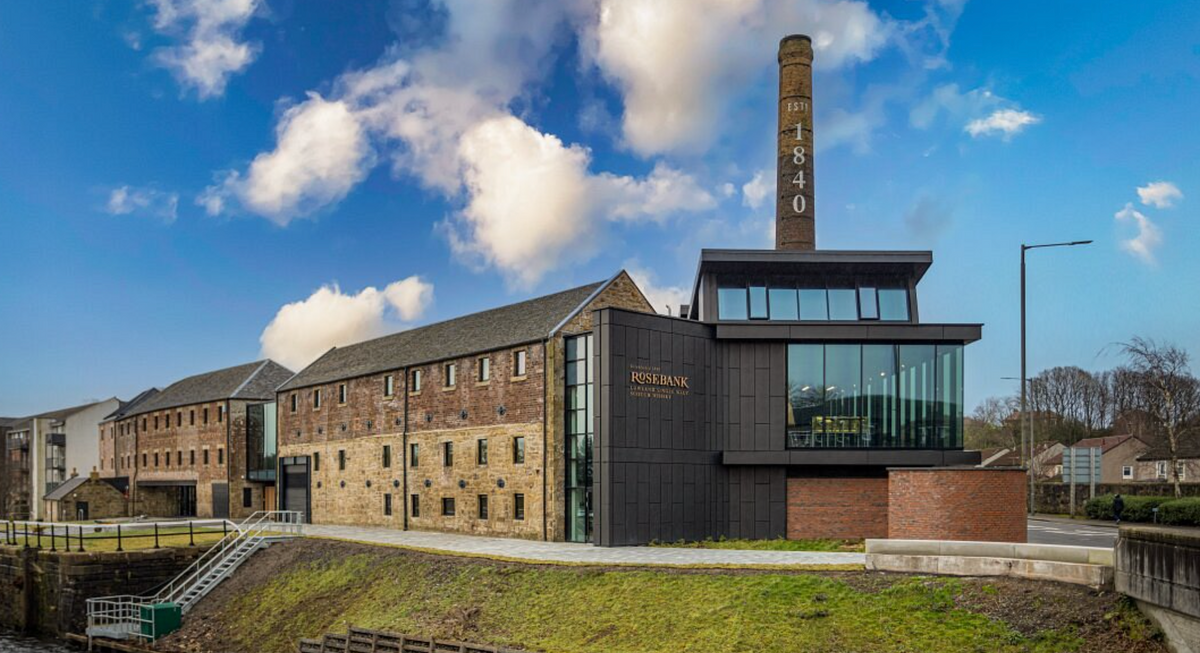
Rosebank Distillery: The King of the Lowlands, Back From 1993
Of all the distilleries that fell silent during the Scotch whisky industry's lean years, Rosebank was the one collectors never stopped asking about. Known for decades as the "King of the Lowlands," mothballed in 1993 and left closed for thirty years, its triple-distilled style became the benchmark other Lowland whiskies were judged against, right through the long stretch when nobody could buy a new bottle of it. Ian Macleod Distillers reopened it in 2023, giving one of Scotch whisky's most mourned ghost distilleries a rare happy ending.
Rosebank at a glance
| Region | Lowland (Camelon, Falkirk) |
| Founded | 1840, by James Rankine (site has distilling history back to 1798) |
| Known for | Triple distillation; nicknamed the "King of the Lowlands" |
| Closed | 1993 (mothballed by DCL/Diageo) |
| Reopened | 2023, by Ian Macleod Distillers (bought the site 2017) |
| Location | On the banks of the Forth and Clyde canal |
| Visitor access | Yes, visitor centre opened 2024 |

History of Rosebank
Distilling on the site goes back to 1798, when the Stark brothers ran an operation at Laurieston, Falkirk, but James Rankine founded the distillery that became Rosebank under that name in 1840, on the banks of the Forth and Clyde canal at Camelon. Its signature was triple distillation, rarer in Scotland than in Ireland, which produced a lighter, more refined spirit and earned Rosebank its reputation as the finest of the Lowland distilleries, in a region that has always lived in the shadow of Speyside and Islay.
DCL mothballed Rosebank in 1993. The reason was financial rather than romantic. Meeting the European effluent treatment standards of the day would have cost around £2 million, and the owners were not willing to spend that on a distillery of Rosebank's size. A slow dismantling of the site followed rather than a clean closure. Diageo sold the buildings and contents to British Waterways in 2002, developers demolished the maltings for housing, and part of the bonded warehouse on the west bank became a pub. For years Rosebank existed only as maturing stock slowly running out, and as a name whisky writers used as shorthand for what Scotland had lost.
The turnaround came in October 2017, when Ian Macleod Distillers bought the remaining site from Scottish Canals and the Rosebank trademarks from Diageo, with the stated goal of reviving the distillery rather than owning the name alone. Production restarted in July 2023, and a visitor centre followed in 2024. The restoration kept what could be kept. The chimney, the lockkeeper's cottage and the red-brick buildings were retained and restored rather than rebuilt from scratch, work that RIAS architecture judges later recognised.

How Rosebank makes its whisky
Triple distillation is the defining detail of Rosebank's production, and Ian Macleod has kept it at the centre of the revived distillery rather than simplifying the process for cost or convenience. It is a slower, more labour-intensive method than the double distillation used almost everywhere else in Scotland, and it is what gave historic Rosebank its lighter, more delicate character, the quality behind the "King of the Lowlands" reputation. The new owners set out to recreate that character rather than reinvent it.

Rosebank and independent bottlers
Pre-1993 Rosebank has long been a fixture of the independent bottling scene. Gordon & MacPhail, Signatory and others released vintages across the decades the distillery sat closed, and those bottlings now trade at a steep premium given the finite stock. Whisky from the 2023 reopening is still too young for meaningful independent release, so for now pre-1993 Rosebank and the new production exist as two separate markets.
Rosebank and The Single Cask
We don't hold a Rosebank cask. Pre-1993 stock is scarce and expensive, and the whisky from the 2023 reopening is still maturing. Our Glasgow (Peated) 6 Year Old (cask 18/470) is the closest comparison available today. It is a different style entirely, since Rosebank is defined by a light, unpeated triple-distilled character, but it is the Lowland single cask we can offer you while new Rosebank matures.

Plan a bottling inspired by Rosebank
Rosebank's revival took thirty years and new owners willing to rebuild rather than buy a name, a reminder that the link between a distillery and the whisky it makes is more fragile, and more recoverable, than it might seem. If you want a more direct hand in a cask that is maturing right now, start with our whisky casks available page, or read about buying a whisky cask and the four steps to bottling your own whisky. For something under your own name, our private label whisky service covers that end to end. For more on the Lowland region, see our guides to Glasgow Distillery and Holyrood.
We bottle whisky from casks we own ourselves, and we also supply casks to independent bottlers and to private customers who want a bottling under their own name. If you are an independent bottler looking for stock, or you have always wanted a cask of your own, talk to us about what we have in the warehouse. Where we don't hold the distillery featured in a guide, we say so rather than dress something else up as a substitute.
If you have questions about any of this, or about Rosebank in particular, our contact page is the fastest way to reach us.
Frequently asked questions
Is Rosebank distillery open again?
Yes. Ian Macleod Distillers bought the site in 2017, restarted production in July 2023, and opened a visitor centre in 2024.
Why was Rosebank known as the "King of the Lowlands"?
Its triple-distilled style produced an unusually light, refined spirit that earned it a reputation as the finest of the Lowland whiskies.
Why did Rosebank close in 1993?
DCL mothballed it over the cost of upgrading effluent treatment to meet European standards, a roughly £2 million investment the owners were not willing to make.
Can I buy old Rosebank whisky?
Yes, through independent bottlers and auction. Gordon & MacPhail, Signatory and others released pre-1993 vintages over the decades it sat closed, and they now sell at a steep premium.
Can I visit Rosebank distillery?
Yes. A visitor centre opened in 2024 as part of the revival.
Does The Single Cask sell a Rosebank cask?
Not at the moment. We point customers toward our Glasgow (Peated) 6 Year Old as the Lowland single cask available while new Rosebank matures.
Work with The Single Cask
Buy a whisky cask, bottle under your own label, or store casks in our HMRC approved bonded warehouse in Fife.
Read more
InchDairnie Distillery: The Mash Filter Rewriting Lowland Rules
InchDairnie is one of only two Scotch distilleries using a mash filter instead of a traditional mash tun. Founded 2015 in Fife, it also makes a pot-still rye. History, the production process and ho...
Read more


