
Article: Cask Strength Whisky: What It Means and How to Drink It
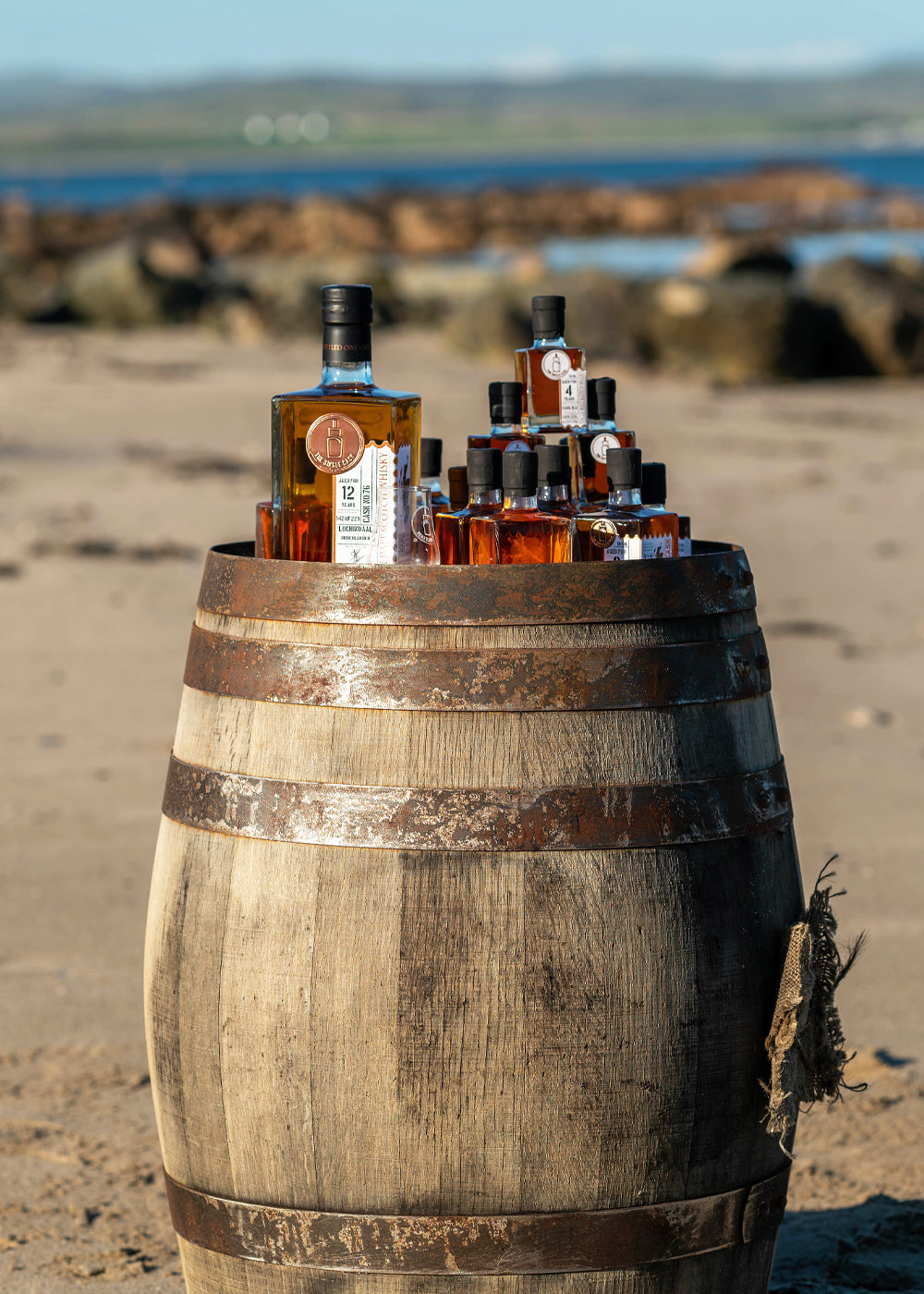
Cask Strength Whisky: What It Means and How to Drink It
Last time, we talked about how to actually taste whisky: nosing, breathing, letting the glass do some of the work before the liquid ever touches your tongue. If you tried that with one of our releases, you'll have noticed something straight away. It hits harder than the whisky you're used to. That's cask strength, and it's worth understanding, because it changes how you should drink the dram in your hand.
What "cask strength" actually means
Cask strength means exactly what it says. The whisky goes from cask to bottle with nothing added and nothing taken away. No water, no dilution, no adjustment to hit a round number on the label. What was in the cask is what's in your glass.
Most whisky on a supermarket shelf is bottled at 40% or 43% ABV. Cask strength releases typically come out anywhere from the low 50s up to the mid-60s, sometimes higher. That's a meaningful jump, cask strength can be around 30% stronger in alcohol than a standard bottle, not just a percentage point or two.
Here's the bit most people don't know: even cask strength whisky was never "neat" spirit to begin with. New make spirit typically goes into the cask at around 63.5% ABV. It doesn't come out stronger than that; maturation and evaporation only take alcohol away, never add it. So a cask strength bottle isn't raw distillery spirit. It's the same spirit after years in oak, doing what oak does, with nobody stepping in afterwards to soften it.
Why most whisky gets diluted, and why we don't
Reducing whisky with water before bottling isn't a shortcut or a cost-cutting trick, at least not entirely. There are good reasons for it. A brand bottling at 40% can guarantee the same taste, the same mouthfeel, bottle after bottle, batch after batch. It also stretches a cask further, which matters when you're filling shelves at scale. And for a lot of drinkers, 40% is simply easier to sip without thinking too hard about it.
We don't do any of that. Every Single Cask release is bottled at its natural cask strength, non-chill-filtered, with no added colouring. Partly that's philosophy: we think a cask's real character shouldn't be smoothed out before it reaches you. But it's also just what single cask whisky is. There's no blending vat to top up or balance against. One cask, bottled as it was found. Whatever strength that cask happens to be at is the strength that goes on the label.
Why higher strength shows more character, eventually
Alcohol carries aroma. The higher the ABV, the more volatile compounds get pulled up out of the glass and into your nose, which sounds like a straightforward win for flavour. In practice it's more complicated.
At full cask strength, a lot of that character is actually harder to pick out at first, not easier. The alcohol can dominate the nose and numb the palate slightly, masking exactly the subtlety it's carrying. That's why we always say to position your nose above the rim of the glass rather than diving in, especially with anything at cask strength. Get too close and all you'll register is spirit heat.
Give it time and a little water, though, and the whisky opens up. Compounds that were locked in behind the alcohol start to separate out. This is the whole reason cask strength exists as a category worth caring about: it hands you the raw material and lets you find the character yourself, rather than having someone else decide the "right" dilution for you.
How to actually drink a cask strength whisky
There's a simple way into this, and it works whether it's your first cask strength dram or your fiftieth.
1. Start neat, and start small
Take a small sip before you add anything. You want a baseline: what does this cask taste like in its purest, most concentrated form? Don't linger too long at this stage; the alcohol will tire your palate if you sit with it.
2. Add water a few drops at a time
Use room-temperature water, and add it sparingly, a few drops, not a splash. Swirl gently, give it a minute, then nose and taste again. You're not trying to "fix" the whisky. You're gradually turning down the alcohol so the other flavours can step forward.
3. Keep going until it tastes right to you
There's no correct final strength. Some people find a cask really sings a couple of points above standard bottling strength. Others prefer to bring it right down. Some barely touch it at all. Whisky people can be surprisingly dogmatic about the "proper" way to do this. Ignore them. Your palate, your glass, your call.
We'll go deeper into the water side of this next time, including why the type of water and even the temperature can make a difference to what opens up.
Why ABV varies so much from bottle to bottle
Look across a run of Single Cask releases and you'll notice the strengths jump around, one at 58.4%, another at 61.9%, another at 54.2%. That's not inconsistency. It's honesty about how each cask actually lived.
Cask strength isn't a recipe. It's a result. Every cask loses a small percentage of its volume to evaporation each year it sits in the warehouse, the angel's share, and alongside that, the alcohol level inside the cask drifts too, shaped by the wood, the warehouse conditions and how long that particular cask has been resting. A cask matured for 10 years won't land at the same strength as one matured for 18, even from the same distillery, filled on the same day. Different casks age differently. That's the whole idea behind single cask whisky, and it's written right there on the label in the ABV.
If you want to see that variation for yourself, our current single cask releases list the exact strength of every bottle, cask by cask. Not sure where to start? Try browsing by how you're feeling rather than by region or age statement over on whisky by mood, cask strength drams tend to sit well in the Bold and Curious categories, for what it's worth.
Work with The Single Cask
Buy a whisky cask, bottle under your own label, or store casks in our HMRC approved bonded warehouse in Fife.
Read more
Owning a Whisky Cask: The Complete Guide
What does it mean to own a whisky cask? Owning a whisky cask means buying an individual barrel of maturing Scotch, in your own name, while it sits in a bonded warehouse in Scotland. You are not buy...
Read more


Leave a comment
This site is protected by hCaptcha and the hCaptcha Privacy Policy and Terms of Service apply.