
Article: Balmenach Distillery: The Speyside Malt Hidden Inside Johnnie Walker
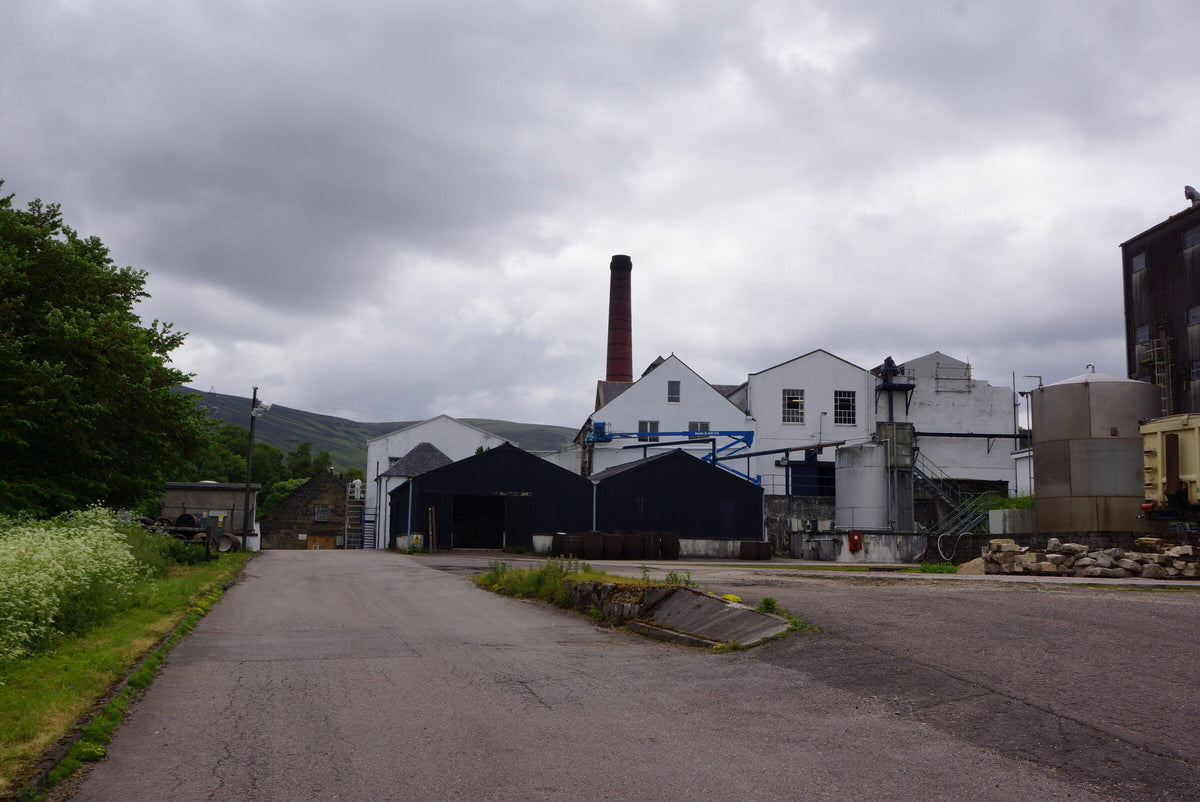
Balmenach Distillery: The Speyside Malt Hidden Inside Johnnie Walker
Ask most whisky drinkers what they know about Balmenach and you will likely get a blank look. That is exactly the point. This Speyside distillery, tucked into the Cromdale Hills above the River Spey, has not put out an official single malt bottling in close to thirty years. It does not take visitors. Roughly six in every ten litres it makes still ends up in blends, Johnnie Walker among them. And yet Balmenach has been quietly distilling since 1824, making it one of the oldest working distilleries in Scotland. If you want to taste it, an independent bottler is pretty much your only route in.
Where Balmenach sits, and why it stayed hidden
Balmenach is in Cromdale, Moray, at the northern edge of the Cairngorms National Park and well inside the Speyside whisky region. The distillery draws its water from a spring in the Cromdale Hills, the same hills that gave the surrounding area its long history of illicit distilling before licensing arrived.
That history runs through Balmenach's own founding. James MacGregor, one of three brothers from a Tomintoul family with a long-standing sideline in illegal whisky making, licensed the site in 1824 under the Excise Act of the previous year. It was one of the earliest legal distilleries in the region. The MacGregor family kept hold of it until 1922, when economic pressure forced a sale to a blending consortium. From there it passed through several corporate hands, ending up as part of the Distillers Company by the mid 1920s. Records differ slightly on the exact year, which is not unusual for a distillery this old.
Balmenach closed during the difficult trading years of the early 1990s, was mothballed by United Distillers in 1993, and sat quiet until Inver House Distillers bought it back in 1997 and brought it back into production. It remains part of Inver House today, itself owned by the Thai drinks group International Beverage. Inver House also owns Speyburn, Old Pulteney, Knockdhu (the anCnoc distillery) and Balblair, all Speyside or Highland names with their own quiet, workmanlike character.
One historical footnote worth knowing: the MacGregor family who founded Balmenach also produced two rather unlikely relatives. Sir Compton Mackenzie, the novelist who later wrote Whisky Galore, and Sir Robert Bruce Lockhart, the diplomat and writer, both had family roots in the same MacGregor line. It is a small detail, but it says something about how tightly whisky and Highland family history are woven together in this part of Speyside.
Anaerobic digestion is another example of that same understated, get-on-with-it character. A £4 million plant installed at the site recovers around 40% of the water used in processing, cuts roughly a dozen tanker journeys a week and generates a meaningful amount of the site's own energy. It is not the kind of thing a distillery does for publicity, since almost nobody visits to see it. It is the kind of thing a distillery does because it makes operational sense over decades, which fits Balmenach's whole approach.
A distillery built to feed blends, not sell single malt
Walk through Balmenach's production and you can see why it has stayed a blender's whisky. There is a stainless steel mash tun and six Douglas fir washbacks, and fermentation runs long by industry standards, which builds complexity into the new make before it ever reaches the stills. The three pairs of stills are relatively small and are worked hard, running through as many as 21 mashes a week when the distillery is at full tilt.
What really marks Balmenach out is the condensers. Rather than the shell and tube design most distilleries switched to decades ago, Balmenach still uses worm tubs, coiled copper pipes sitting in cast iron tanks of cold water outside the still house. Worm tubs give less copper contact than modern condensers, and that is a large part of why Balmenach's new make spirit has a reputation for being meaty, heavy and a little sulphurous when it first comes off the still. It is not a delicate spirit. It is built to carry weight in a blend, and it happens to mature into something distinctive when it is left alone in good wood, particularly sherry casks, for which the distillery has a genuine reputation.
Capacity has grown over the years and now sits somewhere around 2.7 to 2.9 million litres of pure alcohol a year, up from closer to 2 million historically. Alongside the whisky, the same site is also home to Caorunn, the Scottish gin made using a 1920s copper berry chamber that once belonged to the perfume industry. It is an unusual pairing under one roof, whisky maturing quietly in the warehouses while gin botanicals steep next door.
What Balmenach actually tastes like
Older independent bottlings are often described as having a distinct heather note alongside a slightly peaty, flowery character, a hearty style that suits food pairing rather than delicate sipping. The whisky matures slowly, and bottlers who have worked with it tend to reach for sherry wood to let that weight develop into something rounder.
That matches what we found in our own cask. The Single Cask has bottled one Balmenach, cask 800437, distilled in 2003 and bottled at 12 years old at a gentle 50% ABV as part of our Signature Series. On the nose it opened easy and approachable, with thyme and mint giving way to soft caramel and orange peel. The palate was well rounded and gentle, nuts and toffee and vanilla sweetness sitting alongside a fruity edge, and it finished on soft malt and citrus. It is not the aggressive, sulphur-heavy spirit you might expect from the new make description. Twelve years in cask had smoothed it into something genuinely easy to drink.
That cask has since sold through, and we do not currently hold Balmenach stock. We are being upfront about that rather than suggesting otherwise.
Independent bottlers, not the distillery, are where Balmenach single malt comes from
Because Balmenach releases no standard own-label bottling, virtually everything you will find under the distillery's name has come from an independent bottler. Gordon & MacPhail's Connoisseurs Choice range has carried Balmenach expressions periodically for years, and it turns up from time to time through other established independent houses as well. For a distillery this old and this well regarded by blenders, the total volume reaching bottle under its own name each year is small.
That is precisely the gap independent bottling exists to fill, and it is the same gap we work in every day. A distillery like Balmenach, well known inside the trade, largely unknown outside it, is a good example of why sourcing whisky for your own label often means going further than the big-name bottlings everyone already stocks.
For a new brand or a retailer thinking about private label whisky, that is often where the more interesting opportunities sit. Everyone can source a Speyside malt from one of the handful of distilleries with a public visitor centre and a well-known name on the label. Fewer bottlers take the time to go looking for something like Balmenach: a genuinely old, well-regarded distillery whose whisky most consumers have simply never had the chance to try under its own name. That scarcity is part of the story you can tell, provided the cask itself backs it up, which is exactly why we sample, regauge and verify a cask properly before it ever gets close to a bottling run.
Plan a bottling inspired by Balmenach
If you are an independent bottler, a retailer or a new brand looking at Balmenach specifically, the honest picture is that stock is thin and does not come up often. We would rather tell you that plainly than promise something we cannot deliver. What we can do is talk through what drew you to Balmenach in the first place, whether that is the sherry cask character, the Speyside weight, or simply the story of a distillery that quietly feeds Johnnie Walker while almost nobody outside the trade has heard of it, and help you find a cask that matches on flavour, region or maturation style. Our own Speyside and Highland lines, including sister Inver House distilleries like Balblair, already give us a useful starting point.
Whether you are sourcing a single cask, building out a private label range, or need somewhere bonded to store and manage stock while you decide, that is the everyday work of buying a whisky cask and seeing what we currently hold on our available casks page. If you already have whisky and want it bottled under your own name, our independent bottling services and private label whisky pages cover how that process works, and Four Steps to Bottling Your Own Whisky walks through it in plain terms. Casks already in our care sit in our own bonded warehouse in Scotland under bond, sampled and managed properly until they are ready. It is worth remembering that cask ownership is not a regulated investment, values can move up or down depending on the cask and the market, and nothing here should be read as financial advice, just a straightforward account of how the trade works. For anything specific to Balmenach, or to talk through alternatives, get in touch and we will give you a straight answer.
Frequently asked questions
Can you buy Balmenach as a single malt?
Not from the distillery itself. Balmenach has not released an official single malt bottling for close to thirty years, so almost everything available under the distillery's name comes from independent bottlers such as Gordon & MacPhail.
Why does so much Balmenach go into blends?
Its worm tub condensers and long fermentation produce a heavier, meatier new make spirit than many Speyside distilleries, which blenders value for adding weight and body. Roughly 60% of production is understood to go to blends, including Johnnie Walker.
Does The Single Cask have Balmenach casks available?
Not at present. Our one Balmenach cask, distilled in 2003 and bottled at 12 years old, has sold through. We would rather say that plainly than suggest availability that does not exist, and we are happy to suggest flavour-matched alternatives instead.
Is Balmenach open to visitors?
No. Balmenach is a working production distillery without a visitor centre, which is part of why it remains one of the lesser-known names in Speyside despite its age and its role in well-known blends.
Work with The Single Cask
Buy a whisky cask, bottle under your own label, or store casks in our HMRC approved bonded warehouse in Fife.
Read more
Balblair Distillery: The Highland Malt That Gave Up Age Statements
For twelve years Balblair sold its whisky by vintage year instead of age, a rare bet for a Highland distillery to make. Here's the full story, our own single cask, and where to look if you want one.
Read more


