
Article: Balblair Distillery: The Highland Malt That Gave Up Age Statements
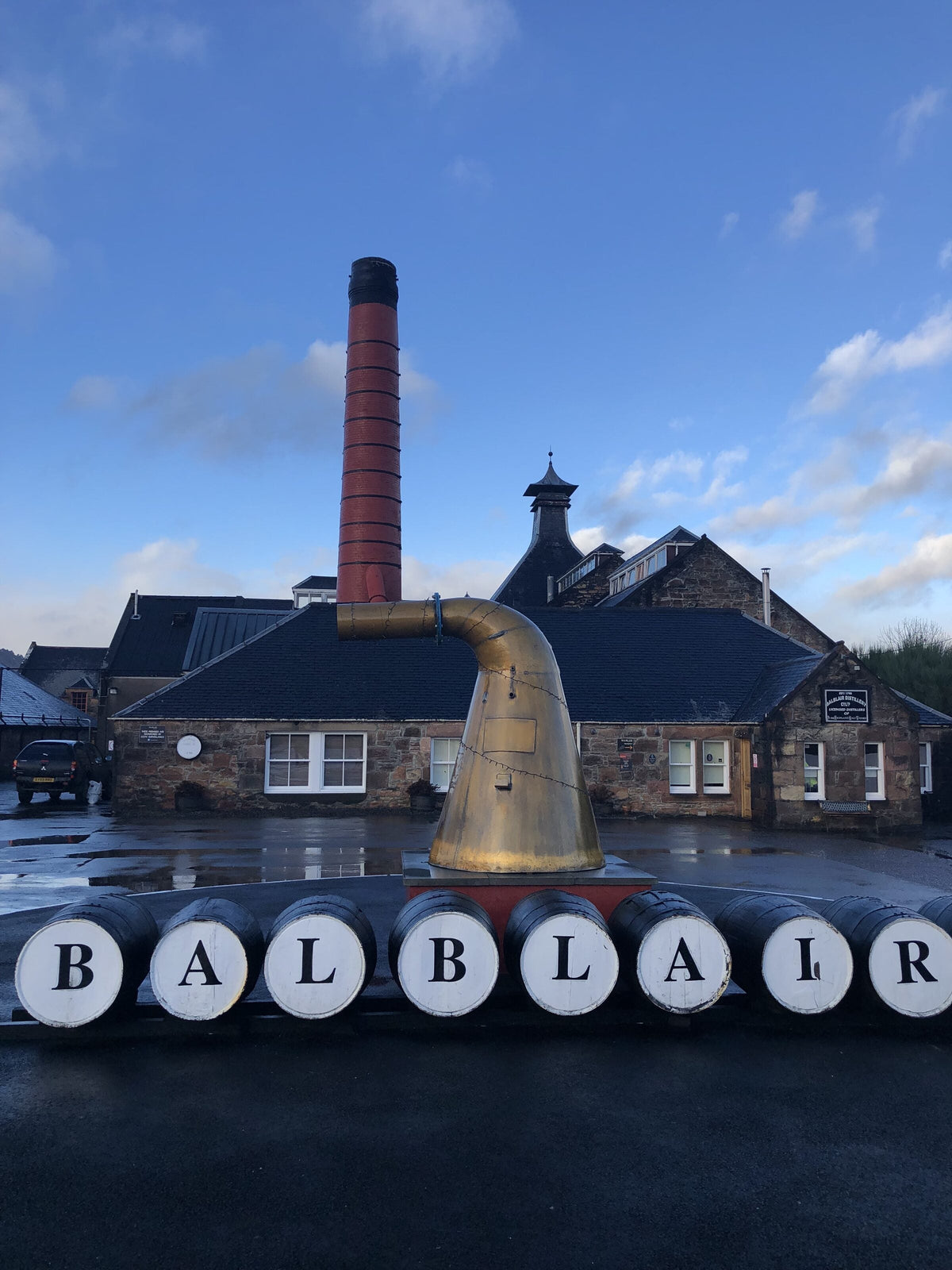
Balblair Distillery: The Highland Malt That Gave Up Age Statements
Most Highland distilleries put an age statement on the label and leave it there for decades. Balblair spent twelve years refusing to. From 2007 until 2019, every core release from this quiet distillery on the Dornoch Firth carried a vintage year instead of an age, a genuinely unusual bet for a working whisky business to make, and one that earned it a reputation among collectors long before most drinkers had heard the name. The distillery itself has been going, on and off, since 1790, which by most accounts makes it the oldest still working in the Highland region proper. We have bottled one cask from here ourselves, and it is currently sold through, so this guide is as much about where to look next as it is about Balblair itself.
Balblair at a glance
| Region | Highland, at Edderton on the Dornoch Firth, Ross-shire |
| Founded | 1790, by John Ross |
| Owner | Inver House Distillers, part of International Beverage Holdings, since 1996 |
| Capacity | Sources put it anywhere from around 1.5 to 1.8 million litres of pure alcohol a year |
| Stills | Two, one wash and one spirit, both a plain, traditional shape |
| Water source | The Allt Dearg burn |
| Fermentation | Around 48 hours, in six wooden washbacks |
| Malt spec | Virtually unpeated |
| Style | Fruity and sweet, with a fresh, grassy lift that some tasters put down to its coastal position |
| Visitor centre | Yes, added after the distillery's screen appearance in 2012 |

History of Balblair
John Ross founded Balblair in 1790 at Edderton, a small parish on the south shore of the Dornoch Firth that locals still half-joke is "the first parish in the north," on the grounds that it was the first place you would want a dram after the long drive up from the south. Edderton's soft, easily drained soil and its own barley-growing tradition made it a natural place to distil, and the Ross family kept the business going for over a century.
Ownership passed to Alexander Cowan in 1894, and it was Cowan who moved the distillery to its present site, close enough to the newly built Edderton railway station on the Tain to Wick line that casks could go straight from the warehouse to the wagon. The rebuild is credited to Charles Doig, the architect behind the pagoda-roofed kiln that became the visual shorthand for a Scottish distillery, and Balblair's own pagoda is a handsome survivor of that period even though the kiln beneath it stopped malting long ago.
The twentieth century brought the ownership churn that swallowed most independent distilleries. Robert "Bertie" Cumming bought the freehold in 1948 and expanded production, Hiram Walker took over in 1970, and the business passed again in 1988 when Hiram Walker's Scotch interests folded into what became Allied Domecq. Inver House Distillers bought Balblair in 1996, and Inver House itself has been part of International Beverage Holdings, the international arm of Thailand's ThaiBev, since the mid-2000s. Under Inver House, Balblair sits alongside Old Pulteney in Wick, Speyburn in Rothes, anCnoc in Knockdhu and Balmenach in Cromdale, a stable of unfashionable, well-regarded distilleries that Inver House has generally left to speak for themselves rather than pushing hard on marketing budgets.
The 2012 Ken Loach film The Angel's Share used Balblair as a filming location, and the distillery opened a proper visitor centre not long afterwards, a rare case of cinema doing a working distillery's PR for it.
How Balblair makes its whisky
Water comes from the Allt Dearg burn, and Balblair has kept using it even though the 1894 move put the distillery some distance from the original source, which tells you something about how much the distillers rate it. The malt is close to entirely unpeated, milled on site, and mashed in a stainless steel semi-lauter tun before fermenting for around 48 hours in six wooden washbacks. That is a longer fermentation than many Highland distilleries run, and long fermentations tend to build the fruitier, more estery character that Balblair is known for.
The stillhouse is small by industry standards: one wash still and one spirit still, both plain and unadorned. What is more unusual is the strength at which Balblair fills its casks. Most Scottish distilleries fill somewhere around 63.5% ABV; Balblair fills closer to 68.5%, noticeably higher, which changes how the spirit interacts with the wood over the years that follow. Historically the warehouse has leaned heavily towards refill and first-fill American oak, bourbon barrels and hogsheads, with only a small proportion given over to sherry wood, though recent official releases have made more of a feature of sherry and wine cask finishes than the distillery's older reputation would suggest.
What does Balblair taste like?
The house style is fruity and sweet before it is anything else: orchard fruit, a touch of honey, and underneath it a fresh, almost grassy quality that some put down to Edderton's position looking out over the firth. It is a gentler, more approachable profile than the peaty reputation of Highland whisky as a whole might suggest, closer in character to a good Speyside than to its smokier Highland neighbours. Age tends to bring out toffee and light spice without smothering the fruit, and the whisky rarely turns heavy even at higher strengths.
Our own cask, an Oloroso hogshead, showed exactly the kind of layering that makes single casks worth seeking out: red fruits and white pepper on the nose, wine gums and dark chocolate arriving on the palate, and a good stretch of oak and malt carrying the finish. It is worth remembering that a hogshead's sherry influence and Balblair's own fruit-forward new make character were doing that work together, not one or the other.
Balblair, vintage dating, and independent bottlers
For most of its recent life, Balblair has been better known among collectors than among casual drinkers, and the vintage-only years explain a lot of that. From 2007, the distillery dropped age statements from its core range entirely and sold whisky labelled by the year it was distilled instead, a marketing decision that is unusual precisely because most distilleries see age statements as easier to sell, not harder. It made Balblair's official releases feel more like small, dateable batches than a standard product line, and it built a following that stuck around even after the distillery reversed course in April 2019 and returned to a conventional 12, 15, 18, 21 and 25 year old range.
Independent bottlers have quietly kept pace with Balblair for far longer than that. Gordon & MacPhail's relationship with the distillery goes back decades, through its Connoisseurs Choice and Distillery Labels ranges, and the firm has released Balblair at ages stretching well beyond anything the distillery itself has bottled officially. Other independent bottlers have taken casks over the years too, and the pattern is a familiar one for a well-regarded, moderately sized Highland distillery: enough goes into blending that single malt supply stays limited, which keeps genuine casks interesting when they do surface.
The Single Cask and Balblair
We have bottled one cask of Balblair to date: cask 800130, distilled in 2011, matured in an Oloroso hogshead and released at 10 years old and a cask strength of 57.1%, with an outturn of 250 bottles. It has since sold through, which is often the way with a distillery this well regarded and this lightly represented on the open market.

We would happily source another Balblair cask if the right one comes up, and if you have a particular age, cask type or strength in mind, tell us and we will keep an eye out. In the meantime, we can point you towards Highland whisky in a similar register.
Plan a bottling inspired by Balblair
Being straightforward about it: Balblair is not a distillery whose casks turn up often, and we are not going to pretend we have one sitting in the warehouse when we do not. What we can do is point you towards the neighbourhood. Balblair sits on the Dornoch Firth in the same corner of the northern Highlands as Glenmorangie, across the water at Dalmore and up the Cromarty Firth at Teaninich, and casks from that cluster of distilleries tend to share some of the same fresh, fruit-led character, even where the specifics differ. If a Balblair cask genuinely is the goal, we are glad to take the search on and be honest with you about the timescale and the price.
For an independent bottler or a brand owner working towards a bottling, none of this needs to start with a specific distillery name. We can talk through independent bottling and private label whisky from whatever stock genuinely fits the brief, walk through the four steps from cask to bottle, and look after maturation in our own bonded warehouse in the meantime. If you are earlier in the process and thinking about buying a whisky cask full stop, our cask sizes and types guide is worth a read before you commit to anything. A cask is not a regulated investment, whisky values move in both directions over time, and nothing on this page should be read as financial advice, only as a straight account of what we see buying and selling casks day to day.
Get in touch and tell us what you are trying to build. We will give you an honest answer about what is realistically available and what it is likely to cost.
Balblair FAQs
Who owns Balblair distillery?
Inver House Distillers, which has owned Balblair since 1996 and is itself part of International Beverage Holdings, the international arm of Thailand's ThaiBev.
Is Balblair whisky peated?
No, or as good as. Balblair uses virtually unpeated malt, and its house style leans towards fruit and sweetness rather than smoke.
Why did Balblair stop using age statements?
From 2007 the distillery sold its core range by vintage year rather than age, an unusual move that built a strong collector following, before returning to a conventional age-stated range (12, 15, 18, 21 and 25 years old) in April 2019.
Can you visit Balblair distillery?
Yes. A visitor centre was added after the distillery featured in the 2012 film The Angel's Share, though it is worth checking current opening times directly before planning a visit.
Can you buy a cask of Balblair?
Only occasionally. Balblair casks are not common on the open market, and our own cask has sold through, but we are glad to look for another and to suggest well-matched alternatives from nearby Highland distilleries in the meantime. Ask us what is currently realistic.
Work with The Single Cask
Buy a whisky cask, bottle under your own label, or store casks in our HMRC approved bonded warehouse in Fife.
Read more
Allt-A-Bhainne Distillery: Speyside's Blending Workhorse With a Secret Smoky Side
The modern Speyside distillery built purely to feed Chivas Brothers blends, its surprising occasional smoky side, and the 21 year old bourbon-hogshead cask we bottled from it.
Read more


