
Article: Braeval Distillery: The Highest, Quietest Whisky Maker in Speyside
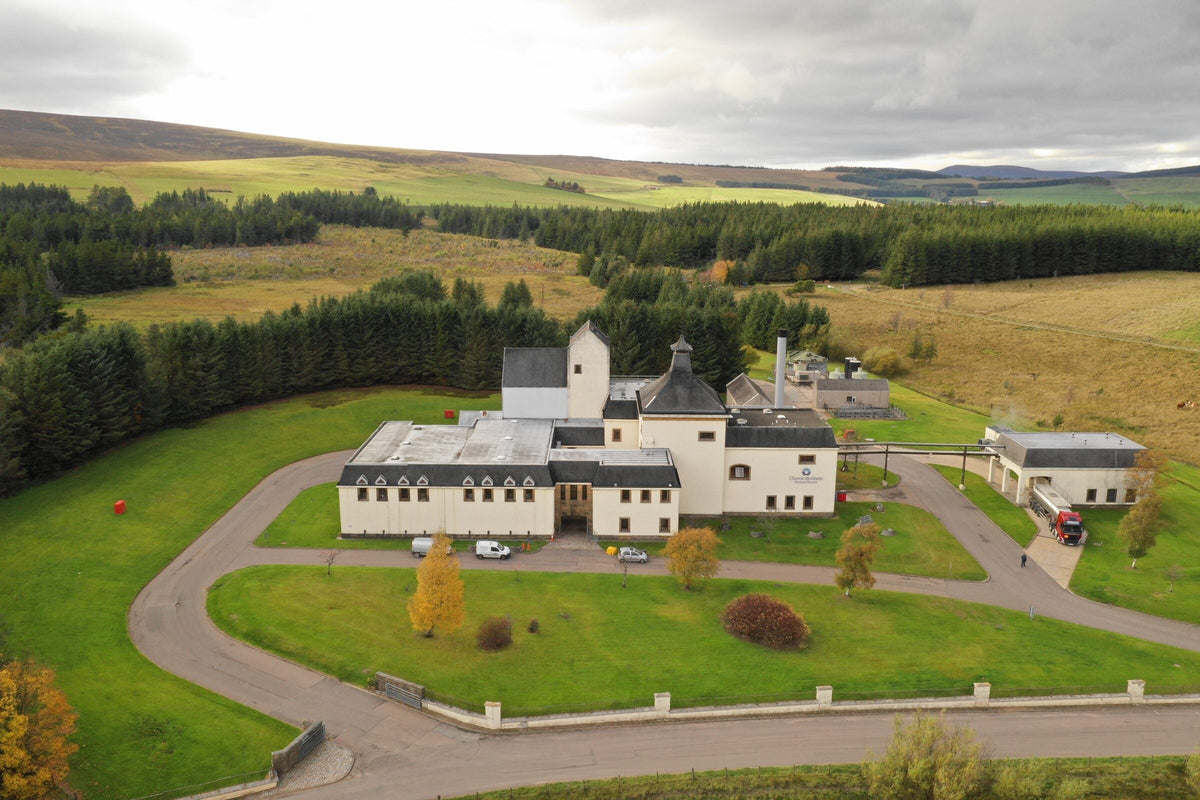
Braeval Distillery: The Highest, Quietest Whisky Maker in Speyside
A distillery built to disappear into blends
Braeval sits about as far into Speyside's back country as a distillery can get, tucked into the Braes of Glenlivet above the far more famous estate that shares part of its old name. It is one of the highest working distilleries in Scotland, built on ground where illicit stills once operated long before anyone thought to build one legally. The chances are you have never seen a bottle with Braeval's name on the label, and there is a good reason for that. It was built to feed blends, not to sell single malt, and for most of its life it has done exactly that.
From Braes of Glenlivet to Braeval
The distillery was built in 1973 by what was then Chivas Brothers and Seagram, under the name Braes of Glenlivet. According to Scotch Whisky's own Whiskypedia entry, the site was so remote that the first road up to it was only laid in the 1960s. The story goes that the very first mash took place before the roof had gone on, because the chairman was flying in from Canada to see his new distillery and nobody wanted to keep him waiting. Whether that has grown a little in the retelling over fifty years, it captures the spirit of the place well: built fast, built remote, and built purely for production.
The name changed to Braeval in 1994, largely to stop it being confused with its far better known neighbour, The Glenlivet, which sits a short distance away on the same estate. Braeval was mothballed between 2002 and 2008 during a quiet patch for the industry, then brought back into production and has run more or less continuously since. Today it belongs to Chivas Brothers, the Pernod Ricard subsidiary that took over the old Seagram distilleries in 2001.
One of the highest distilleries in the country
Braeval is regularly cited as the highest distillery in Scotland, sitting at around 350 metres above sea level, though Dalwhinnie is often mentioned in the same breath and the two are sometimes described as joint holders of the title depending on which source you ask. Either way, it is a cold, exposed spot for a distillery, closed to visitors and rarely seen by anyone outside Chivas Brothers' own production staff.
Production: built for a lighter style
Braeval runs two wash stills and four spirit stills with unusually thin necks and upward sloping lyne arms, a still shape that tends to produce a lighter, more floral new make spirit rather than something heavy or oily. Water for distilling comes from Preenie and Kate's Well, with the Pitilie Burn used for cooling. Fermentation is reported at around 74 hours, on the longer side, which typically adds fruitiness to the spirit before it ever reaches a cask. Reported capacity sits somewhere around 4 to 4.2 million litres a year, making it one of the larger distilleries in the Chivas Brothers stable despite how little anyone outside the trade has heard of it.
Almost everything Braeval makes goes into blends, Chivas Regal chief among them. Official single malt bottlings from the distillery itself are rare enough that most drinkers who have tried Braeval will have done so through an independent bottler rather than a distillery release. Gordon & MacPhail's Connoisseurs Choice range has bottled Braeval in the past, and it is this kind of independent release, rather than anything on a supermarket shelf, that keeps the distillery's name alive among people who actually collect and drink single malt.
This is worth dwelling on for a moment, because it is not really an exception in Scotch whisky. Most distilleries built from the 1960s onward were designed first and foremost to supply blends, and a good number of them still send the overwhelming majority of what they make into someone else's bottle rather than their own. Braeval is simply a particularly clear example of the pattern, sitting at the far end of a spectrum that runs from distilleries with a strong single malt identity, such as The Macallan or Glenfiddich, through to workhorses like this one that almost nobody outside the trade could name. Independent bottlers exist precisely to close that gap, buying individual casks and letting a distillery's character speak for itself, warts and all, rather than folding it anonymously into a blend.
Two Braeval casks, one from each end of the spectrum
We have bottled two casks from Braeval over the years, distilled six years apart and matured very differently, which between them give a fair picture of what this distillery can do when someone bothers to bottle it as itself.
The first, cask 165641, was distilled in 1994 and bottled at 22 years old at 55.0% ABV as part of our Signature Series. The cask type was not recorded on our own records, so we are not going to guess at it here, but the whisky itself was mellow and sweet, like sugar caramelising in a pan, with buttered muffins, soft fruit and a touch of barrel char on the nose. The palate opened up floral and intense with malt at its core, layering in vanilla, lemon and stonefruit, before finishing on slightly sweetened coffee and five spice.

The second, cask 8445, was distilled on 25 February 2000 and matured in a hogshead, bottled at cask strength of 50.9% ABV, again as part of the Signature Series. This one leaned richer and more dessert like: cherry bakewell, baklava, fresh cut pear, apple crumble, almond, honey nut cereal and honeysuckle. It is a genuinely different whisky from the 1994 cask, which says as much about cask influence and time as it does about the distillery's own character.

Both casks are now sold through, so neither is available to buy today. That is fairly typical for a distillery that bottles so little of its own stock in the first place. When a Braeval cask does turn up, whether through us or another independent bottler, it tends not to hang around.
Part of the same Speyside family as several distilleries we already cover
Braeval sits inside the same Chivas Brothers stable as The Glenlivet, just up the road on the same estate, along with Strathisla, Glen Keith, Miltonduff and Allt-a-Bhainne, all of which we have already covered in this series. All of them were built, at least in part, to keep Chivas Regal and the group's other blends supplied, and Braeval is arguably the most extreme example of that purpose: built high, built remote and built almost entirely for a job that happens behind the scenes.
Plan a bottling inspired by Braeval
Being honest about availability matters more to us than pretending otherwise. Braeval whisky is genuinely hard to find as a single cask, official or independent, and we would not tell you otherwise just to make a sale. If a Braeval cask does come up through our own sourcing, whether from the distillery, a broker or another independent bottler's stock, we will list it as always on our available casks page.
In the meantime, if it is the light, floral, high altitude Speyside style you are after rather than the name on the label specifically, we can usually point you toward something close. A cask from The Glenlivet or Miltonduff shares a good deal of that character, and both come from the same corner of Speyside. If you would rather start from scratch, get in touch and tell us the flavour profile, age and budget you have in mind, and we will suggest options from what we currently hold.
Whether you are looking to buy a whisky cask outright, want us to handle independent bottling on stock you already own, or are planning a private label release under your own brand, the process runs through the same HMRC approved bonded warehouse in Fife where casks like these two Braevals matured for us. Our guide to bottling your own whisky walks through what happens after you own a cask, and our contact page is the quickest way to start a conversation about what you have in mind.
Frequently asked questions
Can you buy Braeval whisky?
Rarely, and almost never as an official distillery bottling. Most Braeval that reaches drinkers comes through independent bottlers, ourselves included on occasion, and stock does not last long once it appears.
Is Braeval the same as The Glenlivet?
No, though the two are closely linked. Braeval was originally named Braes of Glenlivet and sits on the same estate as The Glenlivet, a few miles away, but it is a separate distillery with its own stills, its own character and its own ownership history, even though both now belong to Chivas Brothers.
Why is Braeval so rarely bottled as a single malt?
It was built specifically to supply blends, Chivas Regal in particular, and the vast majority of what it distils has never been intended to carry its own name. Official single malt releases are the exception rather than the rule.
What does Braeval whisky taste like?
Lighter and more floral than many Speyside malts, a result of its tall, thin stills, though maturation can push it a long way from that starting point. Our own two casks ranged from soft, caramelised and citrus led to something closer to baked fruit and honeyed spice, depending on the cask and the years involved.
Work with The Single Cask
Buy a whisky cask, bottle under your own label, or store casks in our HMRC approved bonded warehouse in Fife.
Read more
Balmenach Distillery: The Speyside Malt Hidden Inside Johnnie Walker
Ask most whisky drinkers what they know about Balmenach and you will likely get a blank look. That is exactly the point. This Speyside distillery, tucked into the Cromdale Hills above the River Sp...
Read more


