

Girvan Distillery: The Grain Giant That Started From a Grudge
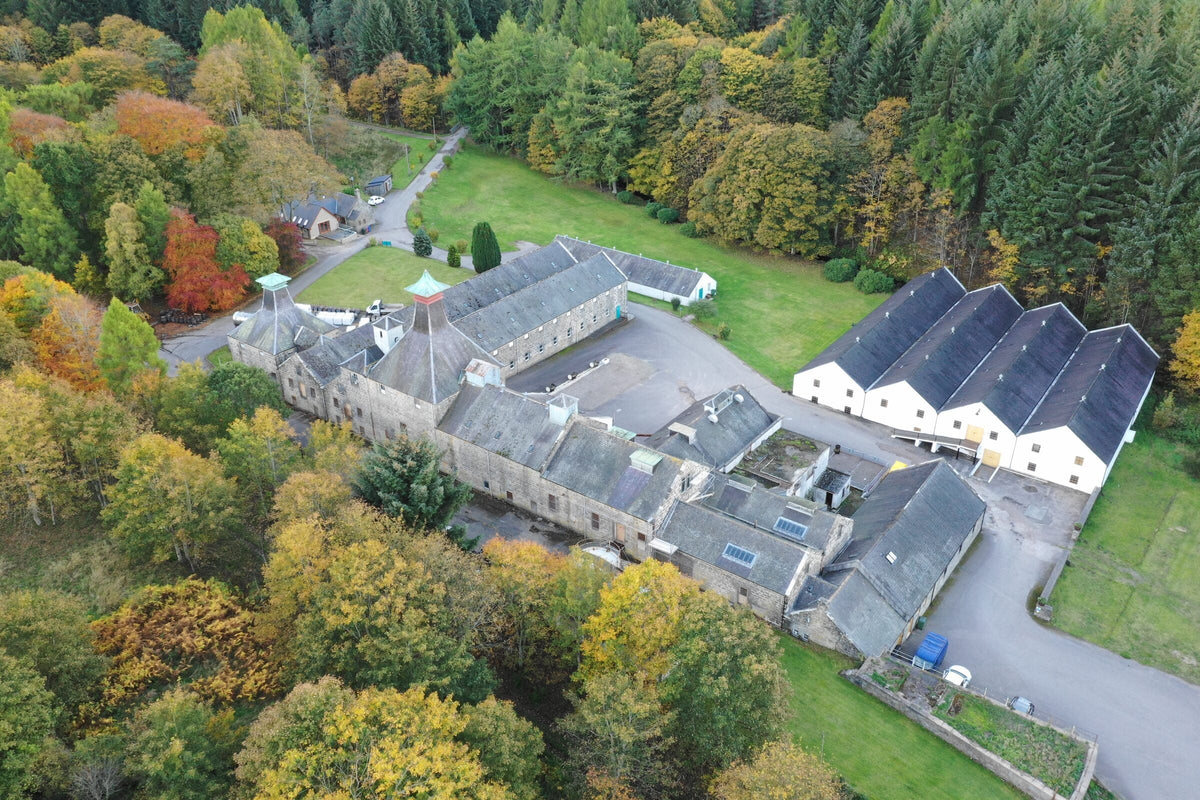
Girvan does not look like most distilleries in this series, and it does not run like one either. There is no pot still, no visitor centre built around a single malt story, and no single building most people would recognise as a distillery at all. It is a grain complex on the Ayrshire coast built in nine months flat, in the middle of a corporate falling-out, and it now makes more spirit in a year than most Speyside malt distilleries manage in a decade. We hold two real Girvan casks ourselves, which puts it in decent company: this is TSC's second grain distillery guide, after Invergordon, and Girvan is by some distance the bigger of the two.
Girvan at a glance
| Region | Lowland, South Ayrshire, on the coast at Girvan |
| Founded | 1963, by William Grant & Sons, built and commissioned in around nine months |
| Owner | William Grant & Sons, family owned throughout |
| Capacity | Around 115 million litres of pure alcohol a year, one of the largest grain distilleries in Scotland |
| Stills | Coffey (column) stills, first installed 1963 |
| Water source | The River Girvan |
| Grain used | Wheat, with a small proportion of malted barley |
| What it supplies | Grain whisky for Grant's and Clan MacGregor blends, Girvan's own Black Barrel single grain, and the base spirit for Hendrick's Gin |
History of Girvan
Girvan exists because of a falling-out. In 1962, the Distillers Company Limited, which supplied William Grant & Sons with grain whisky for its Grant's blend, refused to increase its allocation. Rather than negotiate, Charles Grant Gordon decided the family firm would simply build its own grain distillery, and did so at a pace that still sounds implausible: construction started in late 1962 and the first spirit ran in 1963, a matter of months rather than the years a project of this size would normally take. It was, by design, never meant to look like a traditional distillery. Girvan is a grain plant built for volume and reliability, closer in spirit to an industrial refinery than to a Speyside malt house, and that has never been treated as something to apologise for.
The site has grown well beyond its original brief since. William Grant & Sons briefly ran a separate malt whisky distillery, Ladyburn, on the same complex from 1966 to 1975, a short-lived experiment that was mothballed and later demolished in 1976, leaving Girvan without a malt partner on site for three decades. That gap closed in 2007, when the company built Ailsa Bay next door specifically to supply malt whisky for its blends, an operation with 8 wash stills and 8 spirit stills of its own and its own now-well-known single malt releases. Girvan today also distils the base spirit for Hendrick's Gin, another William Grant & Sons brand, alongside its grain whisky output, making the wider site one of the most diversified single locations in Scotch whisky.
How Girvan makes its whisky
Where a malt distillery ferments malted barley and distils it twice in copper pot stills, Girvan runs continuously through Coffey, or column, stills, first installed in 1963, drawing water from the River Girvan and fermenting a wheat-based mash with a small proportion of malted barley for around 60 hours. The process is built for consistency and scale rather than character in the way a pot still batch is, which is exactly the point: grain whisky like Girvan's exists to be a clean, reliable backbone for blended Scotch, running at close to 94.5% new make strength before being cut down for filling. Most of it disappears into Grant's and Clan MacGregor blends without anyone giving it a second thought, which is true of almost all Scotch grain whisky and no reflection on the quality of what comes off the stills.
Girvan as a single grain whisky
Girvan has had an official single grain identity of its own since 1985, when Black Barrel was introduced for European markets, a rarer thing for a Scotch grain distillery than most drinkers realise, since the vast majority of grain whisky never gets bottled under its own name at all. That makes Girvan a genuinely useful entry point for anyone curious about what unblended grain whisky tastes like on its own: typically softer and sweeter than malt whisky, built around vanilla, toffee and light cereal notes from the wood rather than the fruit, smoke or sherry character a malt spirit develops, and often capable of very long, graceful ageing in the right cask.
Girvan and The Single Cask
We hold two real Girvan casks. Cask 16686 is a 29 year old, distilled in 1990, matured in an ex-bourbon barrel and bottled at cask strength, 60.8%, showing lime and almond tart, green tea, white pepper, popcorn and menthol against the oak and vanilla you would expect from that long a maturation.

Cask 166868 is also a 29 year old from the same 1990 vintage, matured instead in a refill barrel with an outturn of 179 bottles, and shows a noticeably different character: stewed berries and fresh greengages, rounded vanilla, strawberry and white chocolate, with orange, toffee and a whisper of peppery rye on the finish.

Both are a useful illustration of how much a cask type can shift the same year's spirit in different directions over three decades. One honest flag for Ben: both listings currently show an identical cask strength of 60.8% and share the same SKU (01-059) despite being different cask numbers and cask types, which is worth a quick check to confirm both are genuine, separate casks rather than a duplicated listing.
Girvan and independent bottlers
Girvan is one of the more consistently available grain distilleries for independent bottlers, since William Grant & Sons has never guarded the name the way some single malt owners do with their stock. Duncan Taylor has released Girvan regularly across a range of ages, and Hart Brothers keeps a dedicated Girvan page in their range, both treating it as a legitimate, sought-after grain whisky in its own right rather than an afterthought. That makes Girvan a genuinely realistic option for anyone specifically interested in aged single grain whisky, which is a smaller and less crowded market than single malt.
Plan a bottling inspired by Girvan
If aged single grain whisky is what you are after, Girvan is a sensible place to start: genuine independent stock exists, spans a wide range of ages, and the distillery's own scale means supply is less fragile than at a small malt distillery. If you are building a private label or bottling project around grain whisky more broadly, our other grain distillery guide, Invergordon, is worth reading alongside this one for a Highland contrast to Girvan's Lowland style.
For an independent bottler or a new brand working from a wider brief, we can talk through independent bottling and private label whisky built around stock that actually fits, walk through the four steps from cask to bottle, and hold everything in our own bonded warehouse while a plan comes together. If you are earlier in the process and thinking about buying a whisky cask generally, our guide to cask sizes and types is a sensible next stop. A cask is not a regulated investment, values can move in either direction over however many years it spends maturing, and nothing here is financial advice, only a straightforward account of what we see buying and selling casks day to day.
Get in touch and tell us what you are trying to build. We will give you a straight answer about what is realistically available and what it is likely to cost.
Girvan FAQs
Is Girvan a single malt or a grain whisky?
Grain whisky. Girvan distils continuously through Coffey stills using wheat and a small proportion of malted barley, unlike a single malt distillery, which uses only malted barley in pot stills. William Grant & Sons built a separate malt distillery, Ailsa Bay, next door in 2007 specifically to supply malt whisky for its blends.
Who owns Girvan distillery?
William Grant & Sons, the family-owned company behind Glenfiddich and The Balvenie, has owned Girvan since building it in 1963.
Why was Girvan built so quickly?
William Grant & Sons built Girvan after the Distillers Company Limited, its grain whisky supplier at the time, declined to increase its allocation. Rather than negotiate, the family commissioned its own grain distillery, reportedly completing construction and starting production within around nine months in 1963.
Can you buy a cask of Girvan?
Yes, more realistically than at many distilleries. Independent bottlers including Duncan Taylor and Hart Brothers have released Girvan regularly, and we hold two genuine Girvan casks ourselves, both 29 year old, distilled in 1990. Ask us what is currently available.
What is Girvan's connection to Hendrick's Gin?
Both are William Grant & Sons brands made on the same Ayrshire site. Girvan's grain distillery focuses on whisky, while the site also distils the base spirit used in Hendrick's Gin.
Work with The Single Cask
Buy a whisky cask, bottle under your own label, or store casks in our HMRC approved bonded warehouse in Fife.
Read more
Coleburn Distillery: The Speyside Ghost That's Coming Back
Most of the closed distilleries in this series stay closed. Coleburn is the exception worth watching. It shut in 1985, had its distilling licence formally revoked in 1992, and spent the following t...
Read more
Glasgow Distillery: The Whisky That Broke a 113 Year Drought
Glasgow went without a working distillery for over a century. The city that once had at least half a dozen licensed operations lost its last one in 1902, and for the next 113 years anyone wanting a...
Read more


