
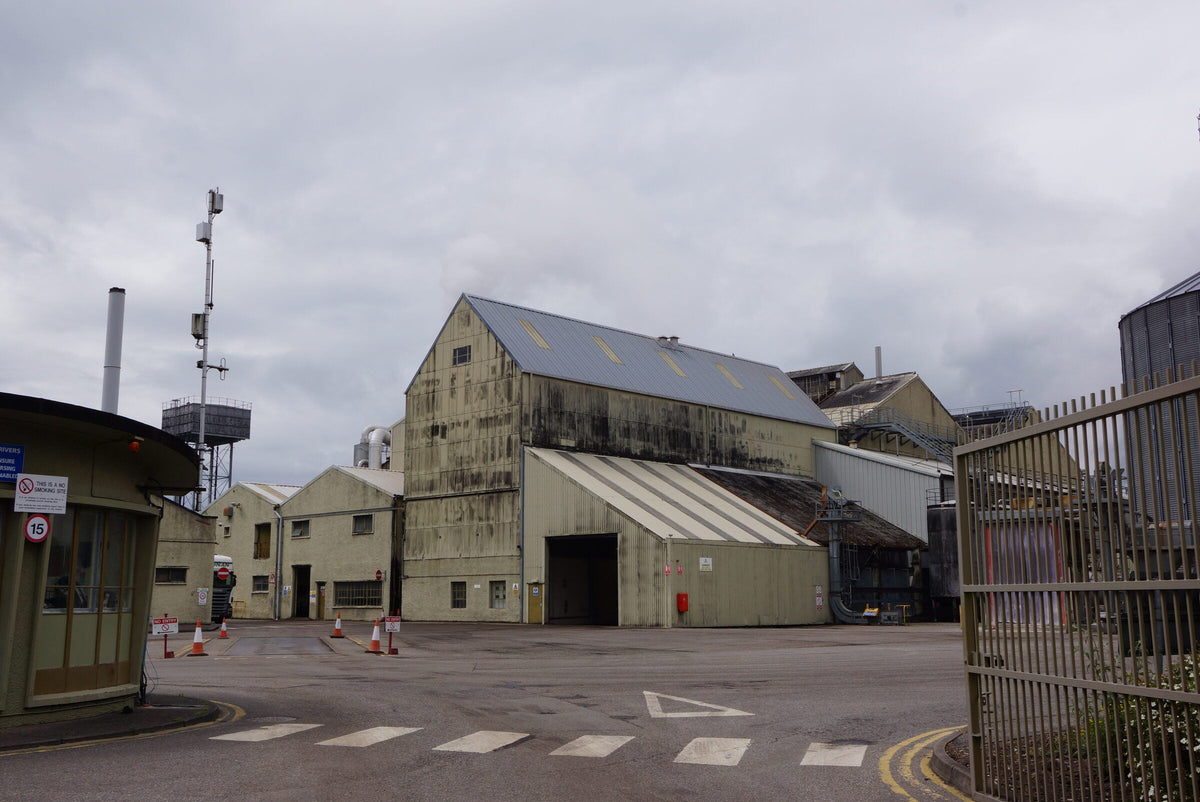
Invergordon Distillery: The Highland Grain Giant Behind Whyte & Mackay
Most of the distilleries on this blog make single malt you can buy by the bottle in a shop. Invergordon does not really work that way. It is the biggest grain distillery in the Highlands, tucked behind a security gate on the Cromarty Firth, and the vast majority of what it makes disappears into blends most people have never thought to ask about. Whyte & Mackay, Dalmore, Old Particular, even the odd gin, all lean on the plain, patient spirit this place turns out in enormous volume. It is not a household name. It is one of the reasons the household names taste the way they do.
Invergordon at a glance
| Region | Highland (Easter Ross, on the Cromarty Firth) |
| Founded | Built in 1959 to 1961 by Invergordon Distillers Ltd, a company formed specifically to put a grain distillery on this site |
| Owner | Whyte & Mackay, itself owned by the Philippines-based drinks group Emperador Inc since 2014 |
| Capacity | Around 36 million litres of pure alcohol a year, among the largest grain distilleries in Scotland |
| Stills | Three Coffey (continuous column) stills, nothing like the pot stills used for malt whisky |
| Water source | Loch Glass, in the hills above the town |
| Grain and fermentation | Wheat and maize, fermented for around 70 hours before distillation |
| Style | Light, sweet single grain: toffee, vanilla, brown sugar and soft orchard fruit rather than the weight of a pot-distilled malt |
| Visitor centre | None. Invergordon is a working production site and is not open to the public |
 History
Invergordon exists because of a very specific bet made in the late 1950s. A consortium of Scotch whisky interests, trading as Invergordon Distillers Ltd, wanted a grain distillery close to a deep-water port so that whisky, and the wheat and maize needed to make it, could move easily in and out by sea. The Cromarty Firth fit the brief, and building work ran from 1959 into 1961, when the first spirit came off the stills. The company floated on the London Stock Exchange in 1965, with the property group London Merchant Securities holding a majority stake.
What followed was one of the more ambitious buying sprees in Scotch whisky's postwar history. Invergordon Distillers picked up Tamnavulin in Speyside in 1966, Bruichladdich on Islay in 1968, and a stake in Tullibardine and Deanston in the early 1970s, before adding Jura and Glenallachie in the 1980s. For a while this small Highland company, built around a single grain plant, controlled a genuinely eclectic spread of malt distilleries from Islay to Speyside. Several of those names are still bottled today under very different ownership, and we cover a number of them elsewhere on this blog.
There was also a malt distillery on the Invergordon site itself, briefly. Ben Wyvis was built alongside the grain plant in 1965, mainly to supply malt for Invergordon's own blends, though it did produce a small amount of single malt that collectors still chase today. It never grew beyond a minor curiosity and was demolished in 1977, after barely twelve years of production. Its stills were not scrapped. They were bought and eventually installed at Glengyle in Campbeltown, where Kilkerran whisky is made today, so a small piece of a distillery that no longer exists is still quietly turning out spirit under a different name.
Ownership of the wider group changed hands several times through the 1970s and 1980s, passing through Hawker Siddeley and a management buyout, before Whyte & Mackay launched a hostile takeover bid for Invergordon Distillers in 1991. The battle took the best part of two years to resolve. When it finally did, in 1993, Whyte & Mackay came away with the Invergordon grain plant plus the malt distilleries of Jura and Tamnavulin, while other parts of the old group, Bruichladdich and Tullibardine among them, were sold off separately over the years that followed. Whyte & Mackay itself has since passed through American Brands, Fortune Brands, United Breweries and, since 2014, the Philippines-based Emperador Inc, which bought the group for a reported £430 million. Invergordon has sat at the centre of that whole chain of ownership for more than three decades, quietly supplying the grain component for Whyte & Mackay's blends the entire time.
How Invergordon makes its whisky
Grain whisky production has almost nothing in common with the process most of this blog describes. Instead of malted barley mashed in a traditional tun, Invergordon uses wheat and maize, cooked and fermented in a continuous process built for volume rather than character. Fermentation runs for around 70 hours, similar in length to many malt distilleries, but the base material and the scale set it apart from the start.
The real difference is in the stills. Invergordon runs three Coffey stills, tall columns of copper and steel that distil continuously rather than in the batch-by-batch rhythm of a pot still. Wash goes in one end and new-make spirit, reaching a remarkably high strength of around 94.4% ABV, comes out the other, a level of purity a pot still simply cannot reach. That high strength is precisely the point of grain whisky: it produces a lighter, cleaner spirit that blenders can use to carry a blend's volume without fighting for attention against the malt component. Water for the whole process is drawn from Loch Glass in the hills above the town, and the finished spirit is cut down to around 71% ABV before it goes into cask.
With three stills running more or less continuously, Invergordon can turn out something in the region of 36 million litres of pure alcohol a year, a figure that puts it among the largest grain distilleries in the country and dwarfs the output of almost every malt distillery covered on this blog. Most of that spirit is destined for blending, filled into ex-bourbon casks and left to mature for years before it ever meets a drop of malt whisky in a blending vat.
What does Invergordon taste like?
Grain whisky gets an unfair reputation as filler, and Invergordon is a decent argument against that. Left to mature on its own in a good cask, particularly a first-fill bourbon barrel, it turns into something genuinely pleasant to drink neat: soft, mellow and sweet, with toffee, peanut brittle and brown sugar doing most of the talking, and a touch of cinnamon spice sitting underneath. The palate tends to be brighter than the nose suggests, often described with notes of pear eau de vie and fruity esters alongside the same caramel sweetness, before an easy, more-ish finish that rarely lingers long or demands much of the drinker.
It is a different kind of whisky experience from a heavily peated Islay malt or a sherried Speysider, and it is meant to be. Where malt whisky picks up weight and character from the pot still, single grain relies almost entirely on the cask for its personality, which is exactly why long-matured Invergordon from a good barrel can be so rewarding: decades in oak have room to build flavour that the base spirit alone never had.
Invergordon and independent bottlers
Grain whisky sits in an unusual position in the independent bottling world. Distilleries guard their malt stock jealously, but grain casks move more freely, since almost none of it is destined for a single malt label anyway and distillers have less commercial reason to hoard it. Invergordon in particular turns up regularly under independent labels, more so than most of the malt distilleries we cover here.
Douglas Laing has released Invergordon repeatedly under its Old Particular range, with vintages spanning the late 1980s through to the early 2000s, and Hunter Laing has done the same under The Sovereign. Wemyss Malts has bottled long-aged Invergordon, including a widely noted 31 year old, and smaller independent names such as Claxton's have released their own single cask versions too. Cadenhead's, the oldest of the independent bottlers, has also put out Invergordon grain over the years. For a distillery with no visitor centre and no single malt of its own, it has a surprisingly visible footprint on independent bottlers' shelves.
The Single Cask and Invergordon
We have bottled Invergordon ourselves. Our cask 8118 was distilled in 1988 and bottled at 28 years old, at a cask strength of 45.8% ABV, part of our Signature Series. Our own tasting notes for it read almost exactly like the classic Invergordon profile: mellow and sweet, toffee, peanut brittle, brown sugar and cinnamon on the nose, with pear eau de vie and fruity esters coming through on the palate. Our listing does not specify the cask type used, though the tasting notes point towards a first-fill bourbon barrel, and it is currently out of stock at £40 a bottle.

That £40 price point is worth pausing on. It reflects what grain whisky generally costs compared with an equivalently aged single malt, where a 28 year old cask strength bottle from a well-known distillery would typically run several times that. Grain whisky is genuinely one of the more accessible corners of the single cask world, and cask 8118 is a fair example of why.
Collectability and cask ownership
Single grain whisky does not command the auction prices or the collector attention that malt whisky does, and Invergordon is no exception. That is not a criticism so much as a description of where the market's interest currently sits. For buyers, it cuts both ways: grain casks and grain bottlings tend to be more affordable to get into, which makes them a sensible way to explore long-aged, cask strength whisky without committing malt whisky money to the experiment.
Cask ownership itself is not a regulated investment class, whatever spirit is inside the cask. Values move for all sorts of reasons, including ones nobody can predict at the point of purchase, and they can go down as easily as up. We do not give financial advice, and anyone thinking about a cask as anything other than whisky they intend to drink or bottle should go in with that firmly in mind.
Visiting Invergordon
There is no getting around this one: Invergordon does not have a visitor centre and is not set up for public tours. It is a working industrial site behind a security gate, built for volume production rather than hospitality, and that is unlikely to change. If a trip to Easter Ross is on the cards regardless, the town itself has a genuine maritime history worth an afternoon, and two distilleries that do welcome visitors sit within easy reach: Dalmore, a few miles down the Cromarty Firth, and Glenmorangie, a short drive further north near Tain.
Invergordon FAQs
Can you visit Invergordon distillery?
No. Invergordon has no visitor centre and does not offer public tours. It is a working grain distillery, not set up for hospitality.
Who owns Invergordon distillery?
Whyte & Mackay, which has owned Invergordon since a hostile takeover of Invergordon Distillers Ltd concluded in 1993. Whyte & Mackay itself has been owned by the Philippines-based Emperador Inc since 2014.
Is Invergordon a single malt?
No. Invergordon is a single grain distillery, using wheat and maize distilled on continuous Coffey stills rather than the malted barley and pot stills used for single malt. Most of its output goes into blended Scotch.
What does Invergordon whisky taste like?
Sweet and mellow, with toffee, brown sugar, peanut brittle and a touch of cinnamon on the nose, pear and fruity esters on the palate, and an easy, gentle finish. Character comes almost entirely from the cask rather than the spirit itself.
Can you buy Invergordon whisky as a single cask?
Yes, more easily than most malt whisky from this list of guides. Independent bottlers including Douglas Laing, Hunter Laing, Wemyss Malts, Claxton's and Cadenhead's have all released single cask Invergordon, and we have bottled it ourselves.
What happened to Ben Wyvis distillery?
Ben Wyvis was a small malt distillery built alongside Invergordon in 1965, mainly to supply malt for Invergordon's blends. It closed and was demolished in 1977. Its stills survive and are still in use today at Glengyle distillery in Campbeltown.
Plan a bottling inspired by Invergordon
Unlike some of the distilleries we cover on this blog, Invergordon is genuinely available. Grain whisky moves more freely through the independent sector than malt does, and casks from this distillery turn up regularly from bottlers such as Douglas Laing, Hunter Laing and Wemyss Malts, alongside our own Signature Series bottling. If a long-matured, cask strength single grain with soft toffee and vanilla character is what you are after, this is a realistic place to start rather than a wish list.
If you would rather explore what a cask project could look like more broadly, our guides to buying a whisky cask and the four steps to bottling your own whisky cover the practical side, from choosing a cask through to a finished, labelled bottle. We also offer private label whisky for brands, hospitality venues and personal projects, full independent bottling services for anyone who wants a hand with the whole process, and secure bonded warehouse storage in Glenrothes for casks already in hand. Our current whisky casks available change regularly, grain and malt alike.
Tell us what drew you to Invergordon, whether it is the toffee and vanilla character, the price point, or simply an interest in how grain whisky is made, and we can point you towards what is actually in front of us right now, including grain casks when we have them. Get in touch and we will give you an honest answer.
Work with The Single Cask
Buy a whisky cask, bottle under your own label, or store casks in our HMRC approved bonded warehouse in Fife.
Read more
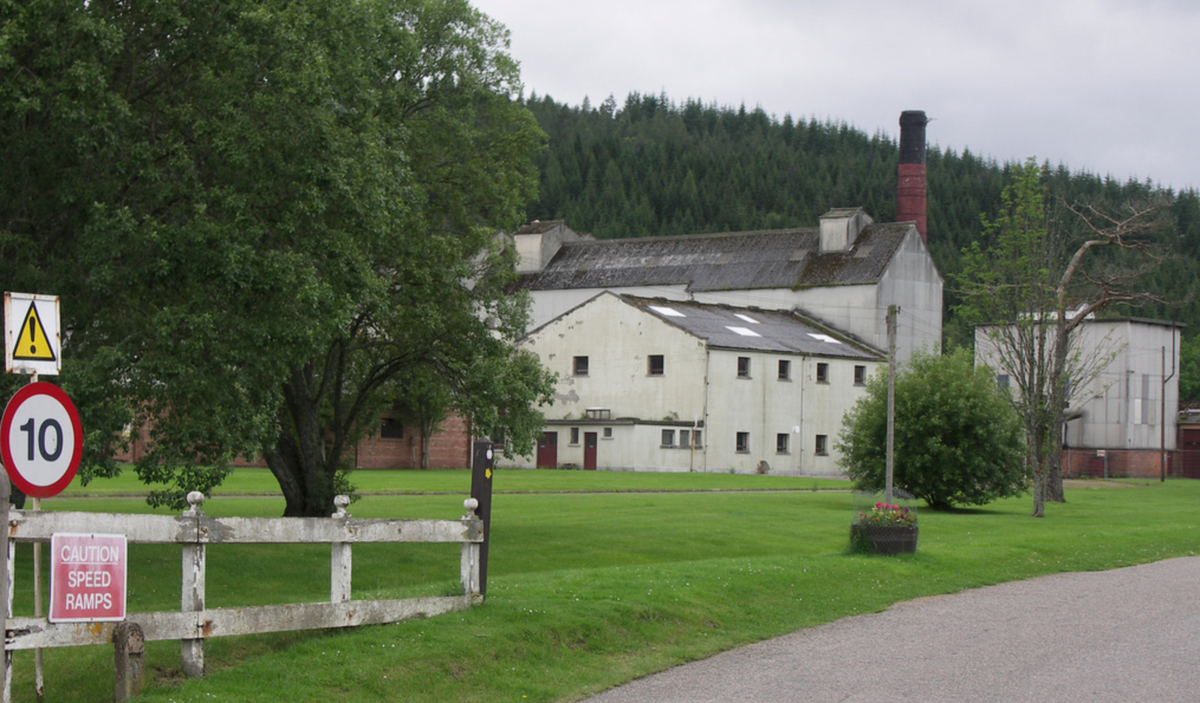
Imperial Distillery: The Ghost Distillery Beneath Dalmunach
Most whisky drinkers have never heard of Imperial, and there is a simple reason for that: the distillery has not made a drop since 1998, and the buildings themselves were pulled down in 2013. Yet I...
Read more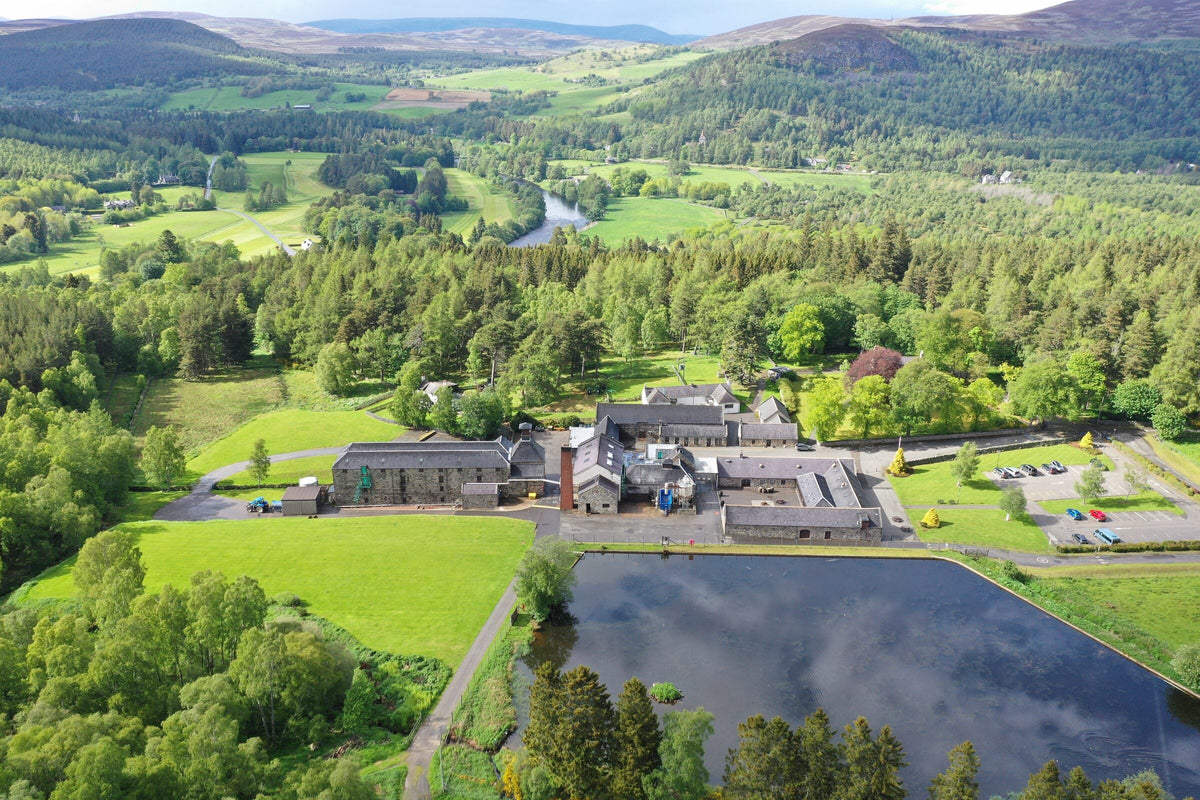
Royal Lochnagar Distillery: Whisky From Queen Victoria's Back Garden
Royal Lochnagar is easy to overlook simply because of where it sits. The distillery is tucked into the hillside above the River Dee, less than a mile from Balmoral Castle, and for most of its life ...
Read more


