
Glendullan Distillery: Diageo's Biggest Secret
There are 308 bottles of Glendullan logged on Whiskybase, the database independent bottlers and collectors use to track pretty much everything that gets released. For a Speyside distillery that has been running more or less continuously since 1897 and turns out something in the region of 3.7 million litres of spirit a year, that is a strikingly short list.
Glendullan makes an enormous amount of whisky and almost nobody outside Diageo's blending team has tasted it as a single malt. That combination, huge output and near-total obscurity, is what makes it interesting.
Glendullan at a glance
| Region | Speyside, Dufftown, Moray |
| Founded | 1897, rebuilt alongside a new distillery in 1972 |
| Owner | Diageo |
| Capacity | Commonly quoted at around 3.7 million litres of pure alcohol a year |
| Stills | Six: three wash, three spirit, pear shaped with tall, narrowing necks |
| Water source | Springs on Conval Hill and the River Fiddich |
| Fermentation | Typically quoted at around 75 hours |
| Malt spec | Unpeated |
| Style | Malty and honeyed, green apple, citrus, a gristy edge, gentle spice |
| Visitor centre | No, a working production site not open to the public |

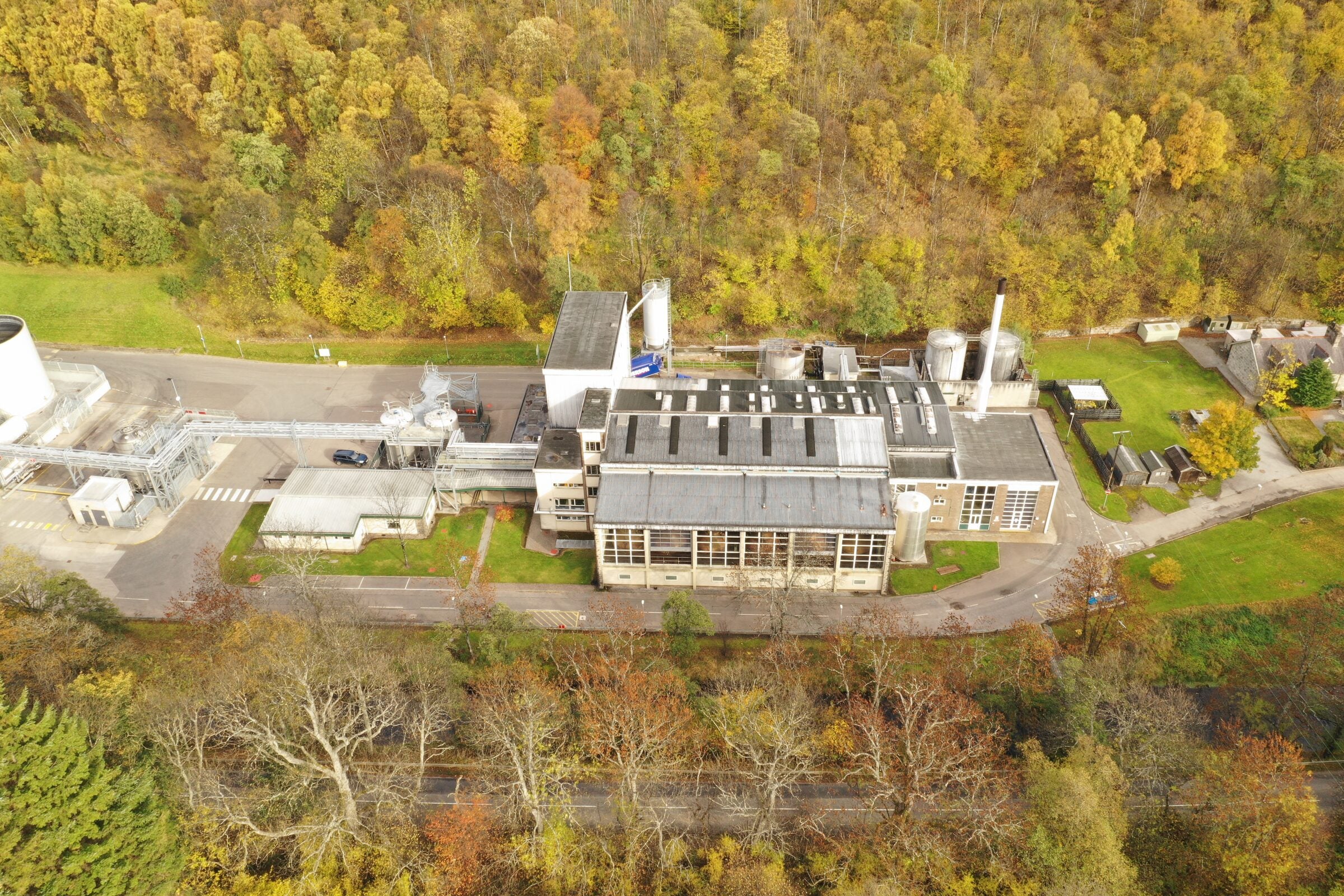
Glendullan from above
We sent our drone over Dufftown to film Glendullan from the air, and the footage shows something you rarely notice from ground level: how much of the site is 1970s industrial building rather than the picture-postcard stone distillery most people imagine. It sits in wooded ground above the Fiddich, close enough to Mortlach and Balvenie that all three could share a postcode, yet almost invisible to anyone who hasn't gone looking for it.
History of Glendullan
Glendullan was built in 1897 by William Williams and Sons, an Aberdeen blending and broking firm, and named for the Dullan Water, the burn that runs down through the town. It was the last of Dufftown's distilleries to be built in that Victorian boom, going up alongside Mortlach, Convalmore and the rest in a town that, by the turn of the century, had more stills per head than almost anywhere in Scotland. By some accounts the whisky found favour quickly: it is said to have become a preferred dram of the future Edward VII within a few years of opening, a claim repeated often enough in whisky writing that it is probably at least partly true, if impossible to verify with certainty a century on.
The distillery's corporate life follows a familiar Speyside pattern. William Williams and Sons merged with Greenlees Brothers in 1925, and the enlarged company was absorbed into the Distillers Company Limited around the same time, the conglomerate that would go on to swallow most of Scotland's independent distillers over the following decades. Glendullan continued quietly as a DCL, then Scottish Malt Distillers, workhorse for most of the twentieth century, doing what most Speyside distilleries of its size have always done: filling blends.
The most significant change came in 1972, when a second, much larger distillery was built directly beside the original 1897 buildings rather than replacing them. For thirteen years the two ran side by side, sharing a name and a spirit safe philosophy but operating as separate stillhouses, until the old Victorian plant finally closed in 1985 and the 1972 building became Glendullan on its own. That is the distillery working today, which is why Glendullan looks more like a 1970s industrial estate than the Highland castle style favoured by some of its neighbours. When Guinness and Grand Metropolitan merged in 1997 to form Diageo, Glendullan came with the rest of the old DCL estate into the new company, where it remains one of the larger sites in a very large portfolio.
How Glendullan makes its whisky
Water comes from springs on Conval Hill and from the River Fiddich, which runs close to the distillery on its way down through Dufftown. The malt is unpeated and, like most of Diageo's Speyside sites, drawn largely from the company's own industrial maltings rather than a single named farm or floor. Fermentation is typically quoted at around 75 hours, long enough to develop the fruity, estery character that runs through the make.
The stillhouse holds six stills, three wash and three spirit, all pear shaped with wide, rounded shoulders that narrow into long, fairly slender necks, a profile built for a reasonable amount of reflux and a spirit that comes off clean rather than heavy. By some accounts the washbacks at Glendullan sit outside the main building rather than inside it, a space-saving decision from the 1972 rebuild that is unusual among Speyside distilleries of its scale, though this is the kind of detail that circulates in whisky writing more readily than it gets formally confirmed, so it is worth treating as a well repeated claim rather than a certainty.
Almost everything that comes off Glendullan's stills goes into blends. Diageo has never made a secret of this: the distillery exists primarily to be a component, not a headline act, and its output supports the company's blended Scotch business at a scale that dwarfs its single malt releases many times over.
What does Glendullan taste like?
Where you can find it, Glendullan reads as a classic, unshowy Speyside malt: malty and slightly gristy on the nose, with green apple, honey and a squeeze of citrus running through it, and enough spice on the back end, cinnamon and black pepper more than anything sharper, to stop it feeling one dimensional. Independent tasting notes tend to mention golden syrup, toffee apple and orange marmalade on the palate, sometimes edging into stone fruit when water is added, with a finish that turns grassy and gently sour rather than sweet. It is not a distillery that shouts. What it does is give a clean, honeyed backbone that blenders can build on and, in the rare cask that reaches an independent bottler, a genuinely pleasant, easy-drinking single malt that never quite gets the attention its quality deserves.
Glendullan and independent bottlers
Glendullan is one of the harder Speyside names to find as an independent release, and the numbers back that up: Whiskybase currently lists somewhere in the region of 300 bottlings against the distillery's name, a fraction of what turns up for prolific independent favourites elsewhere on Speyside. That scarcity comes down to how the distillery is run rather than any reluctance on bottlers' part. With the overwhelming majority of production committed to Diageo's own blends and the Singleton range, there is simply very little spirit left over to be sold on as single casks, and what does leave the estate tends to move quickly once it is spotted.
When Glendullan does turn up independently, reviewers tend to be pleasantly surprised, precisely because so few people have tasted it outside an official Singleton bottling. It is the kind of distillery collectors of Dufftown or Diageo obscurities keep an eye out for rather than one anybody bottles routinely.
The Single Cask and Glendullan
We have bottled Glendullan. Our cask 131 was distilled in 2010 and matured first in a bourbon hogshead before being transferred into a first fill PX sherry hogshead to finish, coming to bottle at ten years old and a cask strength of 60%. It yielded 262 bottles, and like every cask we release it went out at natural colour with no chill filtration.
The nose runs pear juice, wine gums and raisins over oak, with a slight vanilla lift, green tea, cloves, nutmeg and barley sugar underneath. On the palate that pear character carries through, joined by pear drops, green tea, lime, oak, vanilla, black pepper, nutmeg and cinnamon, with a maltiness that ties it back to the distillery's house style. The finish is medium to long, mostly pear juice, black pepper and oak. It is a good example of what a well chosen finishing cask can do for a spirit that is naturally quiet and clean: the PX wood adds weight and dried fruit without swamping the pear and honey character underneath.
Our Glendullan 10 year old, cask 131, is currently sold out, which is honestly typical of how quickly a rare distillery like this moves once it is bottled. We would happily bottle another Glendullan cask if the right one came our way, and if you are after this exact style of whisky, get in touch and we can point you toward similar casks we currently hold.

Collectability and cask ownership
Glendullan sits in an odd corner of the collector's market. It is not chased in the way Diageo's famous closed distilleries or headline Speyside names are, largely because most collectors have never had the chance to form an opinion of it: there simply are not enough bottles in circulation to build the kind of secondary market history that drives strong auction interest. What little does trade tends to do so among people who specifically collect Dufftown distilleries or the less common corners of Diageo's estate, rather than the wider whisky investing crowd.
That scarcity cuts both ways for a cask buyer. On one hand, a genuinely rare distillery with a decent house style has obvious appeal, and the fact that so few casks reach the open market means anyone who owns one has something unusual. On the other hand, thin trading makes it hard to say with any confidence what a Glendullan cask, or bottled Glendullan, is actually worth, because there is so little data to go on. As with any cask, ownership involves risk and values can go down as well as up, and none of this should be read as financial advice. If you want a clearer sense of what you would actually be buying, our guide to cask sizes and types is a sensible place to start.
Glendullan FAQs
Who owns Glendullan distillery?
Diageo. The distillery passed through William Williams and Sons, then Greenlees Brothers, then the Distillers Company Limited during the twentieth century, before arriving with the rest of that estate into Diageo when the company was formed in 1997.
Is Glendullan peated?
No. Glendullan makes an unpeated, malty and fruity Speyside spirit, most of which goes into blends.
Can you visit Glendullan distillery?
No, it is a working production site with no visitor centre. It sits in wooded ground above the Fiddich near Dufftown, within walking distance of Mortlach and Balvenie, though none of the buildings are open to the public.
Why is independently bottled Glendullan so rare?
Because almost all of its output goes straight into Diageo's blends and the Singleton range, leaving very little spirit available to be sold on as single casks. Whiskybase currently lists only a few hundred bottlings against the distillery's name.
What does Glendullan taste like?
Malty and gristy with green apple, honey and citrus, developing into golden syrup, toffee apple and gentle spice on the palate, with a grassy, lightly sour finish. It is a clean, well mannered Speyside style rather than a bold or heavily sherried one.
Can you buy a cask of Glendullan?
Rarely, but it does happen. Casks have occasionally reached independent bottlers, including us, though supply is genuinely thin rather than routine. Ask us and we will tell you honestly what, if anything, is realistically available.
Plan a bottling inspired by Glendullan
We will be straightforward about this: a cask specifically from Glendullan is genuinely hard to get hold of, not impossible, but hard. We have managed it once, and casks do occasionally reach independent bottlers, but with the vast majority of the distillery's output committed to Diageo's own blends, there is very little left over, and what does appear tends to be snapped up quickly rather than sitting around waiting for a buyer. If a specific Glendullan cask becomes available to us, we will say so plainly rather than implying availability that does not exist.
What we can do, in the meantime, is help you plan a bottling project built around this style of whisky rather than this exact name. Glendullan's malty, honeyed, gently spiced character has plenty in common with other Speyside blending workhorses we do have regular access to, distilleries like Mannochmore and Glentauchers, both of which share that same clean, unshowy profile and both of which we bottle far more often. If the flavour is what draws you to Glendullan rather than the name on the label, there is usually a comparable cask we can put in front of you.
Either way, the useful next step is to tell us what you are actually planning. The flavour or distillery style you have in mind, roughly how many bottles you need, your approximate budget, a preferred bottling date, and whether this is for a drinks brand, a retailer, a hospitality venue, a company gift, a whisky club, an event or simply your own private bottling, all of it helps us give you a proper answer rather than a generic one. Let us know too if you will need help with naming, labels, storage or the bottling itself.
From there we can give you an honest view of what is available, suggest alternatives when a named distillery like Glendullan is not realistically obtainable, and talk through likely bottle yield, the main costs involved and a practical route from choosing a cask through to finished bottles in your hand. You can start that conversation through our page on buying a whisky cask, read more about private label whisky if you are planning something for a brand or venue, look at our four steps to bottling your own whisky for a sense of the process, or simply get in touch and tell us what you have in mind.
Work with The Single Cask
Buy a whisky cask, bottle under your own label, or store casks in our HMRC approved bonded warehouse in Fife.
Read more
Cragganmore Distillery: Speyside's Deliberate Outlier
Diageo picked Cragganmore to represent Speyside's whole range of character, not just its honeyed side. Flat-topped stills and old-fashioned worm tubs give it a savoury, meaty style unlike its neigh...
Read more
Cardhu Distillery: The Single Malt Hiding Inside Johnnie Walker
Cardhu quietly ranks among the best-selling single malts in the world, yet almost everything it makes goes into Johnnie Walker. Here is the story of the farm that started it, the 2003 controversy t...
Read more


