
Article: Knockdhu Distillery: The Malt That Had to Change Its Name
Knockdhu Distillery: The Malt That Had to Change Its Name
Knockdhu holds a specific, slightly bureaucratic distinction: it was the first malt distillery the Distillers Company Ltd ever built from scratch, in 1893 and 1894, rather than bought. For a century its whisky sold under the Knockdhu name. Then, in 1994, the name had to change. There was no scandal and no grand rebrand strategy behind it. Customers kept confusing it with a different Speyside distillery with an almost identical name.
Knockdhu at a glance
| Region | Highland (Knock, Banffshire) |
| Founded | 1893, production started 1894 |
| Founder | John Morrison, land bought from the Duke of Fife |
| Built for | Distillers Company Ltd, its first purpose-built malt distillery |
| Brand name | anCnoc, since 1994 (previously sold as Knockdhu) |
| Owner | Inver House Distillers (since 1988) |
| Stills | 1 wash, 1 spirit (originally coal-fired, now steam) |

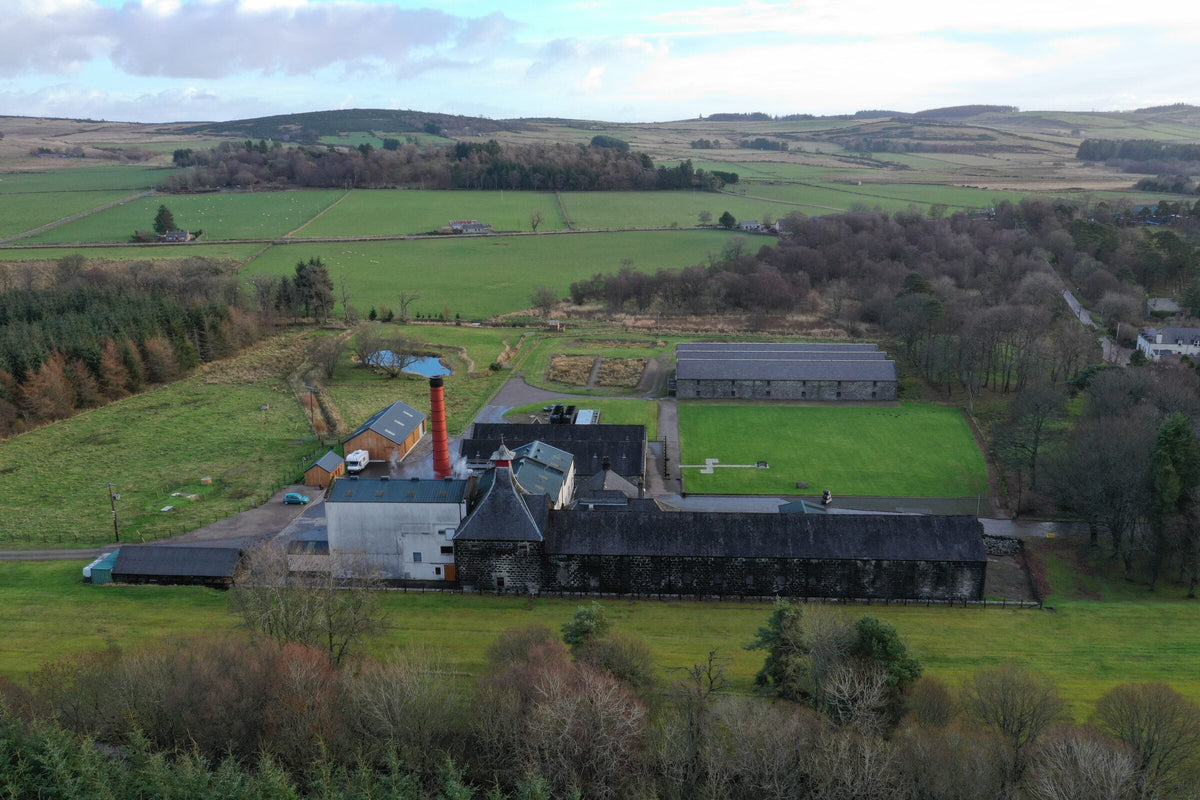
Knockdhu from above
From the air, Knockdhu's granite buildings sit low against the open farmland around Knock Hill, in the kind of quiet Banffshire countryside that has left the distillery little room to expand over its working life. The footage below shows that setting better than any ground level photograph can.
History of Knockdhu
John Morrison founded Knockdhu in 1893 after buying land from the Duke of Fife, and production began in 1894 to supply whisky for Haig's blends. It was the first malt distillery the Distillers Company Ltd built from the ground up rather than acquired from an existing owner, which was the model DCL used far more often as it consolidated the industry through the twentieth century.
Knockdhu's working life has had the usual interruptions of a century-old Scottish distillery. It closed briefly in the 1930s, closed again from 1940 to 1945 under wartime barley restrictions, and retired its original steam engine in 1947 once the site connected to the national grid. The serious closure came in 1983, in the same downturn that shut dozens of distilleries that decade. Inver House Distillers bought it in 1988 and resumed production in February 1989, a quick revival by the standards of distilleries mothballed in that era.
The best-known quirk of Knockdhu's story came in 1994, when the brand switched from selling whisky as Knockdhu to the Gaelic name anCnoc ("the hill"). The reason was practical. Knockdhu was too easily confused with Knockando, a well-known Speyside distillery with a near-identical name, and the rebrand cut through decades of customer mix-ups in one move.

How Knockdhu makes its whisky
Knockdhu runs a traditional single pair of stills, one wash and one spirit, coal-fired at first and converted to steam as the distillery modernised. Water comes from springs on Knock Hill itself, and the buildings are made from local eye-grey granite, which gives the site a strong regional character even by Highland standards. Annual capacity sits at 1.7 million litres, modest by industrial standards but typical for a distillery of this vintage that has chosen consistency over expansion.

Knockdhu and independent bottlers
anCnoc has built a solid reputation on quality rather than scarcity. Its 12 Year Old won Gold at the International Spirits Challenge in 2017, among other awards. Independent bottlings do circulate through specialist retailers, though the distillery's own anCnoc range is the more common way to try it. Independent bottlers do not chase this name the way they chase a Brora or a Port Ellen, because Inver House has kept a steady supply of its own releases on the market.
Knockdhu and The Single Cask
We don't hold a Knockdhu or anCnoc cask ourselves. If it is a comparable Highland character you are after, our Teaninich 9 Year Old (cask 716302) is a fair match: another Highland distillery historically built to feed blends before developing its own identity, and one whose stock we can trace back directly.

Plan a bottling inspired by Knockdhu
Knockdhu's 1994 rebrand is a reminder that even a distillery's own name is not fixed. In the end the whisky maturing in the cask is what counts, whatever ends up on the label. If you want a more direct hand in that process, start with our whisky casks available page, or read about buying a whisky cask and the four steps to bottling your own whisky. For something under your own name, our private label whisky service covers that end to end. For more on the Highland region, see our guides to Teaninich and Knockando.
We bottle whisky from casks we own ourselves, and we also supply casks to independent bottlers and to private customers who want a bottling under their own name. If you are an independent bottler looking for stock, or you have always wanted a cask of your own, talk to us about what we have in the warehouse. Where we don't hold the distillery featured in a guide, we say so rather than dress something else up as a substitute.
If you have questions about any of this, or about Knockdhu in particular, our contact page is the fastest way to reach us.
Frequently asked questions
Why is Knockdhu whisky sold as anCnoc?
The distillery rebranded its single malt as anCnoc in 1994 to stop confusion with Knockando, a different and similarly named Speyside distillery.
Who owns Knockdhu now?
Inver House Distillers, since 1988, following a closure from 1983 to 1989.
Was Knockdhu DCL's first purpose-built distillery?
Yes. It was the first malt distillery the Distillers Company Ltd built from scratch, in 1893 and 1894, rather than acquired.
Can I visit Knockdhu distillery?
Knockdhu is a small working distillery rather than a drop-in visitor attraction, so check with Inver House directly before planning a trip.
What does anCnoc whisky taste like?
A gentle, approachable Highland style. Its 12 Year Old won Gold at the International Spirits Challenge in 2017.
Does The Single Cask sell a Knockdhu cask?
Not at the moment. We point customers toward our Teaninich 9 Year Old as a comparable Highland alternative.
Work with The Single Cask
Buy a whisky cask, bottle under your own label, or store casks in our HMRC approved bonded warehouse in Fife.
Read more
Rosebank Distillery: The King of the Lowlands, Back From 1993
Rosebank was mothballed in 1993 over the cost of an effluent upgrade and became the most sought-after Lowland ghost distillery in Scotch whisky. Ian Macleod Distillers reopened it in 2023, three de...
Read more


