
Article: St Magdalene Distillery: The Lowland Giant Now Lived In as Flats
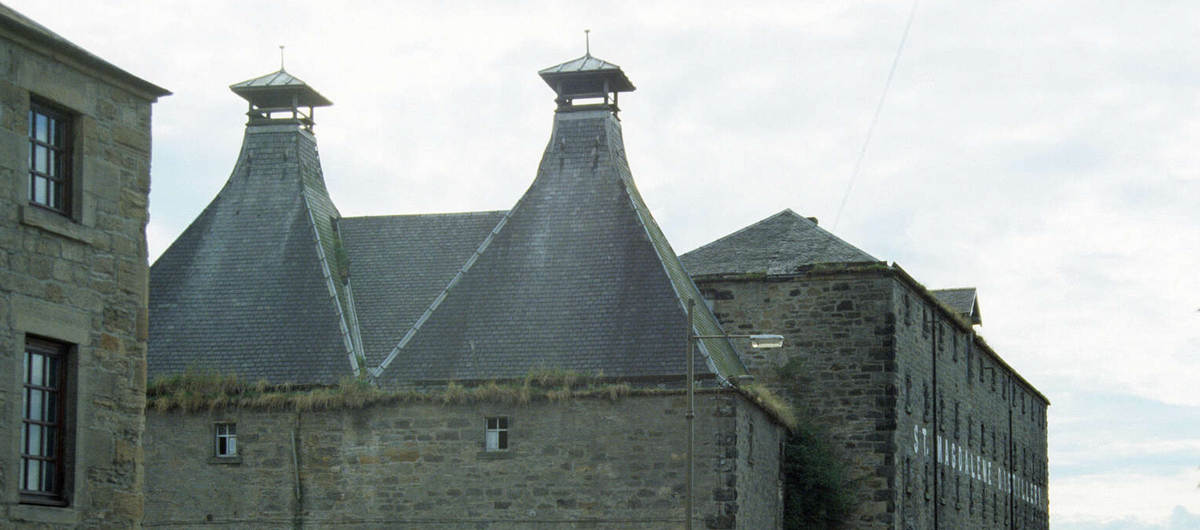
St Magdalene Distillery: The Lowland Giant Now Lived In as Flats
St Magdalene, also known as Linlithgow after its town, was a large operation for its time: 14 washbacks, five stills and capacity of over a million litres of alcohol a year. Alfred Barnard, visiting in the late 19th century, noted stock in the warehouses distilled as far back as 1875 and 1877. None of that scale saved it. The Distillers Company Ltd closed it permanently in 1983, one of nine distilleries it shut that year, and the site is residential flats today.
St Magdalene at a glance
| Region | Linlithgow, West Lothian, Lowland |
| Founded | c.1753 |
| Founder | Sebastian Henderson |
| Closed | 1983, one of nine DCL closures that year |
| Site today | Residential flats, converted early 1990s |
| Surviving structures | Malting barn and kiln, C-Grade listed, pagoda roof visible |
 History of St Magdalene
Sebastian Henderson established the distillery around 1753 on land rented from the Countess of Dalhousie, reportedly built to compete with the nearby Bulzion distillery. Adam Dawson bought it in 1798 and merged in the neighbouring Bonnytoun site, and the Dawson family, trading as A&J Dawson, ran it until the firm went into liquidation in 1912. The Distillers Company Ltd bought it that year, and in 1914 St Magdalene became one of the founding members of Scottish Malt Distillers.
DCL closed the distillery permanently in 1983, one of nine distilleries the company shut that year as the industry worked through a severe downturn. The site was sold to developers and converted into residential flats in the early 1990s. The malting barn and kiln survive as C-Grade listed buildings, and the pagoda roof remains the last visible trace of the site's distilling past above the flats that now occupy it.
 How St Magdalene made its whisky
At its peak St Magdalene ran 14 washbacks and five stills, a large setup by Lowland standards, with cooling water drawn from the Union Canal and process water from an on-site artesian well. Most of its output went into blends, though independent bottlers released it under both the St Magdalene and Linlithgow names. Diageo issued official Rare Malts bottlings in the 1990s, a 23-year-old from 1970 and a 19-year-old from 1979, and a 30-year-old Special Release under the Linlithgow name followed in 2004.
St Magdalene and independent bottlers
Because the distillery has been closed for over four decades, genuine St Magdalene stock is scarce and almost entirely in the hands of specialist auction houses and long-established independent bottlers. What survives tends to be priced accordingly.
St Magdalene and The Single Cask
We don't currently hold a St Magdalene cask, and given how long the distillery has been closed, genuine stock of any kind is rare industry-wide. If a comparable Lowland character is what you're after, get in touch and we'll tell you what we hold right now.
Plan a bottling inspired by St Magdalene
A distillery that ran fourteen washbacks and five stills, then vanished entirely into a block of flats within a decade of closing, is a sharp lesson in how quickly an industrial-scale site can disappear once production stops. If that history interests you for your own bottling, start with our whisky casks available page, or read about buying a whisky cask and the four steps to bottling your own whisky. For something under your own name, our private label whisky service covers that end to end. For more on the Lowland region, see our guides to Rosebank and Littlemill.
We hold a wide range of casks to sell to independent bottlers and private customers, drawn from many different distilleries, finished in a variety of wood types from sherry and port casks to bourbon and rum, with real differences in yeast and production style from one distillery to the next. If you are an independent bottler looking for stock, or you have always wanted a cask of your own, talk to us about what we currently hold in the warehouse. Where we don't hold the exact distillery featured in this guide, we say so honestly, and we're usually able to point you toward something close in style from what we do have.
If you have questions about any of this, or about St Magdalene in particular, our contact page is the fastest way to reach us.
Frequently asked questions
Why is St Magdalene also called Linlithgow?
St Magdalene is the distillery's own name, and Linlithgow is the town it stood in. Both names were used on bottlings over the years, including Diageo's 2004 Special Release.
When did St Magdalene close?
1983, one of nine distilleries DCL closed that year.
What happened to the St Magdalene site?
It was converted into residential flats in the early 1990s. The malting barn and kiln survive as C-Grade listed buildings, with the pagoda roof still visible.
How big was St Magdalene?
Large for a Lowland distillery: 14 washbacks, five stills, and capacity of over a million litres of alcohol a year.
Were there official St Magdalene bottlings?
Yes, Diageo released Rare Malts bottlings in the 1990s and a 30-year-old Special Release under the Linlithgow name in 2004.
Does The Single Cask sell a St Magdalene cask?
Not at the moment. Genuine stock is rare industry-wide. Contact us for comparable Lowland stock.
Work with The Single Cask
Buy a whisky cask, bottle under your own label, or store casks in our HMRC approved bonded warehouse in Fife.
Read more
Loch Ewe Distillery: The Smallest Legal Stills in Scotland, Once Run From a Hotel
Loch Ewe, at Aultbea in Wester Ross, had the smallest commercial stills of any legal distillery in Scotland, found through a licensing loophole and run from a hotel from 2006. It was put up for sal...
Read more


