
Article: Littlemill Distillery: Scotland's Oldest Licensed Whisky Site, Burned to the Ground in 2004
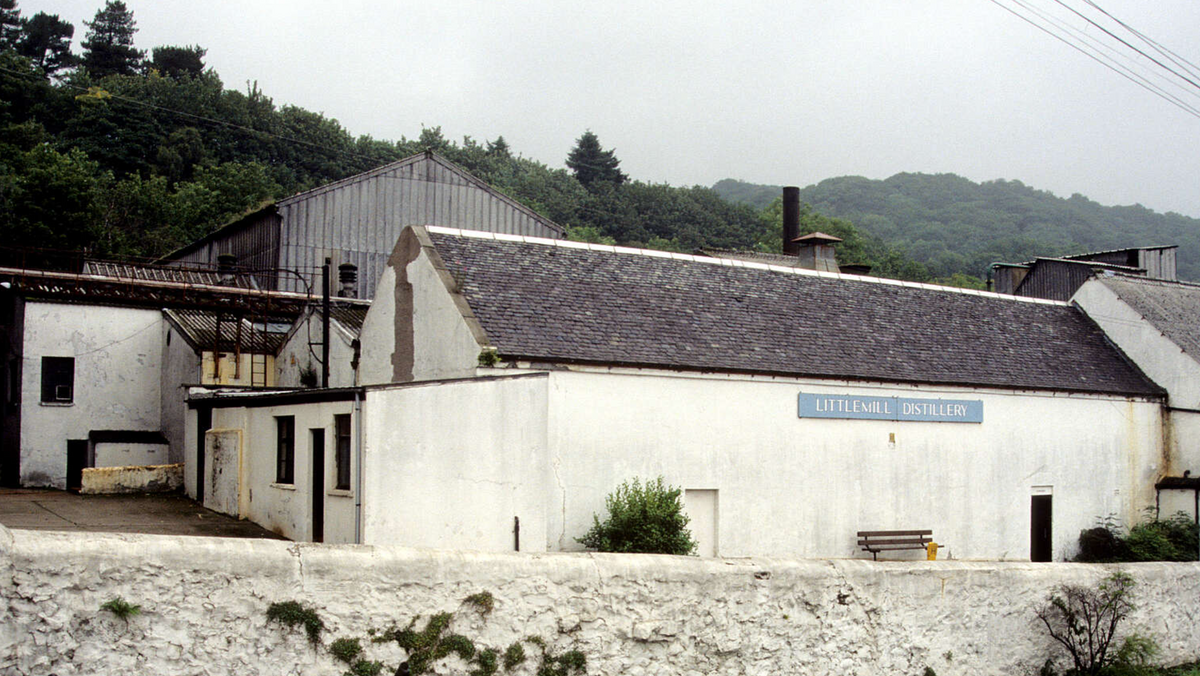
Littlemill Distillery: Scotland's Oldest Licensed Whisky Site, Burned to the Ground in 2004
A date stone on a warehouse gable at Littlemill reads 1772, and a Justice of the Peace record shows the site's first retail licence granted on 2 November 1773, evidence the distillery points to in its claim to be Scotland's oldest licensed whisky site. The exact start of distilling there is less clear than the stone suggests, but the site's estate and brewery were already operating by 1750.
Littlemill at a glance
| Region | Bowling, West Dunbartonshire, Lowland |
| Date stone | 1772, retail licence granted 1773 |
| Closed | 1994, dismantled 1997 |
| Destroyed | Fire in 2004 |
| Current owner of remaining stock | Loch Lomond Distillery |
| Historic styles | Dumbuck (peated), Dunglass (full bodied, both discontinued 1972), Littlemill (light) |


History of Littlemill
Matthew Clark & Co. bought the distillery in 1817, and it passed through Hector Henderson's ownership around 1840 before Hay rebuilt and expanded it in 1875. The distillery was mothballed from 1929 to 1931 and again in 1984, closing for good as a working site in 1994 after Gibson International, which had reopened it in 1989, went bankrupt. Duncan Thomas had earlier reopened it in 1931 with new stills and a switch to double distillation, introducing the three parallel styles that defined its output for decades: the peated Dumbuck, the fuller Dunglass, and the lighter Littlemill itself, with Dumbuck and Dunglass both discontinued in 1972.
The site's story did not end quietly. Loch Lomond Distillery bought it and dismantled the remaining buildings in 1997, and what was left was destroyed by fire in 2004. A housing development now occupies the land where the distillery once stood. The surviving casks, however, did not disappear with the buildings. They are held at Loch Lomond Distillery, and releases from that remaining stock have continued to appear, including a Private Cellar 25 and 27 Year Old, a 1992 Vintage, a 40 Year Old Celestial Edition, and a Private Cellar 29 Year Old released in September 2019.
How Littlemill made its whisky
Littlemill ran three parallel house styles rather than a single profile: a peated expression (Dumbuck), a fuller bodied style (Dunglass) and the lighter signature Littlemill malt, before the first two were discontinued in 1972 in favour of concentrating on the lighter house character. The rebuild of 1931 under Duncan Thomas introduced new stills and moved production to double distillation, and the site continued in that form, through several more ownership changes, until its final closure.

Littlemill and independent bottlers
Because no new spirit has been distilled since 1994 and the physical distillery no longer exists, every Littlemill release now comes from a genuinely finite pool of remaining casks. Independent bottlers and Loch Lomond Distillery itself have released vintage dated expressions from this stock, and demand has only grown as the remaining supply shrinks.
Littlemill and The Single Cask
We don't currently hold a Littlemill cask, and with the distillery long gone and its remaining stock finite, that is genuinely unlikely to change. If a Lowland character with this kind of history appeals to you, get in touch and we'll tell you what comparable Lowland stock we hold right now.
Plan a bottling inspired by Littlemill
Littlemill's survival through more than two centuries, several closures and two World Wars, only to be lost to demolition and fire within a few years of each other, shows how fragile even the oldest whisky history can be once a site stops producing. If that history interests you as a starting point for your own bottling, start with our whisky casks available page, or read about buying a whisky cask and the four steps to bottling your own whisky. For something under your own name, our private label whisky service covers that end to end. For more on the Lowland region, see our guides to Rosebank and Auchentoshan.
We hold a wide range of casks to sell to independent bottlers and private customers, drawn from many different distilleries, finished in a variety of wood types from sherry and port casks to bourbon and rum, with real differences in yeast and production style from one distillery to the next. If you are an independent bottler looking for stock, or you have always wanted a cask of your own, talk to us about what we currently hold in the warehouse. We do hold a cask of the exact distillery featured in this guide let us know if you are interested in bottling a Littlemill!
If you have questions about any of this, or about Littlemill in particular, our contact page is the fastest way to reach us.
Frequently asked questions
Is Littlemill really Scotland's oldest distillery?
It claims the title based on a 1772 date stone and a 1773 retail licence record, though exactly when distilling began on the site is less certain than the stone alone suggests.
When did Littlemill close?
It closed for good in 1994. The buildings were dismantled in 1997 and what remained was destroyed by fire in 2004.
Can you still buy Littlemill whisky?
Yes, from a finite remaining pool of old casks held at Loch Lomond Distillery, released periodically as vintage dated bottlings.
What were Dumbuck and Dunglass?
Two other house styles Littlemill made alongside its signature light malt: a peated style (Dumbuck) and a fuller bodied style (Dunglass), both discontinued in 1972.
Does Littlemill distillery still exist?
No. It was dismantled in 1997 and destroyed by fire in 2004. A housing development now occupies the site.
Does The Single Cask sell a Littlemill cask?
Not at the moment, and with the remaining stock finite, that is unlikely to change. Contact us for comparable Lowland stock.
Work with The Single Cask
Buy a whisky cask, bottle under your own label, or store casks in our HMRC approved bonded warehouse in Fife.
Read more
Strathclyde Distillery: The Grain Giant Behind Glasgow's Blends
Strathclyde has made grain whisky in Glasgow's Gorbals since 1928, mostly destined for blends, with a capacity of 40 million litres a year. We hold a genuine single cask from it.
Read more


