
Article: Bladnoch Distillery: Scotland's Southernmost Whisky Survivor
Bladnoch Distillery: Scotland's Southernmost Whisky Survivor
Most Scotch distilleries have one closure in their history, if that. Bladnoch has had four, and the distillery has come back from every single one. Tucked into the farmland of Wigtown, in Dumfries and Galloway, it sits further south than any other working distillery in Scotland, drawing its water from the very river that gave it its name. That combination, the setting, the survival story and a whisky that has changed character more than once under new owners, makes Bladnoch one of the more unusual names in the Lowland region.
This guide covers Bladnoch's long and interrupted history, how the whisky is made today under its current Australian ownership, what its whisky actually tastes like, and how independent bottlers and cask buyers fit into the picture.
Bladnoch at a glance
| Region | Lowland (Wigtown, Dumfries and Galloway) |
| Founded | 1817, by John and Thomas McClelland |
| Owner | David Prior, since July 2015 |
| Capacity | Around 1.5 million litres of pure alcohol a year |
| Stills | 4 (2 wash, 2 spirit) |
| Mash tun | 5 tonnes |
| Water source | The River Bladnoch, on whose bank the distillery stands |
| Style | Light, floral and grassy, classic Lowland character |
| Visitor centre | Yes, opened September 2019 |

Bladnoch from above
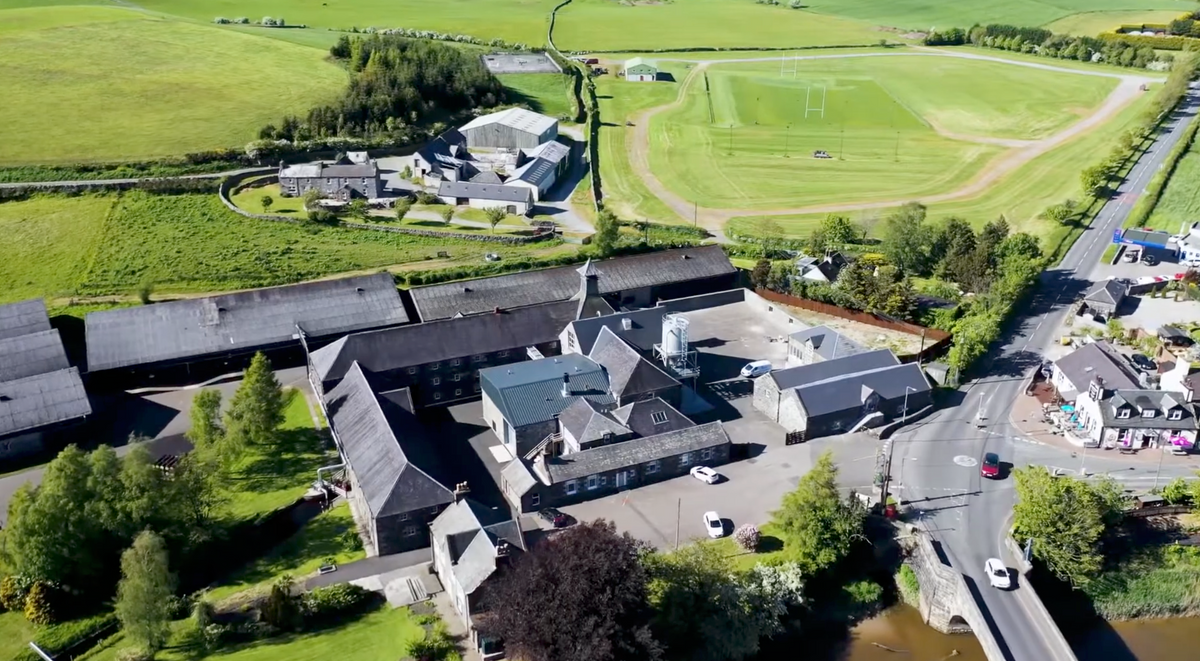
Bladnoch sits low in the Galloway farmland beside the river that shares its name, a cluster of dark pitched roofs and pagoda vents among green fields with barely another building in sight. Our drone caught the distillery from directly overhead, tracing the warehouses and the river bend that has supplied its water since 1817.
History of Bladnoch
John and Thomas McClelland took out a licence to distil on their farm at Bladnoch, just outside Wigtown, in 1817, and the family kept hold of it until 1905, when industry oversupply forced a closure that lasted until 1911. The Irish firm Dunville and Co then ran it on and off until 1937, when it closed again, this time for nearly two decades. It reopened in 1956 and passed through a string of owners over the following decades: Ian Fisher and McGowan and Cameron took it on in 1966, Inver House Distillers in 1973, Arthur Bell and Sons in 1983, and United Distillers, the forerunner of today's Diageo, in 1987. United Distillers closed the site again in 1993.
The most colourful chapter began in 1994, when Northern Irish brothers Raymond and Alwyne Armstrong bought the distillery and spent several years restoring it before production restarted in December 2000. The Armstrong era was notably open to the wider trade: Bladnoch built an active independent bottling programme of its own and rented out warehouse space to other producers, a rare example of a working distillery treating third parties as partners rather than competitors. That openness could not save the business indefinitely, and the distillery closed for a fourth time in March 2014.
Its current chapter began in July 2015, when Australian entrepreneur David Prior bought the site and set about restoring it once more. Production resumed in 2017, and a new visitor centre opened its doors in September 2019, with the then Duke and Duchess of Rothesay attending the opening ceremony. For a distillery that has now been mothballed four times in two centuries, that is a genuinely hard won milestone, and Bladnoch today looks in better shape than it has for decades.
How Bladnoch makes its whisky
Bladnoch runs a straightforward double distillation through two wash stills and two spirit stills, fed by a 5 tonne mash tun, and is one of the very few distilleries in Scotland to draw its process water directly from the river it is named after and stands beside. Capacity today is around 1.5 million litres of pure alcohol a year, modest by industry standards but a considerable recovery for a site that spent so much of its history either closed or fighting for survival.
The character of Bladnoch's spirit has shifted with its owners. Under Bell's in the 1980s it was known as a lighter, floral style; later blending requirements pushed it toward something nuttier and spicier. Under David Prior's ownership the distillery has settled back into a lighter, grassy, malty expression of the classic unpeated Lowland style, closer in spirit to what founders would likely recognise than the in-between years produced.
What does Bladnoch taste like?
Expect a gentle, easy drinking Lowland malt: fresh cut grass and light cereal notes up front, with soft orchard fruit, a touch of honey and a clean, faintly floral finish. It is not a whisky built to shout, and that restraint is exactly the point. Alongside Auchentoshan and Glenkinchie, Bladnoch is one of the handful of names still keeping the traditional Lowland style alive, a style that all but disappeared from Scotland through the twentieth century as distilleries in the region closed one after another.

Bladnoch and independent bottlers
Bladnoch's relationship with the independent bottling world has not been consistent, which is really a reflection of its unsettled ownership history rather than any reluctance on the distillery's part. The Armstrong years between 2000 and 2014 were genuinely productive for third parties: stock moved into independent releases at accessible prices, and other producers used Bladnoch's warehousing for their own casks. A fair amount of that older stock, distilled before the 2014 closure, still surfaces at specialist retailers and auction from time to time.
Since David Prior took over in 2015, the focus has understandably been on rebuilding Bladnoch's own single malt range and its visitor experience, and new-make casks from the current era are less commonly seen reaching independent bottlers than they were under the Armstrongs. That is not unusual for a distillery midway through re-establishing itself, and it may well change again as production settles into a rhythm.
The Single Cask and Bladnoch
We do not currently hold a Bladnoch cask, and we like to be upfront when that is the case rather than pad out a guide with stock we do not have. If a genuine Bladnoch cask comes our way, whether from the Armstrong years or the current production, we will treat it exactly as we treat every cask that reaches our bonded warehouse in Glenrothes: assessed on its own character before it goes anywhere near a bottle.
In the meantime, if it is a Lowland malt you are after, we do have genuine Lowland stock to talk about, including our own Glasgow (Peated) 6 year old, a rare peated take on the region, and an Auchentoshan 12 year old for a more classic, unpeated comparison. Neither is Bladnoch, but both give a genuine feel for what this quiet corner of Scotch whisky can do.
Plan a bottling inspired by Bladnoch
Bladnoch's survival story and its river-water setting make it a distinctive name to build a private label release around, even without a Bladnoch cask itself in hand. If the Lowland style is what draws you in, whether that is Bladnoch's own grassy character or the wider region's floral, easy drinking profile, our specialists can talk you through what we may currently be able to source, matched by flavour, age and cask type rather than distillery name alone.
From there, the path is the same whichever cask you choose: buy a whisky cask with verified provenance, let it mature in our bonded warehouse, and when it is ready, we can guide you through bottling it under your own label. Our four steps to bottling your own whisky sets out what that process actually involves, start to finish.
As with any cask, whisky cask ownership is not a regulated investment in the UK, and values can fall as well as rise once storage, insurance and duty are accounted for. Nothing in this guide is financial advice, and any decision to buy should rest on the whisky and the paperwork behind it, not on promised returns.
Curious what a Bladnoch flavoured Lowland bottling might look like, or want to talk through current stock in the region? Contact us and we will give you a straight answer.
Bladnoch FAQs
Who owns Bladnoch distillery?
Bladnoch is owned by Australian entrepreneur David Prior, who bought the site in July 2015 after its fourth closure in March 2014. Production resumed in 2017 and a new visitor centre opened in September 2019.
Is Bladnoch the most southerly distillery in Scotland?
Yes. Bladnoch, near Wigtown in Dumfries and Galloway, is widely recognised as Scotland's most southerly working distillery.
Is Bladnoch peated?
No. Bladnoch makes an unpeated, classic Lowland style malt: light, grassy and floral rather than smoky.
Can you visit Bladnoch distillery?
Yes. Bladnoch has a visitor centre that opened in September 2019, offering tours and tastings at the distillery near Wigtown.
Can I buy a cask of Bladnoch?
Occasionally, mostly stock distilled during the Armstrong ownership between 2000 and 2014, which still appears through specialist retailers and auctions. Casks from the current, post 2017 production are less commonly seen on the independent market. Verify provenance and paperwork through a reputable specialist before committing to any cask, whichever era it comes from.
Work with The Single Cask
Buy a whisky cask, bottle under your own label, or store casks in our HMRC approved bonded warehouse in Fife.
Read more
Benromach Distillery: The Independent Bottler That Bought Its Own Distillery
Benromach spent most of the twentieth century opening, closing and changing hands, and by 1983 it had stopped altogether. What makes it worth a proper look now is who brought it back. Gordon & ...
Read more


