
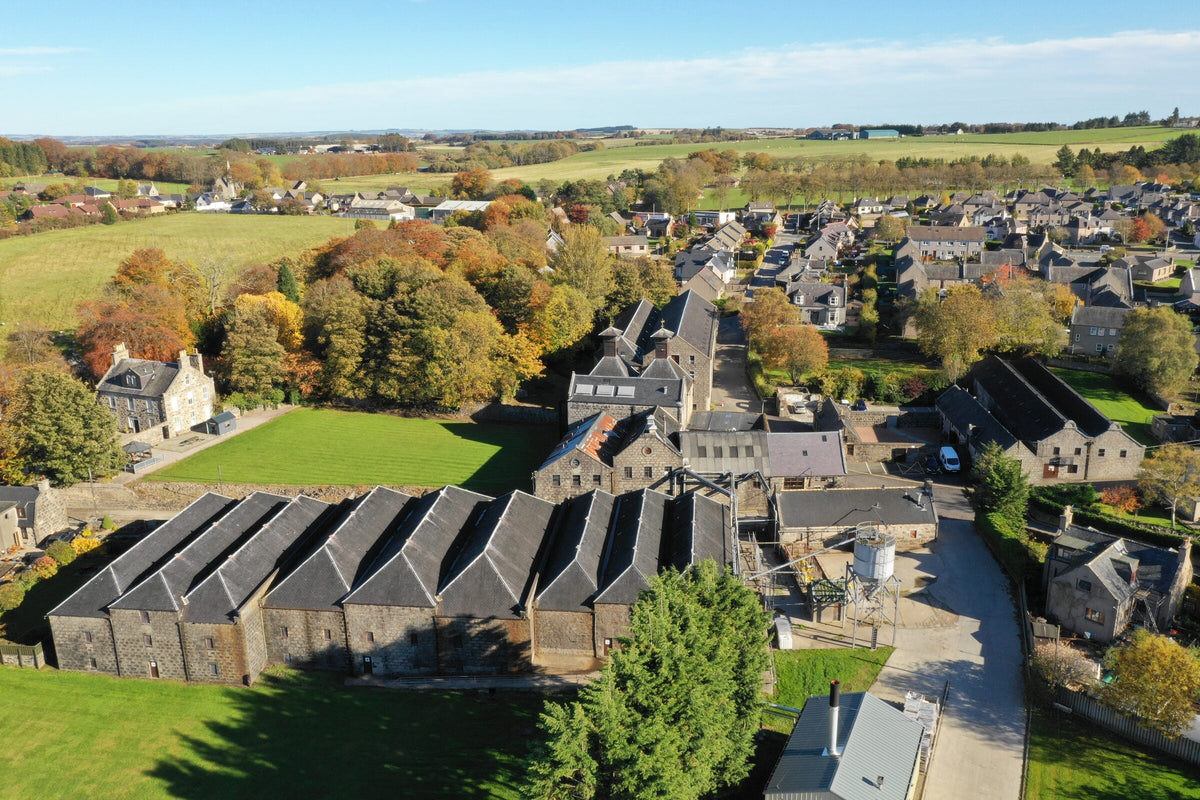
Glen Garioch Distillery: The Highland Malt That Swapped Peat for Fruit
Drive north out of Aberdeen for half an hour and the city gives way fast to open farmland. This is the Garioch, a broad valley of some of the best barley ground in Scotland, and it is where Glen Garioch distillery has been making whisky, on and off, for longer than almost anywhere else in the country.
The licensing paperwork dates the distillery to 1797, though there is a documented reference to distilling on the same Oldmeldrum site as far back as 1785, which would make Glen Garioch one of the oldest continuously worked distillery sites in Scotland, not merely an old one. The exact founder is disputed too: some accounts credit John and Alexander Manson, others point to Thomas Simpson. What is not disputed is why the site was chosen. Local barley was so good that Oldmeldrum was known as the Granary of Aberdeenshire, and a distillery built to use it on its own doorstep made obvious sense.
A long history, a short list of closures
For a 200-plus-year-old distillery, Glen Garioch has stopped production remarkably rarely. Ownership changed hands several times through the 1800s and early 1900s, passing through JG Thomson & Co, then William Sanderson & Son (the Edinburgh blender behind Vat 69), and eventually into Distillers Company Limited, the forerunner of Diageo, by the late 1930s. The site only fell silent twice in its history: once in 1968, when the water supply ran short, and again in 1995, shortly after Suntory's Morrison Bowmore business took ownership. It reopened in 1997 as a single malt focused operation and has run more or less continuously since.
Stanley P. Morrison bought the distillery in 1970 and got it back into production by 1973, and it is that period, the 1970s through to the 1995 closure, that gives Glen Garioch one of its more interesting stories.
The peated years, and why they ended
Most people who know Glen Garioch today know it as an unpeated Highland malt, all fruit and honeyed spice. That has not always been true. Through the 1970s and 1980s, and into the early 1990s, Glen Garioch ran a heavily peated style, reportedly because the maltster responsible for the barley had trained on Islay and brought that smoky habit north with him. It made for a robust, unusually assertive Highland dram that stood apart from most of its neighbours.
When the distillery closed in 1995 and reopened two years later, the peat was dropped and production switched to the cleaner, fruitier style the distillery is known for now. Floor maltings, which had run until 1979, stayed closed for decades. Interestingly, Glen Garioch has quietly started moving back toward some of its own history: the floor maltings reopened in 2022 and now supply around a quarter of the distillery's malt requirement, and small batches of smoky barley have reportedly been run again in recent years. It is not a return to the old style wholesale, but it is a sign that the distillery has not entirely closed the door on its peated past.
One detail from the Morrison years is worth a mention purely because it says something about how these places run, day to day: the heat recovered from the stills was once piped out to warm a nearby greenhouse, where tomatoes were grown commercially. Distilling is often described in romantic terms, but a lot of it comes down to practical Scottish farmers finding a use for spare heat.
Water, stills and what makes the spirit
Glen Garioch's process water comes from a source on Coutens Farm known as the Silent Spring, discovered in 1972 and named, by most accounts, for how quiet and easy to miss it is on the ground. The distillery draws from the Percock Hills burns too, water noted for being particularly mineral rich, which plays into the fuller, waxier character of the spirit.
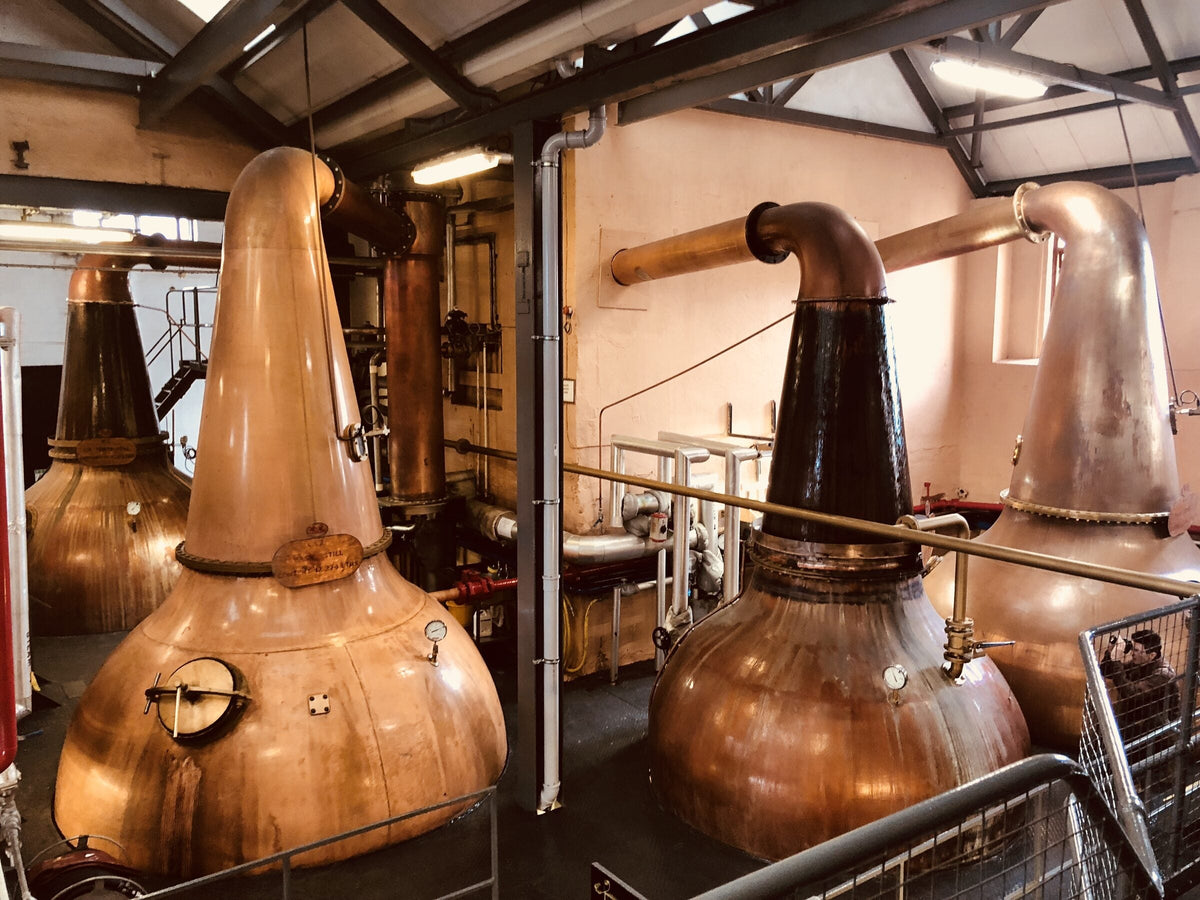
The still house holds two wash stills, one at 20,000 litres and one at 10,000 litres, alongside two spirit stills of 11,000 litres each. What stands out technically is the length of the lyne arms, especially on the wash stills, which are unusually long for stills of this size. Longer lyne arms generally mean more contact between the vapour and the copper before it condenses, which tends to produce a lighter, cleaner spirit character, and it is one of the quieter reasons Glen Garioch's fruit-forward style comes through the way it does. Fermentation runs through five washbacks of 27,500 litres each, and the mash tun is a five tonne lauter design that, by most technical accounts, produces a fairly cloudy wort, another factor that feeds into the distillery's fuller mouthfeel.
Annual capacity sits at around one million litres, though the distillery has typically run at somewhere closer to 700,000 litres a year in recent times, a meaningful share of it going into blends and a good deal exported to Asian markets under Suntory's ownership. It is a working distillery in the fullest sense: production supporting a global spirits business, with single malt bottlings very much part of the picture but not the whole of it.
What Glen Garioch tastes like now
Modern Glen Garioch, bottled at 48% in its core range, leans fruity and full bodied with a heathery, floral lift, poached pear, honeyed fruit and a creamy vanilla thread running through it. Short fermentation times are generally credited with the deep cereal and spice notes that sit underneath the fruit. It is a style that rewards ex-bourbon wood particularly well, letting the vanilla and honeyed character develop without burying the spirit's own character, though sherry and other wine cask finishes are far from unusual either.
Independent bottlers and Glen Garioch
Glen Garioch has a long and well documented history with independent bottlers. Gordon & MacPhail, Cadenhead's, Signatory Vintage, Adelphi, Douglas Laing and Hunter Laing have all released Glen Garioch expressions over the years, spanning everything from relatively young cask strength releases through to some properly old stock from the peated era, which tends to draw serious attention from collectors when it does surface. For an independent bottler or a private label project, Glen Garioch offers something reasonably unusual: a Highland malt with two distinct historical styles to draw on, and a flavour profile that reads as approachable without being generic.
The Single Cask's own Glen Garioch stock
We have bottled two Glen Garioch casks over the years, and between them they show a fair spread of what this distillery can do.
The first, cask 1335, was an 8 year old ex-bourbon hogshead bottled at its full cask strength of 62.4%, with an outturn of 220 bottles. It was a lighter, more delicate expression: rosehip, malt and grist on the nose with soft oak and a fruity lift, moving into a sweet, spicy palate of vanilla, gooseberry and citrus, and finishing on vanilla, oak, wood spice and a last touch of citrus.

The second, cask 145, was a considerably older release: 19 years old, distilled in 1995, bottled at cask strength of 62.7%. The cask type was not recorded on our own records at the time, so we have not guessed at it here. Distilled in the same year Glen Garioch closed for its 1995 to 1997 hiatus, this cask sits right at the edge of that changeover, an interesting point in the distillery's own timeline even without knowing exactly which side of the peating switch its spirit falls on. In the glass it was a different animal to the 8 year old: clean, fresh and floral on the nose, kitchen flowers and a lemon and lime lift alongside scorched brown sugar, ginger, white pepper and cardamom, with the spice following through onto a palate of ginger and cardamom tea, fizzy citrus and more burnt sugar and fresh flowers, finishing long and aromatic with a real zesty pucker at the end.

Both casks have sold through, so we do not have Glen Garioch stock available today. We are noting that plainly rather than leaving the impression that either bottling can still be had.

Planning a bottling inspired by Glen Garioch
If you are an independent bottler, a new brand or an established one looking specifically for Glen Garioch, the honest answer is that exact stock is not something we can promise. It is not a distillery that casks come up for often, and when they do they tend to move quickly. What we can do is talk through what you are after: a fruity, waxy, honeyed Highland profile from a similar cask type and age range, or, if the peated Glen Garioch story is what appeals, other Highland or island casks with a comparable weight and smoke. We source and hold casks across Scotland's regions, manage them in our own bonded warehouse in Fife, and can bottle to order once a cask is ready, whether that is a small independent release or the start of a private label whisky brand.
Cask ownership itself is worth a plain word here too. It is not a regulated investment product, values can move in either direction depending on the cask, the market and how it matures, and nothing here should be read as financial advice. We deal in real casks, real warehousing and real bottling, and we would rather talk plainly through the practical side of a project than oversell what any single cask can do.
Frequently asked questions
Where is Glen Garioch distillery?
Glen Garioch is in Oldmeldrum, Aberdeenshire, in the Garioch valley around 20 miles from Aberdeen. It is classed as a Highland distillery.
Is Glen Garioch whisky peated?
Not in its current core range. The distillery ran a heavily peated style from the 1970s until it closed in 1995, then switched to unpeated production when it reopened in 1997. Small batches of peated barley have reportedly been run again in recent years, so older and newer peated expressions do exist, but they are the exception rather than the rule.
Can independent bottlers buy Glen Garioch casks?
Independent bottlers including Gordon & MacPhail, Cadenhead's, Signatory Vintage, Adelphi, Douglas Laing and Hunter Laing have released Glen Garioch over the years, so there is a track record of casks reaching the independent market, though availability varies and is never guaranteed at any given time.
Does The Single Cask have Glen Garioch stock available now?
Not currently. Both of our Glen Garioch casks have sold through. Get in touch and we can let you know if that changes, or suggest a flavour-matched alternative in the meantime.
What does Glen Garioch taste like?
Modern Glen Garioch is fruity and full bodied, with heathery, floral notes, poached pear, honeyed fruit and vanilla. Older or peated-era releases carry more smoke and weight alongside that same fruit character.
Read more on Highland whisky, or explore our guides to Fettercairn and Macduff, two more Aberdeenshire Highland distilleries. If you are planning a bottling project, our pages on buying a whisky cask, the casks we currently have available, independent bottling services and private label whisky cover how we can help, and our bonded warehouse page explains how we store and manage cask stock in Fife. For a step by step view of the process, see our guide to the four steps to bottling your own whisky, or get in touch to talk through a project.
Work with The Single Cask
Buy a whisky cask, bottle under your own label, or store casks in our HMRC approved bonded warehouse in Fife.
Read more
Fettercairn Distillery: The Highland Whisky Scotland Almost Forgot
Fettercairn sits at the foot of the Cairngorms in Aberdeenshire, tucked below the Grampian hills in a part of the Highlands most whisky drinkers drive straight past. For a distillery licensed in 18...
Read more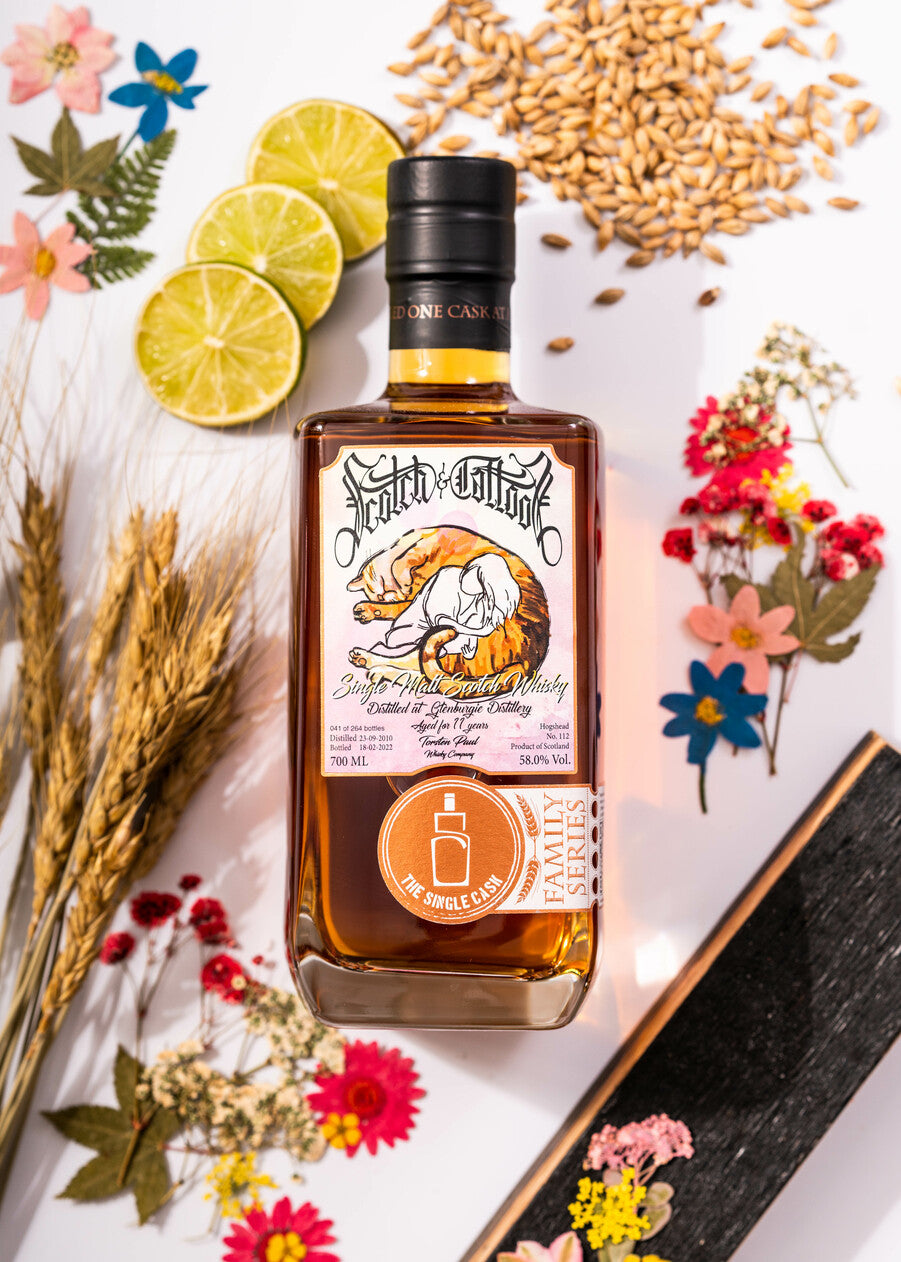
Glenburgie Distillery: The Speyside Malt Ballantine's Won't Let Go
Ask most whisky drinkers what Glenburgie tastes like and you will get a blank look. Ask them if they have ever drunk it, and the honest answer for the vast majority is yes, almost certainly, they j...
Read more


