
Article: GlenAllachie Distillery: The Speyside Workhorse Billy Walker Turned Into an Award Winner
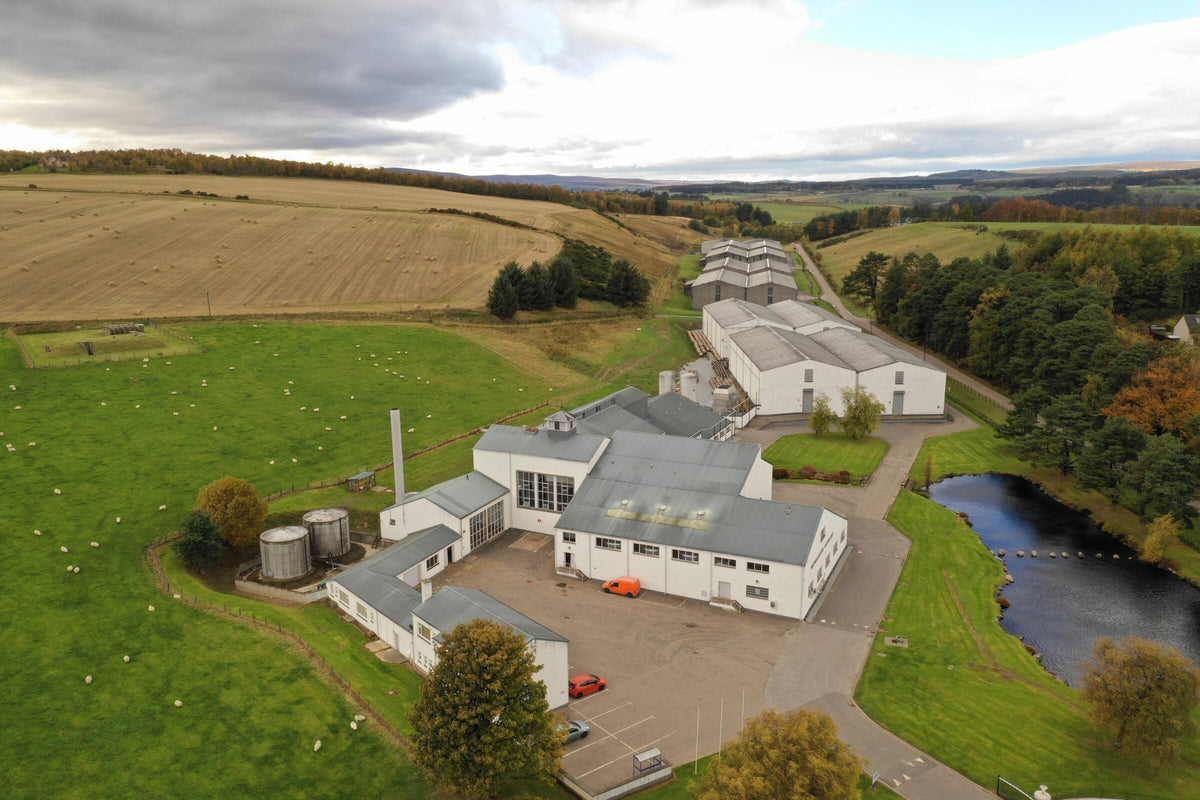
GlenAllachie Distillery: The Speyside Workhorse Billy Walker Turned Into an Award Winner
For the better part of fifty years, GlenAllachie made whisky that almost nobody ever tasted on its own. Built in the late 1960s to feed blended Scotch, it passed between three different owners without ever releasing a single malt under its own name, and most drinkers outside the trade had never heard of it. Then in 2017 a Scotch whisky veteran named Billy Walker bought the place, and within a few years GlenAllachie had gone from an anonymous blending malt to a multi award winning single malt with one of the most ambitious cask programmes in Speyside.
This guide covers how GlenAllachie came to be built, what Walker changed when he took over, how the whisky is made today, and what the picture looks like for anyone, private buyer or trade customer, hoping to get hold of a cask of their own.
GlenAllachie at a glance
| Region | Speyside (Aberlour, Banffshire) |
| Founded | Built 1967 to 1968 by Mackinlay McPherson, the distilling arm of Scottish & Newcastle |
| Owner | The GlenAllachie Distillers Company Limited, owned by Billy Walker, Trisha Savage and Graham Stevenson since July 2017 |
| Capacity | Licensed for around 4,000,000 litres of pure alcohol a year; run deliberately at roughly 500,000 to 800,000 litres since 2017 |
| Stills | Four: two lantern shaped wash stills and two onion shaped spirit stills, gravity fed with horizontal condensers |
| Washbacks | Six stainless steel, fed by one semi lauter mash tun |
| Fermentation | Long and variable, reported anywhere from around 120 to 160 hours depending on the source |
| Water source | Spring and snow fed streams on Ben Rinnes for production; the Lour burn feeds the cooling ponds |
| Cask policy | Roughly half first fill ex bourbon, around 30% ex sherry, the remainder in port, Marsala, Barolo, Moscatel, fino sherry and Madeira wood |
| Visitor centre | Yes, opened 2019 and upgraded in 2023 |

History of GlenAllachie
GlenAllachie was built in 1967 and 1968 by Mackinlay McPherson, the distilling arm of the brewing group Scottish & Newcastle, on a site at the foot of Ben Rinnes near Aberlour. It was designed by William Delme Evans, an architect already responsible for three other Scottish distilleries, who planned GlenAllachie to run almost entirely on gravity rather than pumps, a deliberate way of keeping running costs down. The name comes from the Gaelic for the valley of the rocks, after the burn that still feeds its cooling ponds today.
For its first two decades GlenAllachie did the job it was built for: filling casks that went into blends, with almost nothing bottled as a single malt under its own name. Invergordon Distillers bought the site in 1985 and mothballed it, and it stood quiet for several years before Campbell Distillers, part of the French drinks group that became Pernod Ricard, bought it in 1989 and brought it back into production. Ownership eventually passed to Chivas Brothers, Pernod Ricard's Scotch whisky arm, who ran GlenAllachie much as earlier owners had: as a dependable source of malt for blends, with the distillery's own identity staying firmly in the background.

That changed in July 2017, when Chivas Brothers agreed to sell GlenAllachie, along with the blended brands White Heather and MacNair's, to Billy Walker and his business partners Trisha Savage and Graham Stevenson, trading as The GlenAllachie Distillers Company. Walker was no newcomer to this kind of project. He had already revived BenRiach in 2004 and bought GlenDronach in 2008, building both into some of the most admired sherried malts in Speyside and the Highlands, before selling the pair, together with Glenglassaugh, to the American drinks group Brown-Forman in 2016 for around 285 million pounds. Buying GlenAllachie less than a year after that sale was, in effect, Walker doing the same thing a third time: taking an under appreciated distillery and building a single malt identity for it almost from nothing.
The pace of change was fast. GlenAllachie launched its first core range of single malts in 2018, less than a year after the sale and the first time the distillery's own spirit had been bottled seriously on its own. A visitor centre followed in 2019, opening on the first day of the Spirit of Speyside Whisky Festival. Recognition came quickly too: the 10 year old Cask Strength won World's Best Single Malt at the World Whiskies Awards in 2021, the same year Walker was inducted into Whisky Magazine's Hall of Fame. 2022 marked fifty years since Walker first entered the Scotch whisky trade, celebrated with a trilogy of releases called Past, Present and Future, and in 2023 the distillery secured Scottish Government backed funding for a decarbonisation project expected to roughly halve its energy use, partly powered by solar panels in a neighbouring field. A rebrand followed in 2024, though the whisky inside the bottle did not change.
How GlenAllachie makes its whisky
GlenAllachie is licensed to produce around 4 million litres of pure alcohol a year, a legacy of its blending past, but Walker has chosen to run it at a fraction of that, somewhere between 500,000 and 800,000 litres depending on the year, in favour of quality over volume. The stillhouse holds four copper stills: two lantern shaped wash stills and two onion shaped spirit stills, fed almost entirely by gravity rather than pumps, with horizontal condensers that make the temperature of the spirit easier to control as it comes off. One semi lauter mash tun feeds six stainless steel washbacks, where fermentation runs long, reported variously at anything from around 120 to 160 hours depending on the source, to build a fruitier, more estery wash before it ever reaches the stills. Water for production is drawn from spring and snow fed streams on the northeast side of Ben Rinnes, while the distillery's cooling ponds are fed separately by the Lour burn that gave the site its valley name. Malt is bought in rather than grown or floored on site, using the Concerto barley variety favoured across much of Speyside.

The real change under Walker has been in the warehouse rather than the stillhouse. GlenAllachie has sixteen warehouses on site holding more than 50,000 casks, some laid down in the 1970s, and Walker's team has used that inherited stock, together with new fills, to build one of the more varied wood policies of any Speyside distillery. Roughly half of what is filled goes into first fill ex bourbon casks, around 30 percent into ex sherry casks, and the rest into a genuinely wide spread of wine wood: port, Marsala, Barolo, Moscatel, fino sherry and Madeira casks have all been used, almost always on a first or second fill basis to keep the wood's influence strong. Everything is bottled at a minimum of 46 percent ABV, with no colouring or chill filtration on the single cask and Wood Collection releases.
What does GlenAllachie taste like?
The house style leans toward dried fruit, nuts and baking spice rather than smoke, and it varies a good deal by expression because the cask policy is so deliberately mixed. The 10 year old Cask Strength, matured across bourbon, virgin oak and sherry wood, opens with sweetened cereal, nougat and almond, moving into dried fruit and coconut husk on the palate with a chocolate finish. The 12 year old, which adds red wine casks to the bourbon and virgin oak mix, is drier and more citrus led, dried peel and quince with a peppery edge and a finish of almond, chocolate and overripe banana. The 15 year old is matured exclusively in Pedro Ximenez and Oloroso sherry casks and shows it: baking spice, orange peel and rye bread on the nose, old wine and brown butter on the palate, and a cocoa and black pepper finish. The 18 year old, sherry casks only, is more restrained, almond and nougat with citrus and a lingering, gently banana tinged finish. Across the range, the common thread is a spirit that takes strong, often unconventional wood extremely well without being overwhelmed by it.
GlenAllachie and independent bottlers
Older GlenAllachie does exist on the independent market. Stock distilled during the Chivas Brothers years, before 2017, found its way to established bottlers, and vintage releases such as a 19 year old from 1996 bottled by Signatory Vintage, or a 10 year old from 2011 released by Duncan Taylor in their Octave series, turn up for sale from reputable retailers. That reflects GlenAllachie's old role as a blending malt: distilleries that fill mostly for blends have historically had more casks move through brokers and into independent hands than distilleries that bottle everything themselves.
Whether that continues for whisky distilled since 2017 is a different question. Walker has run exactly this playbook twice before at BenRiach and GlenDronach, where single cask bottling by the distillery itself eventually became the default and third party access tightened considerably. Nothing published confirms GlenAllachie's current policy on new fill one way or another, but the pattern at Walker's other distilleries, and the sheer number of single cask and Wood Collection releases GlenAllachie now puts out under its own name, suggests an independent bottler chasing new make or young stock should expect a similar story: a real but shrinking market, mostly served by brokers trading older, pre-2017 parcels rather than any standing allocation from the distillery.
The Single Cask and GlenAllachie
We do not currently hold a GlenAllachie cask ourselves. Given how far the distillery's house style leans on wine and sherry wood, the closer match in our own stock is not another Speyside bourbon cask but our Teaninich 9 year old PX octave, a cask strength Highland malt finished in Pedro Ximenez wood that shows the same dried fruit and baking spice direction GlenAllachie fans tend to look for. For something closer to GlenAllachie's own region and a lighter, orchard fruit profile, our Craigellachie 10 year old, matured in ex bourbon casks, is a genuine Speyside alternative currently in stock. Any GlenAllachie cask that does reach us through the trade goes through the same checks as every cask that arrives at our bonded warehouse in Glenrothes before we would offer it to a client.
Readers drawn to GlenAllachie's story as much as its flavour, a once anonymous blending distillery rebuilt into an award winning single malt by an independent owner, might also enjoy our guides to GlenDronach and Benromach, two other distilleries shaped by owners who came from the independent bottling side of the trade rather than a large drinks group.
Plan a bottling inspired by GlenAllachie
If it has to be genuine GlenAllachie, older stock from before 2017 does turn up through established independent bottlers and auction houses, though it is worth treating any younger cask offered as GlenAllachie with a healthy amount of scrutiny given how tightly the distillery now controls its own output. If what actually matters to you is a well made Speyside malt that takes strong wood confidently, whether that is first fill bourbon, sherry or something more unusual like port or Madeira, we can help from a different angle. Our team can talk you through what we currently have available, matched by flavour, region, age and cask type.
From there the process is the same whichever cask you choose. Buy a whisky cask with verified provenance, let it mature properly in our bonded warehouse, and when it is ready we can take you through bottling it under your own label. Our four steps to bottling your own whisky page sets out what that involves from start to finish.
Whisky cask ownership is not a regulated investment in the UK, and the value of a cask can go down as well as up once storage, insurance and duty are accounted for. Nothing here is financial advice, and any decision to buy should rest on the whisky and the paperwork behind it, not on a promised return.
Want to talk through genuine Speyside stock, or ask us plainly what is realistic for a GlenAllachie inspired project? Get in touch and we will tell you straight.
Frequently asked questions
Who owns GlenAllachie distillery?
The GlenAllachie Distillers Company Limited, owned by Billy Walker, Trisha Savage and Graham Stevenson, who bought the distillery from Chivas Brothers in July 2017.
Was GlenAllachie always a single malt?
No. For roughly its first fifty years GlenAllachie made whisky mainly for blends, under owners including Invergordon Distillers, Campbell Distillers and Chivas Brothers. Its first core range of single malts was not launched until 2018, under current owner Billy Walker.
What cask types does GlenAllachie use?
A deliberately wide mix: roughly half first fill ex bourbon, around 30 percent ex sherry, and the remainder in port, Marsala, Barolo, Moscatel, fino sherry and Madeira casks, bottled at a minimum of 46 percent ABV.
Can I buy a cask of GlenAllachie whisky?
Older stock distilled before 2017 does appear through established independent bottlers and at auction. Whisky distilled since 2017, under current owner Billy Walker, is understood to be kept largely for the distillery's own single cask and Wood Collection releases, following the same pattern Walker set at BenRiach and GlenDronach.
Is GlenAllachie peated?
No. GlenAllachie makes an unpeated Speyside style; its character comes from long fermentation and an unusually varied cask policy rather than smoke.
Can you visit GlenAllachie distillery?
Yes. The visitor centre opened in 2019 and was upgraded in 2023, with tours, a tasting lounge and outdoor seating.
Work with The Single Cask
Buy a whisky cask, bottle under your own label, or store casks in our HMRC approved bonded warehouse in Fife.
Read more
Ardnamurchan Distillery: The Independent Bottler That Went Off Grid
Most Highland distilleries built in the last fifteen years sit somewhere within reach of a main road. Ardnamurchan does not. It stands on one of the remotest stretches of the Scottish mainland, on ...
Read more


