
Article: Glenrothes Distillery: History, Whisky and Seven Casks We've Bottled
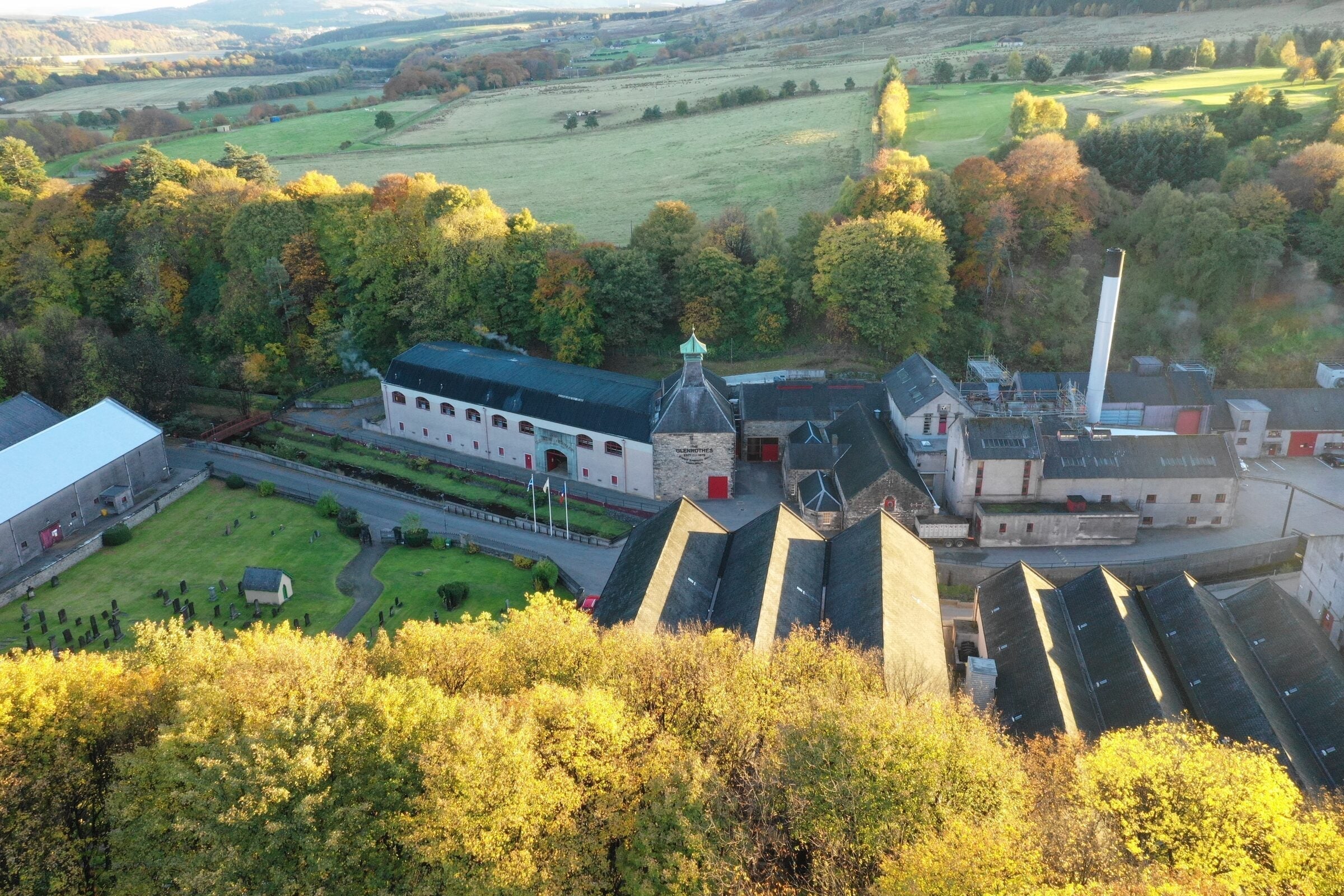
Glenrothes Distillery: History, Whisky and Seven Casks We've Bottled
In 1878, a partnership building a new distillery beside the Burn of Rothes ran out of money halfway through construction, after the Glasgow Bank collapsed. The loan that saved the project came from the United Free Presbyterian Church of Knockando, which is not a sentence you get to write about many whisky distilleries. That distillery is Glenrothes, and it has spent the century and a half since quietly supplying two of Scotland's best known blends, Cutty Sark and The Famous Grouse, while its own single malt built a reputation almost entirely through independent bottlers before the distillery marketed one itself. We have bottled Glenrothes seven times over the years, more than almost any other distillery on our books, so this guide leans on what we know rather than what is easy to find written elsewhere.
Glenrothes at a glance
| Region | Speyside, Rothes, Moray, beside the Burn of Rothes |
| Founded | Built 1878; first distillation 28 December 1879 |
| Owner | Edrington, the distillery's owner since 1999. Berry Bros & Rudd held the single malt brand rights from 2010 to 2017 |
| Capacity | Around 5.2 million litres of pure alcohol a year |
| Stills | Ten in total (sources differ slightly on the exact wash to spirit split), unusually tall and run slowly for extended copper contact |
| Water source | Two springs, Ardcanny and Brauchhill, at the foot of the Mannoch Hills |
| Fermentation | Around 55 to 60 hours across twenty washbacks, roughly two thirds wood to one third stainless steel |
| Malt spec | Unpeated |
| Style | Bright, fruity and elegant, built mainly on ex sherry oak with some ex bourbon |
| Visitor centre | No, not open to the public; tours are by private invitation only |

History
James Stuart & Co built Glenrothes in 1878, with William Grant, Robert Dick and John Cruikshank as partners, on a site beside the Burn of Rothes in Moray. The build very nearly did not survive itself. When the Glasgow Bank collapsed midway through construction, the project only got finished thanks to that loan from the United Free Presbyterian Church of Knockando, a detail that raises an eyebrow every time we mention it to visitors who assume whisky and the kirk had little to do with each other. First distillation ran on 28 December 1879, and the site took the Glenrothes name not long after.
What followed was a rough early history for a distillery now known mainly for calm, elegant whisky. Fires damaged the site in 1897, 1922 and 1962. An explosion struck in 1903. This is the kind of run of bad luck that closed weaker operations outright, and Glenrothes just kept rebuilding. Ownership passed to William Grant & Co in 1879, then to Highland Distillers in 1887, which ran the distillery for well over a century while the make quietly became a cornerstone of two of Scotland's most recognisable blends. Highland Distillers evolved into what is now Edrington, the distillery's owner since 1999.
The single malt itself took an odd route to market. For most of the twentieth century it barely existed as a consumer product, since almost everything the distillery made went into blends. That changed through a partnership with the wine and spirits merchant Berry Bros & Rudd, who took on the marketing and distribution of the Glenrothes brand and, in 1993, started releasing it as vintage dated expressions rather than fixed age statements. It let drinkers watch how individual years of maturation behaved, rather than relying on a single house style number. Berry Bros & Rudd held the brand from 2010 to 2017, after which Edrington brought it back under one roof alongside the distillery. The core range has kept moving since: an 18 Year Old and a reformulated 25 Year Old sit alongside older expressions running to 32, 42 and even 51 years old, and a 15 Year Old joined the permanent line up as recently as November 2024.
How Glenrothes makes its whisky
Water comes from two springs, Ardcanny and Brauchhill, rising at the foot of the Mannoch Hills and filtered naturally through the rock before it ever reaches the distillery. It is soft enough that Glenrothes uses it untreated. Malted barley, sourced from Simpsons Malt and left unpeated, is mashed and fermented for a long 55 to 60 hours across twenty washbacks, a mix of roughly two thirds wood and one third stainless steel. That is a longer ferment than many distilleries bother with, and it favours fruit and elegance over raw cereal weight.
The still house is where Glenrothes does its most distinctive work. Ten stills, unusually tall for Speyside, are run at around half the speed of comparable distilleries on purpose, to maximise the spirit's contact with copper as it rises through the neck. That patience shows up directly in the character of the new make, which comes off cleaner and lighter than a rushed distillation would produce, leaving plenty of room for the cask to do the rest of the work. Maturation leans heavily on ex sherry oak, both European and American, with some ex bourbon casks used alongside, held across both dunnage and racked warehouses with a stated capacity equivalent to around 40,000 sherry butts. It is a house style built patiently at every stage, from the slow stills through to the wood.
What does Glenrothes taste like?
Bright, fruity and elegant rather than big or showy: a whisky that leans on balance instead of any single dominant note. Vanilla, stone fruit and a gentle almond nuttiness tend to sit at the centre, with the exact balance shifting according to age and cask, more citrus and green fruit in younger, more actively finished expressions, deeper dried fruit, chocolate and spice as sherry oak has longer to work. This is a style that rewards patience. It is not spirit built to impress in the first two or three years, but one that tends to reward the extra decade in wood, which is a large part of why Berry Bros & Rudd built their whole approach to the brand around showing individual vintages rather than a fixed age house blend.
Glenrothes and independent bottlers
For most of its history Glenrothes has been better known through independent bottlers than through its own official range, and that is still broadly true today. Signatory Vintage alone has released close to twenty different Glenrothes bottlings over the years, Douglas Laing more than ten, and a long list of others have put out Glenrothes at various ages and cask types too: Gordon & MacPhail, Hunter Laing, Duncan Taylor, That Boutique-y Whisky Company, Murray McDavid, Thompson Bros and Master of Malt's own label among them. Few Speyside distilleries have quite this depth of independent bottling history, which makes Glenrothes one of the more reliably documented single malts if you are comparing cask strength, vintage and cask type across a wide sample of releases. Its fellow Edrington stablemate The Macallan could not present a starker contrast: one distillery built its reputation almost entirely on its own bottlings, the other largely through everyone else's.
The Single Cask and Glenrothes
We have bottled Glenrothes more than almost any other distillery, seven casks in total, spanning eight years old to twenty six. It is worth setting out what we know from each one rather than generalising.
Our most recent release is cask 5256, a hogshead distilled in 2013 and bottled at eight years old at a punchy cask strength of 65.3%, with an outturn of 310 bottles. It shows a spicier, more youthful side of the distillery than the sherried releases below: gingernut biscuit, malt, white pepper, citrus, green tea, oak and nutmeg run through nose, palate and finish alike. This is the only Glenrothes we currently have in stock.
Further back, cask 262, a 21 year old ex sherry cask distilled in 1997 and released at a natural cask strength of 40.8%, sold out from an outturn of 270 bottles. It leaned into the classic sherried Glenrothes profile: raisins and berries soaked in rum, plum syrup, rolled oats and old oak on the nose, macerated berries, cinnamon, dark chocolate and candied oranges on the palate. We also released two related sherry cask fills from the same 2005 distillation, casks GR008A and GR008B, both bottled at 15 years old at cask strength around 64.5 to 64.6%, sharing an almost identical tasting profile of red fruits, rancio, dark chocolate, cinnamon, allspice, malt, oak and black pepper, though GR008A's outturn of 262 bottles dwarfed GR008B's 34. A pair of 19 year old sherry casks from 1997, casks 7153 and 15400, both now sold out, showed the deeper, more savoury side sherry maturation can bring: meaty, leathery notes alongside sherry, black pepper and cinnamon on one, a denser, more perfumed, prune and apricot character on the other. Two casks filled in the same year rarely mature identically, and these two are proof of it. Our oldest Glenrothes to date, cask 717982, was a 26 year old hogshead distilled on 19 November 1997 and released at 55.9%, showing citrus fruit, papaya, milky coffee, malt, oak and savoury depth, a different, less sherry driven route to real maturity.
Take those seven casks together and you get a real cross section of what this distillery can do: young and spicy in a hogshead, richly sherried at fifteen and twenty one, quietly complex once it gets past twenty five. That range is exactly why we keep coming back to Glenrothes.

Collectability and cask ownership
Glenrothes carries real weight with collectors, built on decades of vintage dated official releases from the Berry Bros & Rudd era alongside a deep bench of independent bottlings across nearly every major bottler in the trade. Older official vintages and well aged independent casks, particularly anything from the 1970s and 1980s, turn up at auction with some regularity and tend to hold interest, a track record few Speyside distilleries can match outside the handful of true blue chip names.
None of that predicts what any particular cask will fetch in future. Cask ownership is unregulated and values move in both directions over the years a cask sits maturing, so treat this as background rather than a promise. If you are new to owning a cask outright, our guide to whisky cask sizes and types is a sensible place to start before committing to anything.
Visiting
Glenrothes is not open to the public and has no visitor centre. Tours happen by private invitation only, rare enough that even trade press coverage of the distillery is usually built around a single behind the scenes visit rather than a standing offer. If a visit matters to your plans, it is worth approaching Edrington directly rather than expecting to book a standard tour.
Glenrothes FAQs
Who owns Glenrothes distillery?
Edrington, which has owned the distillery continuously since 1999. Berry Bros & Rudd held the marketing and distribution rights to the Glenrothes single malt brand between 2010 and 2017, after which Edrington brought the brand back in house alongside the distillery.
Is Glenrothes whisky peated?
No. Glenrothes uses unpeated malt, and its bright, fruity, sherry driven house style carries no smoke at any age.
Can you visit Glenrothes distillery?
Not as a member of the public. Glenrothes has no visitor centre, and tours are by private invitation only.
What does Glenrothes whisky taste like?
Bright, fruity and elegant, typically built around vanilla, stone fruit and almond, with sherry cask releases adding dried fruit, chocolate and spice as they age. It is a style that rewards extra time in wood.
Can you buy a cask of Glenrothes?
More often than with many Speyside distilleries. Glenrothes has one of the deepest independent bottling histories in Scotland, and we have bottled it seven times ourselves. Ask us and we will tell you plainly what is realistically available right now.
Plan a bottling inspired by Glenrothes
Of every distillery we cover, Glenrothes is one we can speak to with the most first hand confidence. Seven casks bought and bottled over the years tell us a lot about how this spirit behaves in different wood at different ages, and unlike some of the scarcer names we work with, Glenrothes casks do come to market with some regularity through the independent trade. We currently have one Glenrothes cask in stock, an eight year old hogshead at cask strength, and we would rather point you to what is available than talk up a distillery we cannot currently supply.
If the sherried, fruit and spice side of Glenrothes is what draws you in specifically, that same character runs through several of its Speyside neighbours, and we are always happy to talk through comparable casks when timing or budget do not line up with what we currently hold. Whether you are after a single cask for yourself, or a full private label bottling for a brand, retailer, hospitality business, company, whisky club or event, the conversation works the same way.
Tell us what you are after: the flavour or distillery style you have in mind, roughly how many bottles you need, your approximate budget, a rough date you would like to bottle by, who the whisky is for, and whether you will need help with naming, labels, storage or the bottling itself. In return we will give you a plain view of what is available, sensible alternatives if the exact distillery or cask type is out of reach, a realistic estimate of bottle yield, the main costs and stages involved, and a practical route from choosing a cask through to finished bottles, drawing on our own independent bottling experience. Get in touch and we will start with a straight answer.
Work with The Single Cask
Buy a whisky cask, bottle under your own label, or store casks in our HMRC approved bonded warehouse in Fife.
Read more
Auchentoshan Distillery: Scotland's Full-Time Triple Distiller
Auchentoshan is one of only two Scotch distilleries that triple distil their entire output, a light, citrus-driven Lowland malt from the edge of Glasgow. We bottled our own single cask from here, a...
Read more


