
Article: Tullibardine Distillery: Built on a Brewery, Reborn as a Single Malt
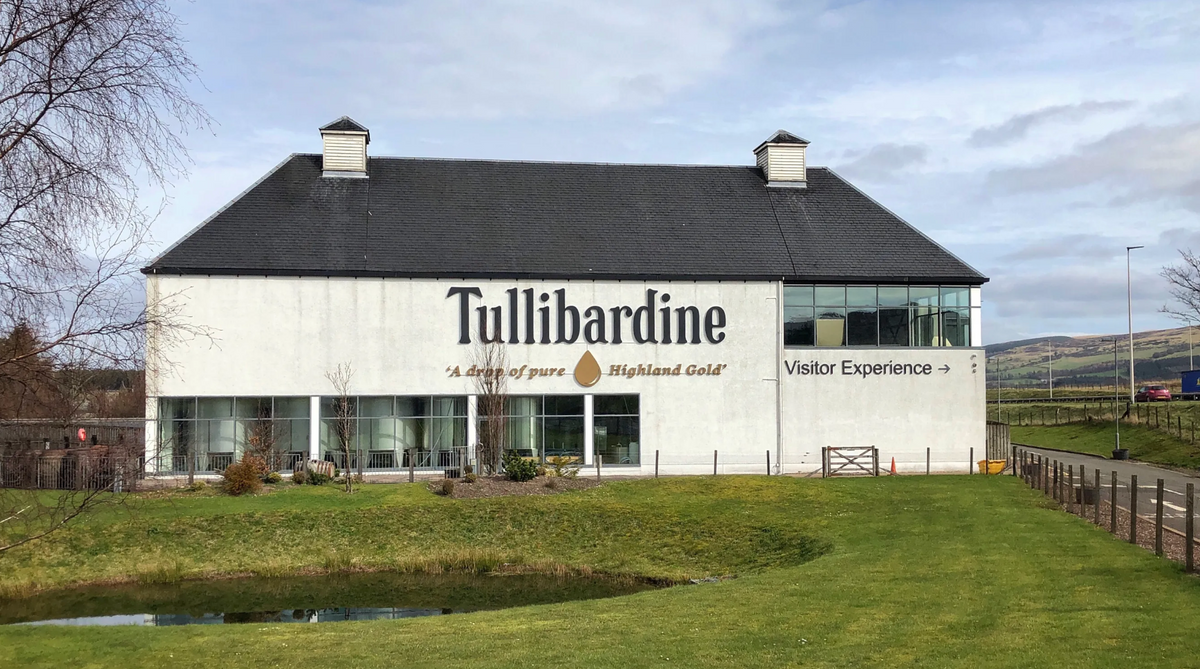
Tullibardine Distillery: Built on a Brewery, Reborn as a Single Malt
Blackford is not a name most whisky drinkers would place on a map, but the village has been making alcohol in one form or another for over six centuries, long before Tullibardine ever distilled a drop. Two earlier attempts at a distillery here, one in 1798 and another in 1814, both failed to last. What eventually succeeded was built on the site of an old brewery in 1949, and it is commonly cited as the first new distillery constructed in Scotland in the twentieth century. That is an unusual claim to hold for any working distillery, and it is only the first of several ways Tullibardine's story does not follow the usual Highland pattern.
From the Gleneagles Brewery to a working distillery

William Delme-Evans, an engineer who went on to design several other Scottish distilleries, bought the site of the old Gleneagles Brewery in Blackford, Perthshire, in 1949 and built Tullibardine on it. He ran it for only a few years before selling on to Brodie Hepburn, a whisky blending company, which held the distillery from 1953 to 1971. Invergordon Distillers took over in 1971 and expanded the plant, adding two more stills in 1973 to bring the total to four: two wash stills and two spirit stills, the configuration still in use today.
Ownership then moved with the wider consolidation of the Scotch whisky industry. Whyte and Mackay acquired Tullibardine in 1993, and the distillery was mothballed not long after, with sources giving 1994 or 1995 depending on which closure date is being counted. It sat silent for a decade until a consortium led by Michael Beamish and Douglas Ross bought it in 2003 and reopened the site, this time with single malt rather than blending stock as the priority. The current owner has held Tullibardine since 2011, when the French wine and spirits company Picard Vins et Spiritueux acquired it and folded it into its Terroirs Distillers arm. That French ownership shows up directly in the whisky: Tullibardine's range now includes finishes in Marsala, Sauternes and Banyuls wine casks alongside the more familiar bourbon and sherry wood, a house style that leans further into wine cask experimentation than most of its Highland neighbours.
Production at Blackford
Tullibardine draws its process water from the Ochil Hills and the Danny Burn, running it through four stills fed by washbacks on site, with reported annual capacity of around 2.7 million litres of pure alcohol. That puts it comfortably among the larger Highland producers, closer in scale to a distillery built to supply a major blend than to the small, artisan operations further north. The distillery also runs a long-established visitor centre and shop in Blackford, something the more remote blending-focused distilleries in this series, Glenburgie or Braeval for instance, do not have.

The character of the spirit itself has shifted with the distillery's fortunes. Under Invergordon and Whyte and Mackay, Tullibardine's output was mostly used young, filled into refill casks and sent off as anonymous blending stock, which suited a lighter, nutty new make that did not need much cask influence to do its job. Since the 2003 relaunch, the distillery has invested more heavily in first fill and higher quality wood, and the modern single malt leans more floral and honeyed than the blending-era spirit did. That shift in priority, from volume blending component to standalone single malt, is the whole story of Tullibardine's last twenty years.
An unfashionable distillery that makes better whisky than its reputation suggests
Tullibardine has never had the profile of a Macallan or a Glenmorangie, and it gets described more often than not as one of the more overlooked Highland distilleries. The official range, built around an entry-level unpeated malt and a run of wine cask finishes, has not always captured drinkers' imaginations the way its quality arguably deserves. Independent bottlers, though, have been consistently willing to put their own name on Tullibardine casks, and the results tend to back up the idea that this is a distillery worth taking seriously rather than a footnote.

Part of the reason Tullibardine has stayed under the radar may come down to geography. Blackford sits just off the A9 between Perth and Stirling, useful for passing trade heading to the Highlands but not on the same well-trodden whisky trail as Speyside or Islay. The distillery shop and visitor centre do a steady trade regardless, and for a business built around blending stock for most of its life, having any retail presence at all puts Tullibardine ahead of several of its Highland contemporaries.
Independent bottlings: a distillery that does reach the open market
Wm Cadenhead's currently lists Tullibardine across an unusually wide age range, from an 11 year old at 52.2% through 12, 13, 25 and 27 year old expressions, spread across their Authentic Collection and older Chairman's Stock releases. Gordon and MacPhail have also bottled Tullibardine under their long-running Connoisseurs Choice range, including a cask strength 1993 vintage. That is a healthier spread than several of the more tightly held blending distilleries covered elsewhere in this series, and it suggests casks do move through the broker and independent bottling market with reasonable regularity, even if Tullibardine will never be as freely available as one of the big single malt brands.

A cask we have handled at The Single Cask


Our own Tullibardine, cask 9900135, was distilled in 2014 and matured for six years in a first fill Oloroso sherry hogshead before we bottled it at a cask strength of 65.5% under our Signature Series, with an outturn of 322 bottles at 700ml. It is not a subtle dram. The nose opens with slightly savoury notes ahead of dense sherry, black pepper, raisins, malt, oak and cinnamon, with cigar leaf, apricot and cashew coming through as it sits in the glass. The palate follows the same path, sherry-led with savoury rancio character, raisins, apricots, drying oak, malt and black pepper, before a medium to long finish that turns spicier still, cinnamon joined by nutmeg, then drying oak, sherry, raisins, rancio and cigar leaf. At 65.5% it rewards a drop of water more than most of the casks we have bottled from this series. This cask has now sold through.
Frequently asked questions about Tullibardine
Is Tullibardine a single malt or a blending whisky?
Both, though the balance has shifted. It was built and run for decades chiefly to supply blending stock, but since the 2003 reopening it has been sold primarily as a single malt, with an official range built around wine cask finishing.
Can you visit Tullibardine distillery?
Yes. Tullibardine has a long-established visitor centre and shop at the distillery in Blackford, Perthshire, one of the more visitor-friendly sites among the Highland distilleries we have covered.
Why does Tullibardine use so many wine cask finishes?
The current owner, Picard Vins et Spiritueux, is a French wine and spirits company, and that background shows up in the range, which includes Marsala, Sauternes and Banyuls finishes alongside more conventional bourbon and sherry wood.
Does The Single Cask have Tullibardine casks available right now?
Not at present. Our cask 9900135 has sold through. Our current cask stock changes regularly, so it is worth checking what we have on hand today, and we are also glad to talk through Highland alternatives with a similar profile.
Plan a bottling inspired by Tullibardine
Tullibardine is one of the more reachable Highland distilleries for an independent bottling project. Cadenhead's alone has released it across a fifteen-plus year age spread, and Gordon and MacPhail's Connoisseurs Choice range adds older vintage stock on top of that, so a specific Tullibardine cask is a realistic thing to look for rather than a long shot. If a sherry-driven, spice-forward style like our own cask 9900135 is what appeals, our Balblair and Aberfeldy guides cover two other Highland distilleries with a genuine independent bottling history worth comparing against.
Whether you are after a Tullibardine specifically or open to something in a similar style, our four steps to bottling your own whisky page walks through what independent bottling involves from sourcing to a finished label, and our buying a cask page explains how that process works directly with us. Casks bought through The Single Cask are matured and stored under bond at our own bonded warehouse in Glenrothes, where you are welcome to come and see your cask in person. If you are building a brand around a bottling rather than a single release, our private label whisky and independent bottling services pages cover labelling, logistics and bottling support.
Worth saying plainly, as it applies to any cask purchase: a whisky cask is a physical asset, its value can go down as well as up depending on the spirit, the cask and the market, and cask ownership sits outside financial regulation. We are not an investment company and none of this is financial advice. A cask is worth buying because you want a genuine stake in a whisky you will one day bottle yourself, not because of any promised return.
If you would like to talk through what is realistically available from Tullibardine or a comparable Highland distillery, get in touch with us and we will talk you through current stock.
Work with The Single Cask
Buy a whisky cask, bottle under your own label, or store casks in our HMRC approved bonded warehouse in Fife.
Read more
Tamnavulin Distillery: From Blending Workhorse to Wine Cask Specialist
Most Speyside distilleries built in the 1960s were designed to do one thing: make clean, reliable spirit for someone else's blend. Tamnavulin was built for exactly that reason, and for the best par...
Read more


