
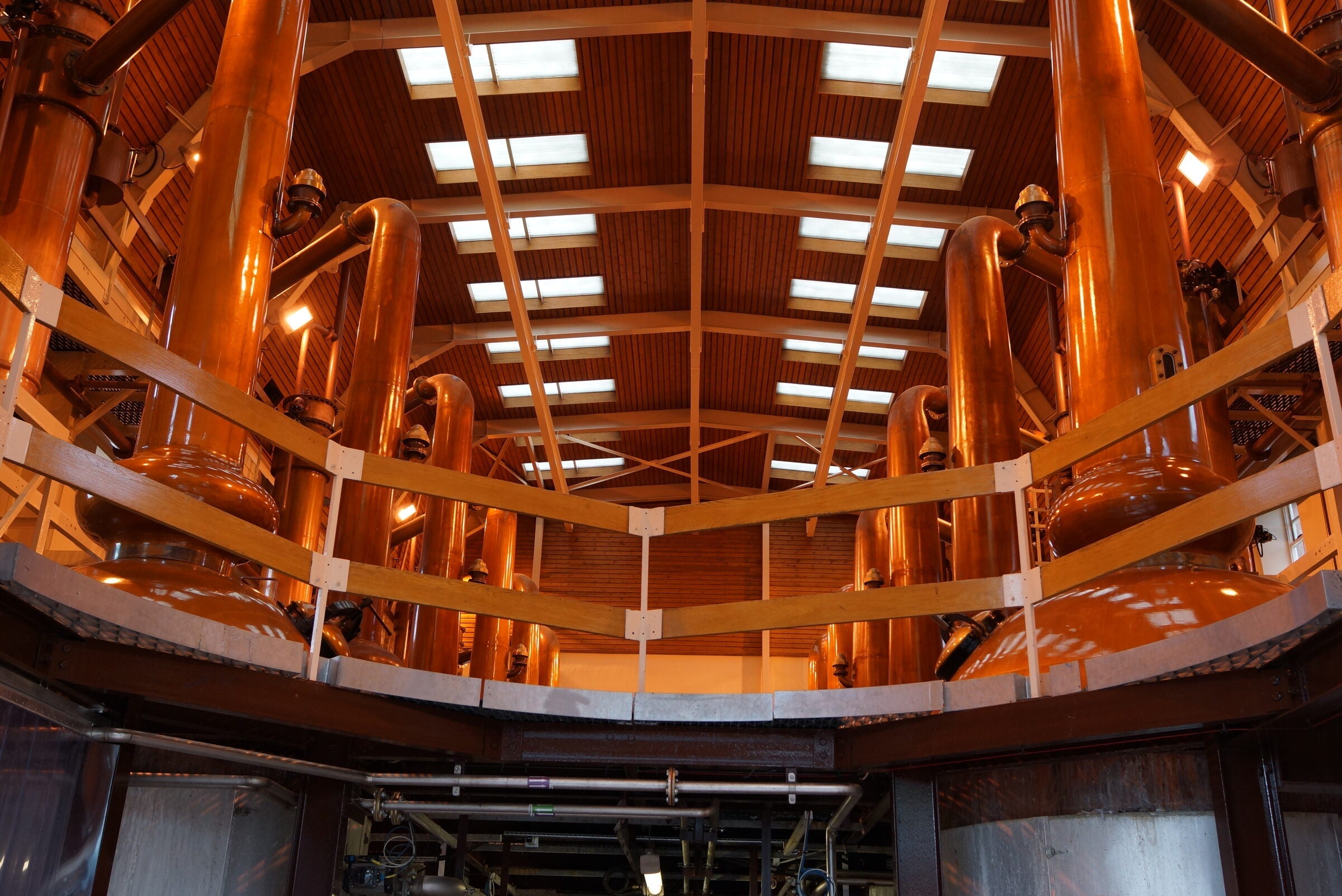
Glenmorangie Distillery: The Tallest Stills in Scotland
The tall stills at Glenmorangie owe their existence to a bargain. When William Matheson converted the old Morangie brewery in 1843 he could not afford purpose-built equipment, so he installed a pair of second-hand gin stills, and their absurdly long necks turned out to make a Highland spirit of unusual delicacy. Every still added since has been built to the same measurements, which is why the swan necks in Tain rise 5.14 metres, the height of an adult giraffe, and why the whole apparatus is routinely described as the tallest in Scotland.
Glenmorangie matters to whisky drinkers for another reason too: this is the distillery that made cask finishing mainstream. The Port, Sherry and Sauternes finishes it pioneered in the 1990s changed how the entire industry thinks about wood. For cask buyers and independent bottlers, though, Glenmorangie is one of the hardest names in Scotland to get hold of, and we will be straight with you about that below.
Glenmorangie at a glance
| Region | Highland, Tain, Ross-shire, on the shore of the Dornoch Firth |
| Founded | 1843 by William Matheson; first spirit usually dated to 1849 |
| Owner | The Glenmorangie Company (LVMH, since 2004) |
| Capacity | Around 6.5 million litres of pure alcohol a year, plus up to 1 million from the Lighthouse |
| Stills | Twelve: six wash, six spirit, with 5.14 m necks, the tallest in Scotland |
| Water source | Tarlogie Springs, rare hard, mineral-rich water |
| Fermentation | Around 52 hours in 16 stainless-steel washbacks |
| Malt spec | Unpeated (max 2 ppm); chocolate malt used annually for Signet |
| Style | Light, elegant Highland: citrus, peach, honey, vanilla, florals |
| Visitor centre | Yes, open year round |

History of Glenmorangie
Alcohol has been made on the Morangie site for a very long time. Records point to distilling at Morangie Farm as far back as 1703, and a brewery stood here from the 1730s, drawing on the same spring water. William Matheson, who had managed nearby Balblair, took out his licence in 1843 and spent six years scraping together the money and equipment to convert the brewery, which is why the first spirit is usually dated to 1849. Those second-hand gin stills were the making of the place, quite literally: their height became the house signature, preserved through every expansion since.
The distillery was rebuilt in 1887 under the Glenmorangie Distillery Company, and in 1918 it passed to the Leith firm Macdonald & Muir, whose Macdonald family would steer it for the better part of ninety years. The twentieth century was not always kind. Glenmorangie fell silent from 1931 to 1936, squeezed by Prohibition in America and depression at home, and again from 1941 to 1944 when wartime barley rationing bit. Recovery came steadily after the war, and by the 1980s the company was confident enough to buy around 600 acres of land surrounding Tarlogie Springs, simply to make sure nobody could ever interfere with its water.
Expansion followed demand: from two stills to four in 1977, to eight in 1990, and to the current twelve in 2009. In 2004 the Macdonald era ended when the business was sold to the French luxury group LVMH in a deal reported at around £300 million, which brought Ardbeg on Islay into the same stable. Under LVMH the pace of innovation quickened, culminating in 2021 with the Lighthouse, a 20-metre glass-walled experimental distillery beside the main still house. Its two stills match the classic Glenmorangie dimensions but carry adjustable condensers, cooling jackets and purifiers, letting the distilling team make spirit as if their stills were taller or shorter than they really are. Little from the Lighthouse has been bottled yet, which makes it one of the more intriguing stocks quietly maturing in Scotland.
Through all of this, Glenmorangie built a commercial record few rivals can match: for decades it has been quoted as the best-selling single malt in Scotland itself, the dram the locals actually drink.
How Glenmorangie makes its whisky
Start with the water, because Glenmorangie genuinely is unusual here. Tarlogie Springs delivers hard, mineral-rich water that has spent, by the distillery's estimate, decades filtering through limestone and sandstone before it surfaces. Most Scottish distilleries use soft water; Glenmorangie credits the minerality with helping its fruity, floral character develop during fermentation.
The mash is around 9.8 tonnes in a full lauter tun, run to a medium clarity, and fermentation lasts around 52 hours in sixteen stainless-steel washbacks of 48,500 litres each. The malt is unpeated to a maximum of 2 ppm, with one deliberate exception: once a year a batch of roasted chocolate malt is mashed for Signet, an indulgence almost no other major distillery bothers with.
Then the stills do their work. Only the lightest, most volatile vapours can climb five metres of copper and make it over the top; everything heavier falls back and is redistilled. The result is a spirit of remarkable finesse, all citrus and stone fruit, which the distillery entrusts to what may be the industry's most obsessive wood programme. Glenmorangie buys slow-grown oak from the Ozark Mountains of Missouri, air-dries it for around two years, leases the new casks to Jack Daniel's and Heaven Hill to season with bourbon for four years, then ships them to Tain. Casks are used twice only, with second-fill casks resting in damp, earth-floored dunnage warehouses. The team behind all this, once famously numbered at sixteen, is still known as the Men of Tain, and the whisky itself is directed by Dr Bill Lumsden, whose pioneering finishing work in the 1990s, beginning with the original Port Wood Finish, is the reason your favourite whisky shop now has a shelf full of wine-finished malts from every corner of Scotland.
What does Glenmorangie taste like?
Unpeated, light and precise. The classic ten-year-old Original is a masterclass in ex-bourbon maturation: mandarin, peach, vanilla, honeysuckle and a clean malty backbone, delicate without being thin. The finished expressions build on that base rather than burying it, Lasanta adding oloroso raisin and spice, Quinta Ruban bringing dark chocolate and port-soaked fruit, Nectar d'Or layering on Sauternes lemon tart and ginger. With age, the spirit heads towards crème brûlée, mint and eventually chocolate, while Signet, with its chocolate malt, pours like espresso and bitter orange.
Compared with its Highland neighbours, Glenmorangie sits at the elegant end of the spectrum: leaner than the muscular sherried style of Dalmore down the road, fruitier and lighter than the waxy, grassy make of Teaninich across the firth at Alness.
Glenmorangie and independent bottlers
Here is the honest truth: independently bottled Glenmorangie is genuinely rare. The distillery has never sold casks in meaningful quantities, and since the LVMH acquisition the taps have tightened further, because a luxury house has every incentive to keep its malt exclusive. The casks that do escape are usually "teaspooned", meaning a spoonful of another malt is added before sale so the whisky can no longer legally be called Glenmorangie single malt. These casks circulate under the trade name Westport, a blended malt that everyone in the industry understands to be overwhelmingly Glenmorangie in character.
Old genuine Glenmorangie from the independent shelves, mostly bottled decades ago before the current controls, now trades as a collector's curiosity. For modern drinkers, a well-chosen Westport is the practical way to taste this distillate at cask strength and natural colour, and good examples show exactly the orchard fruit and honey you would hope for.
The Single Cask and Glenmorangie
We will not pretend otherwise: we have never bottled a Glenmorangie, and there is no cask of it in our warehouse today. That is not for want of looking. Casks of this make almost never reach the broker market as straight single malt, and when Westport parcels appear we apply the same rule we apply to everything: we taste first, and we only buy when the liquid genuinely excites us. So far the right cask at the right price has not crossed our tasting bench, and we would rather tell you that plainly than bottle something ordinary with a famous name attached.
What we can offer is the same style of whisky done brilliantly elsewhere. Our shelves regularly carry elegant, fruit-driven Highland and Speyside single casks that scratch the same itch, and if a Westport or Glenmorangie cask worth owning ever does surface, the fastest way to hear about it is to get in touch and tell us what you are after. We keep a wish list, and we do call people back.
Collectability and cask ownership
At auction, Glenmorangie occupies a curious middle ground. Its core range is too widely available to appreciate, but the top of the pyramid, Signet, the Grand Vintage series, the Pride releases and the Azuma Makoto artist collaborations, has a genuine collector following, and discontinued 1990s finishes now sell for multiples of their original price. The brand's luxury positioning under LVMH suggests the limited releases will keep coming, and keep being collectable.
Cask ownership is a different story. Because the distillery does not sell casks to private buyers, and because escaped stock is teaspooned into Westport, there is effectively no open market in Glenmorangie casks. Anyone offering you one deserves very careful questions about provenance and naming rights, and this is a corner of the market where scams and overpriced parcels do appear. If you are considering any cask purchase, from this distillery or another, it pays to understand what you are buying: our plain-English guide to cask sizes and types is a good place to start. And the standard caveat matters more than usual here: cask ownership involves risk, values can go down as well as up, and nothing on this page is financial advice.
Visiting Glenmorangie
The distillery sits just off the A9 on the southern shore of the Dornoch Firth, an hour north of Inverness and comfortably on the North Coast 500 route. The visitor centre is open year round, with tours running most days and the still house, with those extraordinary necks disappearing towards the ceiling, worth the ticket on its own. Serious devotees can stay at Glenmorangie House along the coast at Cadboll. Tain itself, Scotland's oldest royal burgh, rewards an hour's wander, and Ben Nevis at Fort William or Blair Athol at Pitlochry make natural companion visits on the drive north or south.
Glenmorangie FAQs
Who owns Glenmorangie distillery?
The Glenmorangie Company, a subsidiary of the French luxury group LVMH (Moët Hennessy Louis Vuitton), which bought the business from the Macdonald family in 2004 in a deal reported at around £300 million.
Why are Glenmorangie's stills so tall?
Founder William Matheson installed second-hand gin stills in the 1840s, and gin stills are built tall. The 5.14 m necks, the tallest in Scotland, let only the lightest vapours pass, which is why the spirit is so delicate. Every new still since has copied the originals.
Is Glenmorangie peated?
No. The malt specification is unpeated, at a maximum of 2 ppm. The house style is light and fruity, though the distillery does mash roasted chocolate malt once a year for its Signet expression.
What does Glenmorangie mean?
The name is Gaelic and is usually translated as "glen of tranquillity", though scholars debate whether the original meaning was closer to "glen of big meadows". The distillery has embraced the tranquillity reading.
Can you visit Glenmorangie distillery?
Yes. The visitor centre in Tain is open year round with regular tours, and the distillery sits directly on the North Coast 500 route an hour north of Inverness.
Can you buy a cask of Glenmorangie?
Realistically, no. The distillery does not sell casks privately, and the rare casks that reach the market are teaspooned and traded as Westport blended malt. Treat any offer of a "Glenmorangie cask" with caution, and ask us if you want an honest second opinion.
Own a piece of Glenmorangie
Owning Glenmorangie by the cask is, frankly, a long shot, and we would rather tell you that than sell you a story. But the qualities that make it loved, elegant fruit, clever wood, Highland character, are qualities we hunt for constantly across Scotland's distilleries, and casks with that profile do come up at prices that make far more sense.
If you are curious about buying a whisky cask, bottling one under your own label, or simply want to know what elegant Highland malt is available right now, get in touch. We taste everything we sell, and we will give you a straight answer about what is worth your money, even when the answer is "not this one".
Work with The Single Cask
Buy a whisky cask, bottle under your own label, or store casks in our HMRC approved bonded warehouse in Fife.
Read more
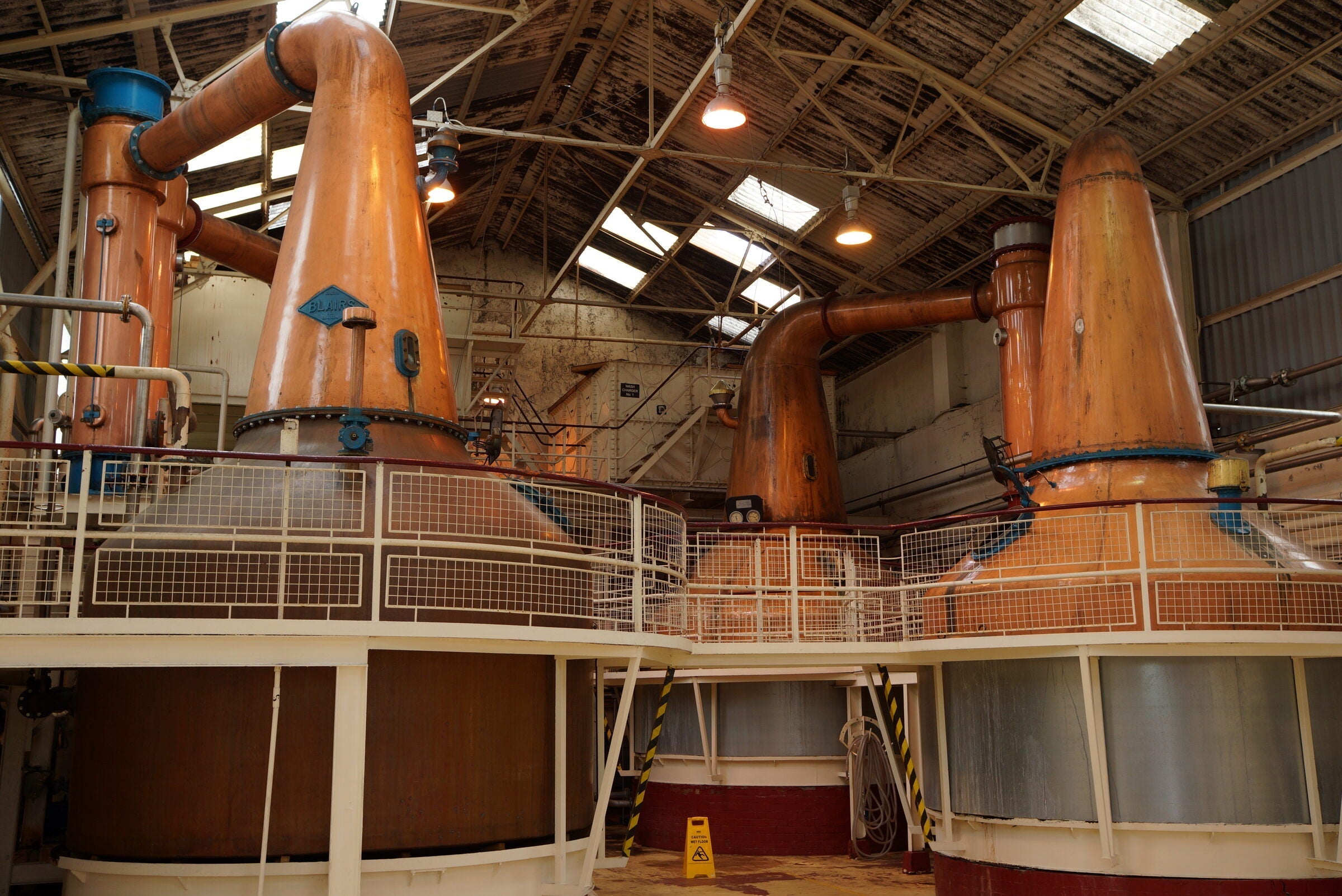
Ben Nevis Distillery: The Highland Malt With a Japanese Passport
Founded in 1825 by a six-foot-four giant, rescued by a Prohibition-era adventurer and owned since 1989 by Japan's Nikka, Ben Nevis makes some of the fruitiest, funkiest spirit in the Highlands. We ...
Read more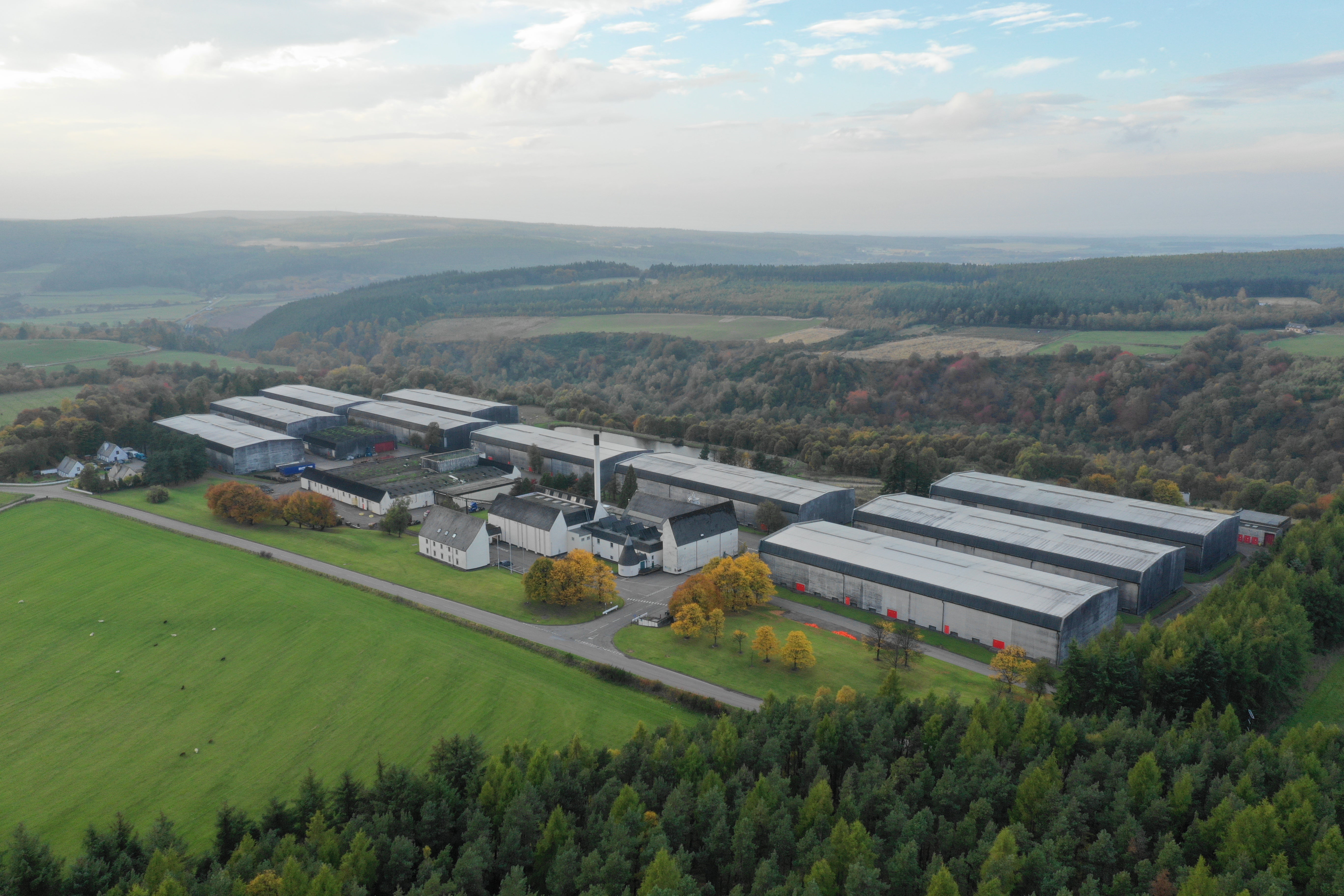
Auchroisk Distillery: The Speyside Malt Nobody Could Pronounce
Built to feed the J&B blend and rebranded as The Singleton because nobody could say its name, Auchroisk is one of Speyside's great unsung workhorses — and one of the distilleries we have bottle...
Read more


