
Article: Imperial Distillery: The Ghost Distillery Beneath Dalmunach
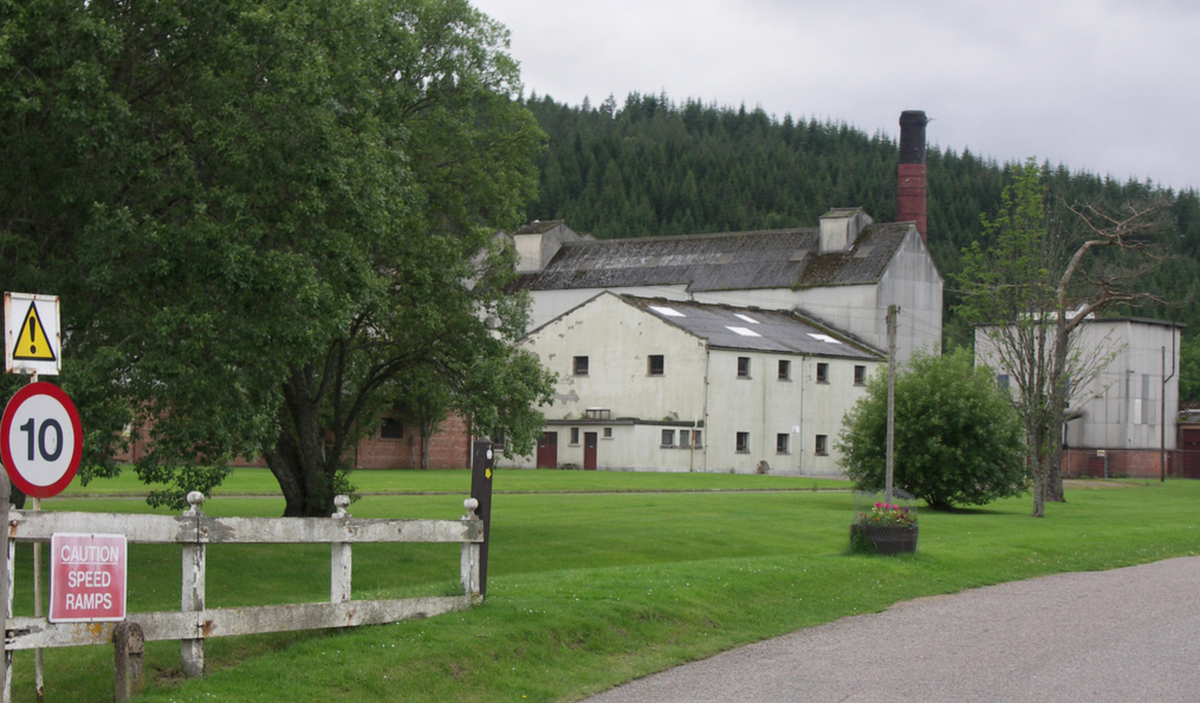
Imperial Distillery: The Ghost Distillery Beneath Dalmunach
Most whisky drinkers have never heard of Imperial, and there is a simple reason for that: the distillery has not made a drop since 1998, and the buildings themselves were pulled down in 2013. Yet Imperial casks still turn up at auction and on specialist retailers' shelves for several hundred pounds, and we hold one ourselves. This is the story of a Speyside distillery that spent most of its life either mothballed or half forgotten, and why what little whisky it left behind is worth understanding before it disappears from the market for good.
We are not bottlers who read distillery histories off Wikipedia and repeat them back. We own a genuine Imperial cask, distilled in March 1998, the year the stills fell silent for the final time, and we have tasted it ourselves. What follows is everything we know to be true about Imperial, what our own cask tells us about the distillery's character, and an honest answer to the question every reader eventually asks: can you still get hold of it.
Imperial at a glance
| Region | Speyside, Carron, on the banks of the River Spey |
| Founded | 1897, by Thomas Mackenzie |
| Status | Closed 1998, demolished 2013. No longer exists as a working distillery |
| What stands there now | Dalmunach distillery, built 2012 to 2014 on the same site |
| Last owner | Allied Distillers, later absorbed into Pernod Ricard / Chivas Brothers |
| Capacity (historic) | Around 1.6 million litres of pure alcohol a year |
| Stills (historic) | Four: two wash, two spirit, both pear shaped with wide, spherical lids |
| Water source | The Balintomb Burn, the same source Dalmunach uses today |
| Malt spec | Unpeated in later years; some peat used in earlier decades |
| Style | Gentle, floral and waxy, with a distinctive cream soda sweetness |
| Visitor centre | None. The site is Dalmunach's working production facility, not open to the public |
History of Imperial
Imperial was built in 1897 by Thomas Mackenzie, who already owned the neighbouring Dailuaine distillery and would later merge his interests with Talisker. The timing could not have been worse. Mackenzie named the new distillery for Queen Victoria's Diamond Jubilee and topped its maltings with a cast iron crown, a flourish of Victorian confidence that the whisky boom of the 1890s seemed to justify. Within two years the Pattison crash had wiped out that confidence along with a large part of the industry, and Imperial closed in 1899 having barely got started.

What followed was two decades of silence. Imperial reopened in 1919 under a consortium of blending firms that included the Distillers Company Limited, ran for six years, then closed again in 1925 when DCL's so called Great Merger reorganised the industry and left Imperial surplus to requirements. It did not distil again for thirty years. When it finally reopened in 1955, floor maltings gave way over the following decade to a Saladin box system, and in the mid 1960s a second pair of stills was installed, taking the distillery to four. It was not a smooth run even then. Imperial was mothballed again in 1985, sold to Allied Distillers in 1989, restarted briefly in 1991, and closed for the last time in 1998. Pernod Ricard's acquisition of Allied Domecq in 2005 brought the derelict site into the Chivas Brothers estate, and in 2013 the demolition crews finally arrived. More than half of Imperial's 116 year existence had been spent standing idle.
Chivas Brothers chose not to rebuild Imperial. Between 2012 and 2014 they invested £25 million in an entirely new distillery on the same ground, named Dalmunach after a pool on the Spey nearby. Some of Imperial's red brick and washback timber was reused in the new building, and Dalmunach's onion shaped spirit stills were deliberately modelled on Imperial's, so there is a genuine, physical line running from one distillery to the other even though they are entirely different operations. If you want to see what the site looks like from the air today, our drone footage of Dalmunach shows the same ground Imperial once stood on.
How Imperial made its whisky
Imperial ran four copper pot stills at the end: two wash stills of around 18,500 litres and two spirit stills of around 20,500 litres, all pear shaped with wide spherical lids and steam heated rather than direct fired. Six wooden washbacks, built from Oregon pine and larch at roughly 56,500 litres each, gave the wort a slow, traditional fermentation, and a single stainless steel mash tun handled around 11.5 tonnes per mash. Barley was unpeated for most of the distillery's later life, though earlier decades saw some use of peat in the malting process, which shows up as a faint smokiness in the oldest surviving bottlings. Annual capacity settled at around 1.6 million litres of pure alcohol, modest by the standards of Speyside's bigger blending distilleries but entirely typical for its era.
None of that equipment survives. It was scrapped along with the rest of the site in 2013, so anything written about how Imperial's whisky is made has to be in the past tense. What we can say with more confidence is what the spirit itself was like, because we have tasted it.
What does Imperial taste like?
Imperial's reputation, such as it is, rests on a gentle, floral, faintly waxy character that whisky writers have long compared to cream soda, and our own cask backs that up almost word for word. Cask 100804, distilled on 10 March 1998 and matured for 25 years in a barrel, opens with a nostalgic, fizzy ice cream soda note, creamy vanilla bean lifted by fresh lemon and lime zest, with the waxy quality that seems to be Imperial's real signature running underneath. Sweet barley malt and softly polished oak give it depth, and a little water brings out more floral character and a creamier texture. On the palate it is rich and coating, with a warming kick of crystallised ginger and white pepper against that same soda sweetness, before a medium to long finish where the spice fades into dry, toasted oak, malt extract and a last trace of lemon sherbet.
Later Imperial tends to read as sweet, fruity and gently woody like this; earlier vintages, distilled before the peat was dropped from the malting process, can carry a light smokiness that has largely disappeared from what remains on the market today.
The Single Cask and Imperial
Our own cask, 100804, was distilled on 10 March 1998, in the same year Imperial's stills ran for the final time. It has matured for 25 years in a single barrel at cask strength, 52.8% ABV, and we bottled it at 700ml with the tasting notes above drawn from our own glass rather than a press release. Because Imperial no longer exists and never will make whisky again, every bottle of this cask is genuinely irreplaceable stock, not a marketing line we reach for out of habit.

Our Imperial 25 year old (cask 100804) is available to enquire about now, one of a diminishing number of chances to taste this distillery as it actually was.
Imperial and independent bottlers
Imperial was built almost entirely to supply blends, above all Teacher's, and only one official single malt was ever released, a 15 year old in the mid 1990s. That makes independent bottlers the main route by which anyone has ever tasted Imperial as a single malt, and several of the established names have released it over the years, including Gordon & MacPhail, Cadenhead's, Signatory Vintage and, more recently, Elixir Distillers under its Single Malts of Scotland label.
What remains on the market today reflects just how finite that stock now is. At the time of writing, The Whisky Exchange lists four current Imperial bottlings: a 1995 vintage 25 year old at £450, a 34 year old Director's Special from Single Malts of Scotland at £925, a 1994 vintage 24 year old at £450, and a 1995 vintage 26 year old marriage at £830. A further seven bottlings from Cadenhead's, Gordon & MacPhail, Elixir Distillers and First Cask are listed as discontinued, having previously sold for anywhere between £500 and £3,000. Prices like that are a useful, honest benchmark for what a cask of genuinely closed distillery whisky commands once the supply can only shrink, and they sit comfortably alongside what we are asking for cask 100804.
Can you buy a cask of Imperial whisky?
No, and we would rather say that plainly than pretend otherwise. Imperial cannot produce a single further litre of spirit. What exists is what was filled into cask before 1998, and every year a little more of it is drunk, bottled or lost to evaporation. Anyone offering you a "new" Imperial cask is either mistaken or not being straight with you.
If what appeals to you about Imperial is the idea of owning something from a vanished distillery, a handful of other closed Scottish distilleries occasionally surface in the same way, though stock is thin everywhere and prices reflect it. If what appeals to you is the gentle, blending grade Speyside character Imperial was known for, distilleries built for the same purpose are often a more practical route to a cask you can actually buy: Glentauchers, built for exactly the same blending role and still working today, is the closest comparison we know of, and Dalmunach, standing on Imperial's own ground and drawing the same water, is the nearest thing to a spiritual successor. We are happy to talk through what is genuinely available before you commit to anything.
Plan a bottling inspired by Imperial
Imperial itself is not a realistic sourcing option for a new bottling, and we will always tell a customer that rather than dress up scarcity as opportunity. What we can do is help you build something in the same spirit: a gentle, fruit forward Speyside single cask from a distillery that is still producing, bottled under our independent bottling service or under your own name through our private label whisky programme. If you already have a cask in mind, our guide to cask sizes and types is a good place to start, and if you are simply curious what is available right now, browse our current whisky casks or get in touch and we will tell you honestly what exists and what it should cost. As with any cask, ownership is unregulated in the UK and values can move in either direction, this is not financial advice, only a straight answer from people who taste everything we sell.
Imperial FAQs
Is Imperial distillery still open?
No. Imperial closed for the last time in 1998 and the buildings were demolished in 2013. Dalmunach distillery now stands on the site.
Can you buy a cask of Imperial whisky?
No new casks can ever be produced, because the distillery no longer exists. Existing casks and bottles occasionally reach the market through independent bottlers, auction houses and specialist retailers, but supply only ever shrinks.
What does Imperial taste like?
A gentle, floral Speyside malt with a distinctive waxy character and a cream soda sweetness, typically showing vanilla, citrus, malt and soft oak, with a little ginger spice on the palate.
Is Dalmunach the same distillery as Imperial?
No. Dalmunach is an entirely new distillery built by Chivas Brothers between 2012 and 2014 on Imperial's former site, reusing some of its brick and timber and modelling its spirit stills on Imperial's, but it is a separate operation with its own spirit.
Why is Imperial whisky so rare?
Imperial was built almost entirely to supply blends such as Teacher's, so very little was ever bottled as single malt, only one official release ever appeared, and production stopped for good in 1998.
Where can you buy Imperial whisky?
Through specialist whisky retailers, auction houses and independent bottlers who hold existing stock. The Single Cask currently holds one genuine Imperial cask, distilled in 1998, available to enquire about directly.
Work with The Single Cask
Buy a whisky cask, bottle under your own label, or store casks in our HMRC approved bonded warehouse in Fife.
Read more
Pulteney Distillery: Scotland's Maritime Malt from the Far North Coast
Wick is not on the way to anywhere. It sits at the far northeastern corner of the Scottish mainland, closer to Norway than to Edinburgh in spirit if not quite in miles, and Pulteney distillery has ...
Read more


