
Article: Speyburn Distillery: The Pagoda on the Hill of the Gibbet
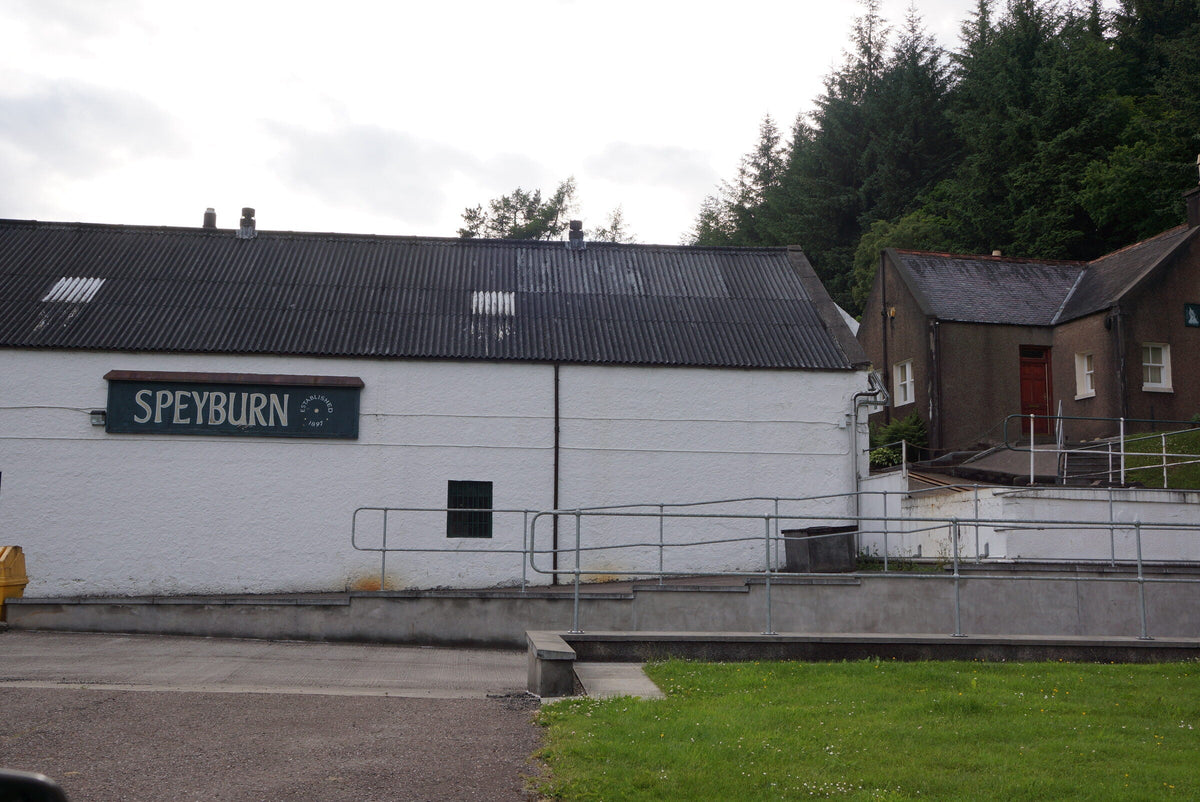
Speyburn Distillery: The Pagoda on the Hill of the Gibbet
Speyburn sits in a wooded glen just outside Rothes, tucked against a hillside below a spot the locals have long called Cnock na Croiche, the hill of the gibbet, which is how the distillery picked up its own local nickname of "The Gibbet". It is one of the more overlooked names in Speyside, built in 1897 to catch the last months of a jubilee year, and it has spent most of its life as steady, reliable blending stock rather than a headline single malt. That is changing. Inver House has pushed Speyburn hard as a single malt in the American market over the last two decades, and it now sells more bottles there than most Scotch drinkers in the UK would guess. We do not hold a cask of it ourselves, and we say that plainly rather than bury it, but the distillery's production story, its surviving Victorian malting kit and its position inside the wider Inver House group make it a useful one to know if you are thinking seriously about where Speyside whisky comes from.
Speyburn at a glance
| Region | Speyside, Rothes, Moray |
| Founded | 1897, by John and Edward Hopkins of John Hopkins & Co, designed by the architect Charles Doig |
| Owner | Inver House Distillers, part of International Beverage Holdings |
| Capacity | Reported figures vary by source and date; around 1.9 million litres of pure alcohol a year before a capacity-doubling expansion begun in 2014, higher since |
| Stills | One wash still (17,500 litres) and one spirit still (15,500 litres), both onion-shaped with worm tub condensers |
| Water source | The Granty Burn, a tributary of the River Spey |
| Style | Unpeated, fruity and grassy in youth, built historically as blending stock and now also bottled as a core single malt range |

Speyburn from above
From the air, Speyburn sits tucked into its wooded glen just below the hillside the locals call Cnock na Croiche, the pagoda roof of the old drum maltings visible among the trees close to the main distillery buildings. It is a quieter, more enclosed setting than the open farmland around many Speyside distilleries, which fits a site that has spent most of its life working steadily rather than courting attention.
History of Speyburn
Speyburn was built in 1897 by the brothers John and Edward Hopkins, trading as John Hopkins & Co, with one clear deadline in mind: to have spirit running before the end of the year, so the new distillery could claim to have made whisky during Queen Victoria's Diamond Jubilee. The building was not finished in time. First spirit finally ran on Christmas Day 1897, in the middle of a snowstorm, with the distillery's own men working the stills in overcoats and mufflers because the roof and walls were still going up around them. One cask from that first run was successfully filled and bonded bearing the 1897 date, which is as good a founding story as any distillery in Speyside can offer.
The site was designed by Charles Doig, the architect whose pagoda-roofed kiln design became the template copied across the Scotch whisky industry, and Speyburn's own pagoda still sits on the hillside above Rothes much as it did in 1897. Ownership passed out of the Hopkins family in 1916, when the distillery was sold to the Distillers Company Limited, the forerunner of today's drinks giants, and it stayed under that umbrella and its successor, United Distillers, until 1991 and 1992, when Inver House Distillers bought it. Inver House itself has been part of International Beverage Holdings, a Thai-owned group, since 2006, and Speyburn now sits alongside Balblair, Balmenach and Pulteney as three of Inver House's five working Scotch distilleries, each of which now has its own guide on this site.
For most of the twentieth century Speyburn's whisky went almost entirely into blends, quietly and without much fanfare, which is true of a large number of Speyside distilleries built in the same late Victorian boom. What changed its fortunes was a push into the American single malt market from the 1990s onward. Speyburn 10 Year Old became a genuine commercial success in the United States, at one point reported among the best-selling single malts in that market, built largely on value pricing and consistent quality rather than marketing spend. The distillery opened permanently to visitors for the first time in 2023, having previously welcomed guests only occasionally, including for events marking its 125th anniversary during the Spirit of Speyside Whisky Festival the year before.
How Speyburn makes its whisky
Speyburn is unusual among working Speyside distilleries for what survives on site from its original 1897 build. The distillery installed a Galland-Henning pneumatic drum malting system when it opened, a three-level mechanical maltings that did away with the need to turn malt by hand across a traditional malting floor. It operated until 1967 and Speyburn's example is now the only one left in Scotland with its original workings still intact, including the four wooden malt hoppers that fed it. Malting itself has long since moved off site to specialist maltsters, but the drum maltings building remains, a genuine piece of whisky industry history rather than a restored showpiece.
Production today runs on one wash still and one spirit still, both the traditional onion shape associated with a lighter, more delicate new make, fitted with worm tub condensers rather than the shell-and-tube condensers more common in modern distilleries. Worm tubs, coils of copper pipe cooled in an outdoor tank of cold water, give less contact between the spirit vapour and copper than a shell-and-tube condenser, which tends to produce a slightly heavier, more sulphury new make spirit. At Speyburn that character mellows during maturation into the lighter, fruitier, grassy style the distillery is known for, drawing on water carried down from the Granty Burn above the site. Six wooden washbacks handle fermentation, typically around 48 hours, using unpeated malt sourced from outside suppliers rather than malted on site.
Inver House began a programme to roughly double Speyburn's production capacity starting in 2014, reflecting how much the distillery's single malt sales had grown, and investment in the site has continued since, including a rebrand of the core range in 2024. None of that has changed the basic production method described above. It is still a small-still, worm-tub distillery making a lighter, more approachable style of Speyside malt than its bigger sherry-driven neighbours.
Speyburn and independent bottlers
Because so much of Speyburn's output has historically gone into blends, and because Inver House has only relatively recently built it into a marketed single malt brand, genuine third-party cask stock does exist in the wider market, more so than at a distillery whose owner bottles almost everything itself. Independent releases under labels including Signatory Vintage, Gordon & MacPhail's Connoisseurs Choice range, Hunter Laing's First Editions and Mackillop's Choice have all put out Speyburn over the years, usually at a wide range of ages from youthful ten and fifteen year old casks through to considerably older stock bottled in small batches. That is a reasonably healthy sign for anyone sourcing Speyside malt for an independent label: the distillery is not locked up entirely inside one owner's own releases the way some are.
That said, availability through the ordinary broker and auction market moves in cycles and is not something any independent bottler can take for granted at a given moment. We do not currently hold a cask of Speyburn, and have not seen compelling stock come through recently, which is a fair reflection of the market rather than any particular problem with the distillery.
Speyburn and The Single Cask
We would rather tell you plainly that we do not hold Speyburn right now than pad this guide out with stock we do not have. What we can offer instead is a straight conversation about what you are after. If it is specifically the lighter, worm-tub, less sherry-driven style of Speyside whisky that draws you to Speyburn, we can point you toward casks we do hold that sit in a similar flavour family, and be clear about where they differ. If it is the Inver House connection or a particular age and cask type, we are glad to go through what is realistically available and keep you updated if genuine Speyburn stock comes up.
Plan a bottling inspired by Speyburn
Speyburn itself moves through the broker market more freely than some Speyside names, but we do not have a cask of it in our own warehouse at the moment, so we would rather point you toward what we can offer than suggest otherwise. Two currently available Speyside casks worth a look if the lighter, fruitier end of the region's style is what appeals are our Craigellachie 10 Year Old, cask strength from an ex-bourbon cask, and our Inchgower 10 Year Old, another coastal Speyside malt built around a similarly approachable, less heavily sherried profile. Both have their own distillery guides if you want more detail before deciding. For the wider Inver House family, our Balblair, Balmenach and Pulteney guides cover Speyburn's three sibling distilleries.
For an independent bottler or a new brand working from a wider brief than one specific distillery name, we can talk through independent bottling and private label whisky built around stock that fits what you are trying to make, walk through the four steps from cask to bottle, and hold everything in our own bonded warehouse while a plan comes together. If you are earlier in the process and thinking about buying a whisky cask generally, our guide to cask sizes and types is a sensible next stop. A cask is not a regulated investment, values can move in either direction over however many years it spends maturing, and nothing here is financial advice, only a straightforward account of what we see buying and selling casks day to day.
Get in touch and tell us what you are trying to build. We will give you a straight answer about what is realistically available and what it is likely to cost.
Speyburn FAQs
Who owns Speyburn distillery?
Inver House Distillers, which has owned Speyburn since 1991 to 1992. Inver House itself is part of International Beverage Holdings, a Thai-owned drinks group, and also owns Balblair, Balmenach, Pulteney and Knockdhu.
Why is Speyburn nicknamed "The Gibbet"?
Locals have long called the distillery "The Gibbet" because it sits below Cnock na Croiche, a hillside whose name translates roughly as "hill of the gibbet", a reference to gallows once sited in the area rather than to anything at the distillery itself.
Is Speyburn whisky peated?
No. Speyburn's core range is unpeated, with a lighter, fruitier, grassier character that comes from its onion-shaped stills and worm tub condensers rather than from peated malt.
Can independent bottlers buy Speyburn casks?
Occasionally. Speyburn moves through the broker and auction market more freely than distilleries whose owners bottle almost all of their own output, with independent releases from houses including Signatory, Gordon & MacPhail and Hunter Laing, though availability still varies and should not be assumed at any given time.
What is pneumatic drum malting, and does Speyburn still use it?
It is a mechanical malting system that turns malting barley inside rotating drums instead of by hand on a traditional malting floor. Speyburn installed a Galland-Henning drum maltings when it opened in 1897 and used it until 1967. The building and its original drums survive on site, the only example left in Scotland with its original workings intact, though malting itself is now done off site.
Work with The Single Cask
Buy a whisky cask, bottle under your own label, or store casks in our HMRC approved bonded warehouse in Fife.
Read more
Ardnahoe Distillery: The Independent Bottler That Built Its Own Distillery From Scratch
Most distilleries on Islay carry decades, sometimes centuries, of history. Ardnahoe carries almost none. It filled its first cask in November 2018 and opened its doors the following April, the firs...
Read more


