
Article: Tamdhu Distillery: The Speyside Malt That Went All-In on Sherry
Tamdhu Distillery: The Speyside Malt That Went All-In on Sherry
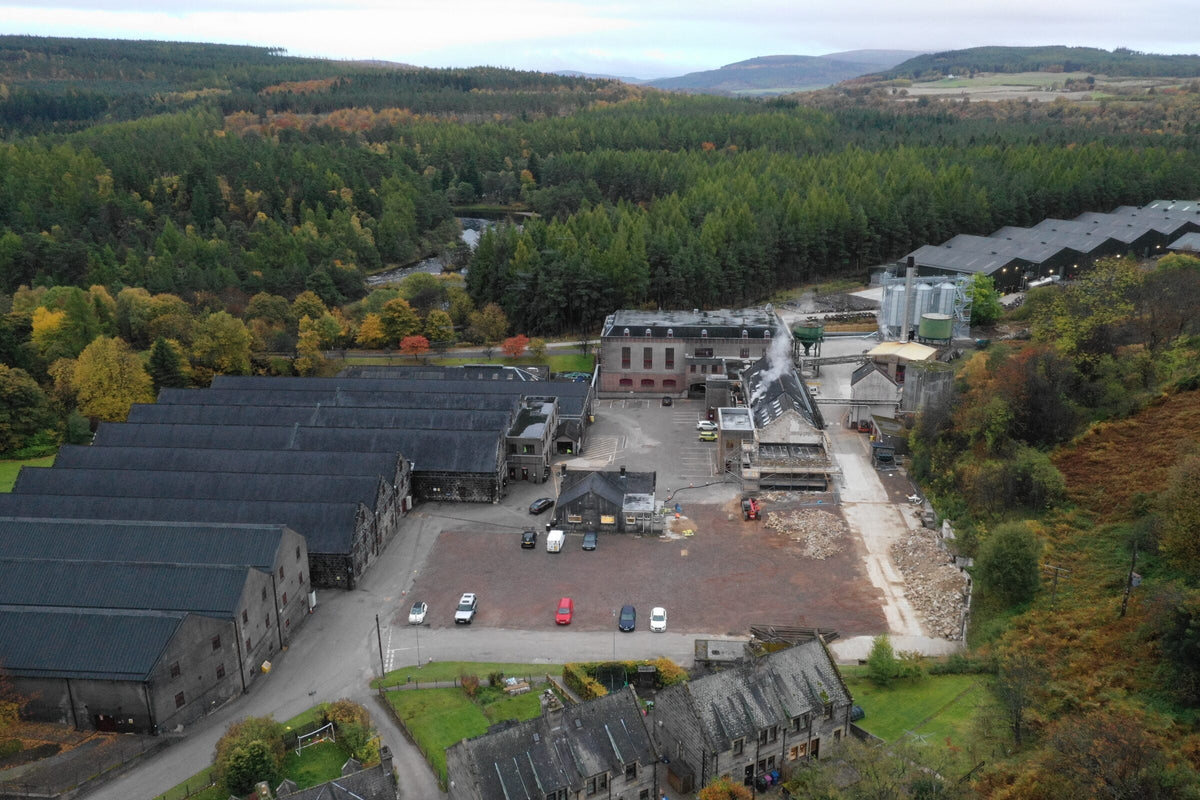
Tamdhu sits on the banks of the River Spey at Knockando, in the thick of Speyside's distillery country, but it looks slightly different from its neighbours the moment you see it from the air. There is no pagoda roof. Charles Doig, the architect whose ventilated kiln design came to define the Speyside skyline, had some involvement with Tamdhu too, yet the distillery never adopted the feature that made his name. It is one of several small facts that make Tamdhu easy to overlook and genuinely interesting to look at properly.
Tamdhu spent most of its life as blending stock, filling casks for The Famous Grouse, Cutty Sark and J&B rather than building a name of its own. That changed in 2013, when new owner Ian Macleod Distillers relaunched it as a single malt built entirely around oloroso sherry casks. For independent bottlers and whisky buyers, that history matters: it explains both why genuine Tamdhu stock is so distinctive and why so little of it ever reaches the open market.
Tamdhu at a glance
| Region | Speyside |
| Location | Knockando, Moray |
| Founded | 1896, first spirit ran in 1897 |
| Owner | Ian Macleod Distillers, since June 2011 |
| Status | Working distillery |
| Stills | 3 wash stills, 3 spirit stills |
| Capacity | Around 4 million litres of pure alcohol a year |
| Cask policy | Exclusively ex-oloroso sherry casks since the 2013 relaunch |
| Visitor access | No standing public tours |

Tamdhu from above
From the air, Tamdhu's low, unpretentious layout stands out precisely because of what's missing: no pagoda roof breaking the skyline, just a cluster of working buildings and warehousing set against the Speyside countryside near the River Spey. It's a useful reminder that not every distillery needs the postcard silhouette to be worth a serious look.
History
Tamdhu was built in 1896 by a consortium of whisky blenders who wanted secure access to good Speyside malt, with the first spirit running the following year. It was designed, like a string of other Speyside distilleries of the period, with some input from Charles Doig, though Tamdhu was finished without his trademark pagoda ventilator, something that still marks it out from near neighbours such as Cardhu and Knockando.
Highland Distillers bought Tamdhu in 1899 and ran it, with interruptions, for a century. The distillery closed briefly between 1911 and 1912, then far more seriously between 1927 and 1947, twenty years of silence during a period when the whisky trade as a whole was struggling through depression, American prohibition and war. It reopened after the Second World War and settled into the role it kept for the rest of the twentieth century: a steady, largely anonymous supplier of fillings for blended Scotch, with The Famous Grouse, Cutty Sark, J&B and the Dunhill blend among the brands that relied on it.
Highland Distillers became part of the Edrington Group, which inherited Tamdhu along with higher-profile stablemates including The Macallan and Highland Park. With those two brands commanding most of Edrington's attention and investment, Tamdhu was mothballed in 2009 and put up for sale. Ian Macleod Distillers, the independent, family-controlled company behind Glengoyne and a long list of blended and bottled whiskies, bought it in June 2011.
Ian Macleod spent the next couple of years bringing Tamdhu back into production and rebuilding it as a single malt brand in its own right, rather than simply reviving it as another anonymous filling distillery. The new era began properly in 2013 with the launch of a 10 year old built entirely from ex-sherry cask stock, a style the distillery has stuck to ever since. It is a genuine rescue story, with a clear throughline: a distillery that spent most of a century making whisky nobody outside the trade ever tasted by name is now built, deliberately, around one of the most recognisable cask styles in Scotch whisky.
Production
Tamdhu draws its process water from a spring and borehole source on site, feeding a semi-lauter mash tun and nine wooden washbacks, each holding around 53,500 litres. Fermentation runs long, typically 59 to 107 hours depending on the brewing schedule, well beyond the shorter cycles some distilleries use. Longer fermentation favours the fruity, estery character Tamdhu is known for, giving the yeast more time to develop flavour before the wash ever reaches the stills.
Spirit comes off six stills, three wash and three spirit, a set that was expanded from a smaller original pair in the early 1970s when demand for blending stock was running high. Annual capacity sits at around 4 million litres of pure alcohol, respectable for a distillery that spends so little of its output on its own single malt range.
For much of the twentieth century Tamdhu malted all of its own barley on site using Saladin boxes, mechanical maltings installed in 1950 that largely replaced the traditional malting floor. It was one of the last distilleries in Scotland to keep this method running, and for some years it supplied malt to neighbouring Glenrothes and to Highland Park as well as using it for its own production. Floor and Saladin box malting of this kind has long since given way to centralised commercial maltsters across the industry, and Tamdhu is no exception today, but it is a genuine and slightly unusual piece of the distillery's working history.
The real story of modern Tamdhu is cask policy. Since the 2013 relaunch, every bottle released as Tamdhu single malt has been matured in ex-oloroso sherry casks, sourced from cooperages in Spain and seasoned for 18 to 24 months before filling, longer than the 12 month minimum the industry generally works to. Bourbon casks are still filled at Tamdhu, but that spirit is earmarked for blending or exchanged with other distilleries rather than bottled under the Tamdhu name. It is an unusually disciplined approach for a distillery of this size, and it shows in the whisky: dense dried fruit, toffee and a quiet spiciness that sits further towards the sherry-forward end of Speyside than most of its neighbours.

Tamdhu and independent bottlers
Tamdhu's relationship with independent bottlers is shaped directly by who owns it. Ian Macleod Distillers is not a faceless multinational drinks group. It built its business bottling and blending other people's whisky before it owned a single distillery of its own, and it still bottles widely under labels such as Chieftain's and Smokehead alongside its own-name releases. In that sense, whoever runs Tamdhu today understands the independent bottling trade from the inside, in much the same way Gordon & MacPhail's ownership shapes Benromach a few miles away.
That ownership cuts both ways for anyone hoping to buy a genuine Tamdhu cask. Because Ian Macleod built the modern Tamdhu brand specifically around its own 100% sherry cask single malt range, very little of that stock is released to third parties. The bourbon-filled spirit that does exist at Tamdhu is kept back for blending or swapped with other distilleries rather than sold on to brokers or independent bottlers, so genuine independently bottled Tamdhu, sherry cask or otherwise, is correspondingly rare on the open market. Where it does appear, usually through long-standing broker relationships or older stock bottled before the 2013 relaunch, it tends to be collected and priced accordingly.
For a buyer or independent bottler specifically chasing a Tamdhu cask, it is worth being realistic about this from the outset rather than finding out after a lot of searching. The distillery's sherry-forward style is far more widely available from other Speyside producers that do sell to the trade, something we come back to below.
Tamdhu and The Single Cask
We do not currently hold a Tamdhu cask, and given how tightly Ian Macleod controls its sherry-matured stock, that is unlikely to change quickly. It is a fair question to answer honestly rather than imply otherwise.
What we can offer is direct experience with the kind of whisky Tamdhu makes. Several of the casks we have sourced and bottled over the years share Tamdhu's sherry-first character: dense fruit, baking spice and the depth that long oloroso maturation gives a Speyside spirit. If what draws you to Tamdhu is that flavour profile rather than the name on the label, we can talk through genuinely available Speyside stock that sits in similar territory, matured the same honest way, in bond, with full paperwork and a clear route to bottling.
Plan a bottling inspired by Tamdhu
If Tamdhu itself is realistically out of reach for an independent bottling, the more useful question is what you actually want from the whisky: the region, the sherry-forward style, a particular age, or a specific maturation story. We work with independent bottlers and new brands from all of those starting points, not just distillery name recognition, and we would rather point you towards a cask you can genuinely buy than let you chase one that was never coming to market.
Our whisky casks available page shows genuine current stock, and our buy a whisky cask page explains how sourcing and ownership works when you buy from us directly rather than through a broker. For independent bottlers building a range, our independent bottling services cover sourcing, storage and bottling in one place, and if you are building something under your own name rather than ours, our private label whisky page sets out how that process works end to end. Everything sits in our own bonded warehouse here in Fife while it matures.
Worth reading alongside this guide: our Glengoyne distillery guide, Tamdhu's sister distillery under the same Ian Macleod ownership, and our Benromach guide, another distillery whose owner is itself a long-standing independent bottler. For more on the wider region, see our Speyside whisky region page.
A note on cask ownership generally: buying a whisky cask is not a regulated financial product, and nobody can honestly guarantee what a cask will be worth by the time it is ready to bottle. Values move in both directions depending on the spirit, the cask and the market at the time, so treat anything you read here, including this guide, as background rather than financial advice.
If you want to talk through Tamdhu-style sherry cask stock we do have available, or discuss sourcing, storage or bottling more generally, get in touch through our contact page and tell us what you are trying to achieve. We will give you a straight answer, including when the honest answer is that we cannot help with something specific.
Frequently asked questions
Can I buy a genuine Tamdhu whisky cask?
It is possible but difficult. Ian Macleod Distillers built the modern Tamdhu brand around its own 100% sherry cask single malt range and releases very little stock to brokers or independent bottlers. Bourbon-filled spirit exists but is generally kept for blending or exchanged with other distilleries rather than sold on. If a genuine Tamdhu cask does come to market it is usually through an established broker relationship, and it tends to carry a price that reflects its scarcity.
Why doesn't Tamdhu have a pagoda roof?
The pagoda-style ventilator associated with many Speyside distilleries, including several designed by architect Charles Doig, was never built at Tamdhu, even though Doig had some involvement with the distillery's design. It is a small but genuine point of difference from near neighbours like Cardhu and Knockando, and one reason Tamdhu is easy to pick out in aerial photography of the area.
Why is Tamdhu whisky always matured in sherry casks?
It is a deliberate decision rather than tradition going back to 1896. When Ian Macleod Distillers relaunched Tamdhu as a single malt in 2013, it chose to build the brand entirely around ex-oloroso sherry casks sourced from Spanish cooperages and seasoned for 18 to 24 months, longer than the industry's usual 12 month minimum. It gives the whisky a consistent, dense, dried fruit character that has become Tamdhu's signature.
Is most Tamdhu whisky used for blends rather than sold as single malt?
Historically, yes, and it still plays a role today. For most of the twentieth century Tamdhu's output went almost entirely into blends including The Famous Grouse, Cutty Sark and J&B. Since 2013 the sherry-matured spirit has been released as single malt, but bourbon-filled stock continues to be made specifically for blending and exchange rather than bottling under the Tamdhu name.
Can I visit Tamdhu distillery?
Not routinely. Tamdhu does not run standing public tours in the way some neighbouring distilleries do, though it has occasionally opened for events such as the Spirit of Speyside festival. If visiting matters to you, it is worth checking directly with the distillery or the festival organisers before planning a trip around it.
What is a realistic alternative to a Tamdhu cask for an independent bottling?
Look for genuinely available Speyside stock with a similar sherry-forward profile rather than waiting for Tamdhu itself to come to market. We hold and source casks with that kind of dense, fruit-driven character regularly, and can talk through what is actually in bond now rather than what might theoretically exist somewhere.
Work with The Single Cask
Buy a whisky cask, bottle under your own label, or store casks in our HMRC approved bonded warehouse in Fife.
Read more
Speyburn Distillery: The Pagoda on the Hill of the Gibbet
Speyburn sits in a wooded glen just outside Rothes, tucked against a hillside below a spot the locals have long called Cnock na Croiche, the hill of the gibbet, which is how the distillery picked u...
Read more


