
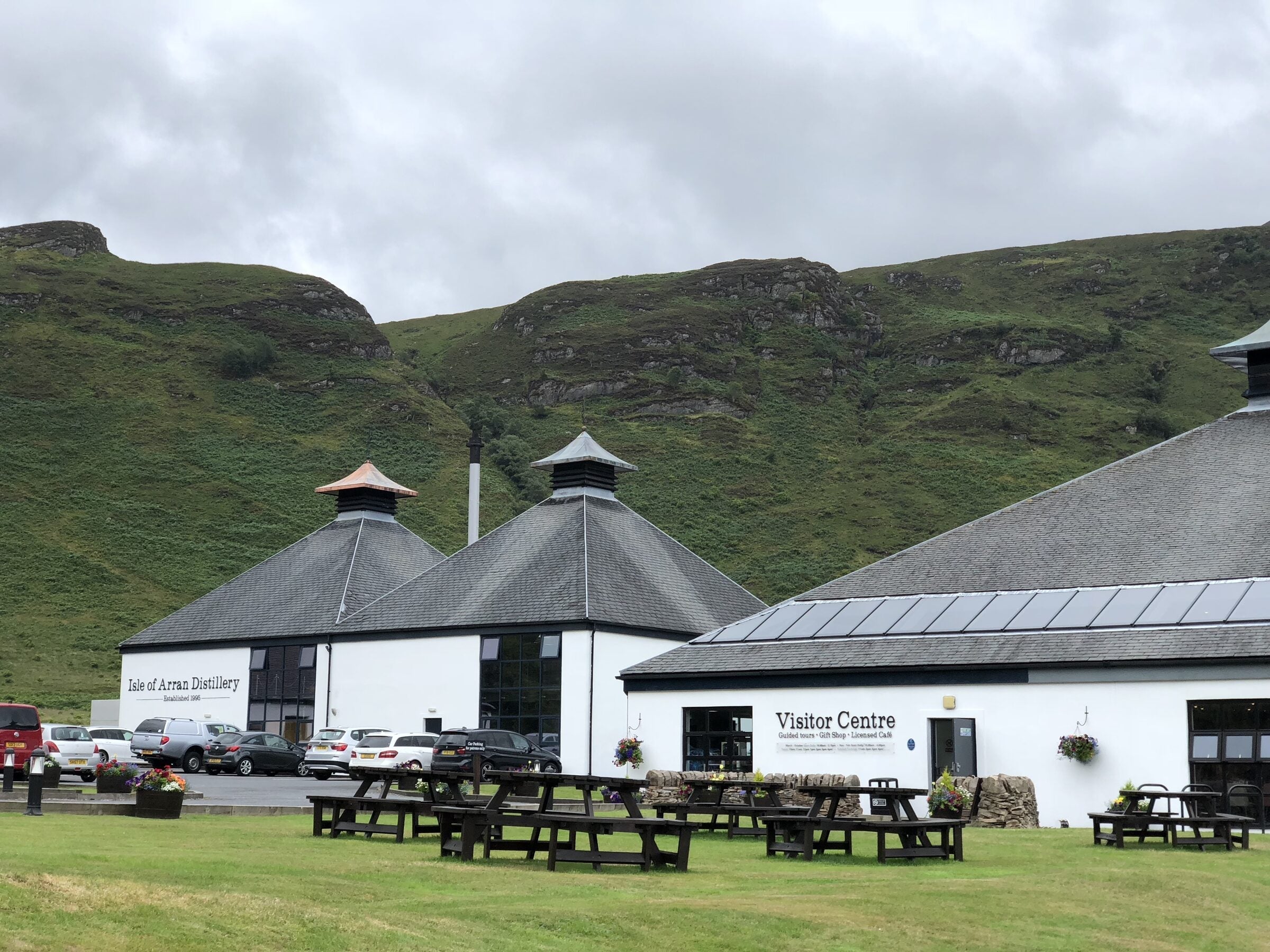
Arran Distillery: The Island That Waited 158 Years for Legal Whisky
At 2.29pm on 29 June 1995, new-make spirit ran through a spirit safe on the Isle of Arran for the first time in around 158 years. The man behind it was Harold Currie, a D-Day veteran and former Chivas Brothers director in his seventies, who had spent two years persuading backers, planners and, memorably, a pair of nesting golden eagles that a small island off the Ayrshire coast deserved a legal distillery again.
Three decades on, Lochranza is one of Scotland's most respected independents: a four-still operation making an unpeated, fruit-forward malt, with a peated sister distillery at Lagg and a stack of awards, including Distillery of the Year at the 2025 Scottish Whisky Awards. We have bottled two single casks from Arran's first two years of production, so we have a soft spot for the place.
Arran at a glance
| Region | Islands (Isle of Arran); legally part of the Highland region |
| Founded | Construction began December 1994; first spirit 29 June 1995; officially opened 17 August 1995 |
| Owner | Isle of Arran Distillers Ltd (independent, family and private shareholders) |
| Capacity | Around 1.2 million litres of alcohol per year (typically quoted; actual output described as just over 1 million) |
| Stills | 4 (2 wash, 2 spirit), made by Forsyths of Rothes; doubled from 2 in early 2017 |
| Water source | Loch na Davie, via the Easan Biorach burn |
| Fermentation | Long; wooden washbacks; typically quoted at 65 to 85 hours |
| Malt spec | Unpeated at Lochranza; peated production (Machrie Moor) moved to Lagg in 2019 |
| Style | Light, fruity, citrus and orchard fruit, cereal sweetness; takes sherry and wine casks well |
| Visitor centre | Yes, at Lochranza (opened by the Queen in 1997); tours, tastings, Casks Café |

History of Arran
Arran was once thick with whisky. Around 1800 the island is said to have supported some fifty small stills, almost all illegal, and "Arran Water" was smuggled across the Firth of Clyde in quantity. Legal distilling never took hold, and when the original Lagg distillery closed (1837 is the date most often given, though the company has also cited 1840), Arran went without a licensed still for the better part of two centuries.
The revival came from Harold Currie. After a career at Chivas and House of Campbell, Currie set out in 1993 to build a new distillery, an unusual ambition while the industry was still recovering from the closures of the 1980s. Working with architect David Hutchison, he chose Lochranza on the north coast for its water, which analysts reportedly judged among the purest in Scotland. Funding came from private backers and a bond scheme that promised early supporters cases of the eventual whisky.
Work started on 16 December 1994 and promptly stopped when a pair of golden eagles nested on the crags above the site. As a protected species they could not be disturbed, so the builders waited until the chicks had fledged. First mashing followed on 24 June 1995, first spirit five days later, and the distillery opened officially on 17 August 1995 with Gordon Mitchell as manager. The first cask was filled that same month.
The Queen opened the visitor centre on 9 August 1997, and casks were laid down for Princes William and Harry. Ewan McGregor opened the first casks in July 1998. Money was tight and the company traded at a loss for years; Currie sold his shares and stepped down in 2003, and Isle of Arran Distillers Ltd carried on under Euan Mitchell, still managing director today. The first proper 10 year old arrived in spring 2006, and in 2007 Arran was named Scottish Distillery of the Year.
The 2010s were the growth years. A 14 year old and the peated Machrie Moor both landed in 2010, an 18 year old joined the core range in 2016, and extra washbacks in 2014 paved the way for early 2017, when two stills became four. Then came Lagg: planning approved in 2016, first spirit on 19 March 2019, visitor centre open that summer. With Lagg dedicated to heavily peated spirit, Lochranza dropped peat entirely, and the Arran range was relaunched in September 2019 as "A Breath of Fresh Arran" with the Barrel Reserve and Sherry Cask expressions and 18 and 21 year olds. Machrie Moor stocks were run down and the label has since been discontinued.
The distillery marked its thirtieth birthday in 2025 with a run of just over 300 bottles of 30 year old sold from the visitor centre, followed in May 2026 by a permanent 30 year old at the top of the range and the return of the 14 year old. It also took Distillery of the Year at the 2025 Scottish Whisky Awards, two years after Lagg won the same title. Ownership has not changed: Isle of Arran Distillers remains one of the few genuinely independent Scotch distillers of any scale.
How Arran makes its whisky
Lochranza is a compact site that prefers quality to volume. Water comes from Loch na Davie in the hills behind the distillery, tumbling down the Easan Biorach burn over a series of waterfalls. Barley is unpeated malt from commercial maltsters, and the distillery has milled its own malt on site since 2000.
A single mash tun feeds a set of wooden washbacks, historically Oregon pine, with two more added in 2014 and further additions in 2022 and 2023. Arran runs clear worts and long fermentations, with figures between 65 and 85 hours quoted in different sources; either way, it is a long ferment that pushes the wash towards the fruity, almost cider-like character the distillers want.
The stills are the interesting part. Arran started with one pair, and when it expanded in 2017 the company went back to Forsyths in Rothes with the original drawings and had four stills built to the same pattern, so the spirit would not change. Both types have a bulbous shape and a long, narrow, near-horizontal lyne arm, giving plenty of copper contact and reflux. Distillation is slow, around six or seven litres a minute on the spirit still, and the heart is cut fairly high (roughly 63.5 to 75 per cent) to keep the fruit and leave heavier notes behind. The result is a clean, light new-make that ages gracefully.
Wood is where Arran has arguably done its best work. Most spirit goes into first-fill and refill ex-bourbon barrels, alongside a serious commitment to sherry casks (Oloroso and, more recently, Palo Cortado, which underpins the relaunched 14 year old) and a well-known series of wine cask finishes: Amarone, Port, Sauternes and others. Warehousing is a mix of dunnage, racked and palletised. In the very early years, when Lochranza had nowhere to put its casks, some were stored at Springbank in Campbeltown, just across the Kilbrannan Sound.
Peat is now Lagg's job: a single pair of much larger stills, malt peated to around 50ppm and a capacity of about 500,000 litres.
What does Arran taste like?
Unpeated Arran is a fruit-driven malt. From ex-bourbon wood you get green apple, pear, lemon and lime zest, a touch of pineapple as it ages, and a soft, biscuity cereal sweetness. Younger spirit often has a grassy or herbal edge that rounds off into vanilla and honey with more years in cask. The texture is lighter than a Highland Park or a Talisker, but Arran is rarely thin; the long fermentation gives it a juiciness that carries through.
Give it sherry wood and it turns into something else: dried apricot, orange peel, dates, ginger and baking spice, with the distillery's citrus still poking through. The Sherry Cask "Bodega" and the Quarter Cask "Bothy" show two sides of that, while the older age statements (18, 21, 25 and now 30) draw on hogsheads from the earliest years, exactly the territory our own bottlings come from. Well-aged 1990s Arran picks up tropical fruit, mango and pineapple especially, alongside white chocolate, ginger and gentle oak.
For comparison, Glenmorangie shares the light, fruity, cask-led approach on the mainland, while Springbank across the water in Campbeltown is oilier, saltier and more old-fashioned, yet with the same independent ethos.
Arran and independent bottlers
Arran has always been more available to independents and private owners than most distilleries of its size. In the 1990s and 2000s the company sold casks to private individuals to raise money, and later admitted this made brand building harder. Today's programme is far more selective, but a healthy number of early Arran casks still sit outside company ownership and surface as independent and private bottlings.
The Scotch Malt Whisky Society bottles Arran under distillery code 121, and most established independents have released Arran single casks over the years. Because the distillery is young, most sit in the 8 to 20 year bracket, which makes anything from 1995 to 1997 particularly notable. Independent bottlings are also where you find Arran at cask strength without finishing, the best way to understand the raw spirit.
The Single Cask and Arran
We have released two Arran single casks so far, and both come from the distillery's first two years of production. The spirit was made when Lochranza had one pair of stills, when Gordon Mitchell was still learning what the place could do, and when nobody knew whether the venture would survive. Bottling that history is one of the pleasures of what we do.
The first was Arran 19 years old, cask 1607, distilled in 1996, the distillery's second year, and bottled at a natural cask strength of 45.8%. On the nose we found grilled pineapple, farmhouse butter and dried apricot. The palate opened grassy and herbal, very much the young Arran character, before bourbon-cask vanilla sweetness took over. The finish brought stem ginger and a subtly bitter orange peel. It sold out.
The second, released in 2026, is Arran Malt 28 year old, cask 97-176, distilled on 10 February 1997 and matured for the full 28 years in a single hogshead before bottling at 54.7%. It is textbook old bourbon-wood Arran: tropical and yellow fruits, subtle oak, sweet malt, then ginger, cinnamon and allspice, with white chocolate on the finish. That one has also sold out, and quickly. If you would like to hear when we next bottle Arran, please get in touch.

Collectability and cask ownership
Arran occupies an interesting position for collectors. It is young enough that the earliest stock is only now passing 30 years, yet respected enough that 1995 to 1997 casks are increasingly scarce and the distillery's own 25 and 30 year olds sit firmly at the premium end. Early limited releases, the Smugglers' and Explorers Series, and single casks from the first few years all attract healthy interest at auction, though Arran has never had the speculative frenzy of some Islay or Speyside names, which many enthusiasts see as a good thing.
Arran still fills a small number of casks for private customers, and brokers occasionally have older Arran hogsheads and barrels available. If you are weighing up cask sizes and types, our guide to whisky cask sizes and types explains how a hogshead differs from a barrel or a butt and why it matters for maturation and eventual bottle count.
A word of balance. Owning a cask is a long-term commitment with real costs: storage, insurance, regauging, bottling and duty. Cask ownership involves risk, values can go down as well as up, and nothing on this page is financial advice. Buy a cask because you want to bottle it, share it and enjoy it, and treat anything else as a bonus.
Visiting Arran
The main crossing is CalMac's roughly 55-minute ferry from the Ayrshire coast to Brodick; the route has historically sailed from Ardrossan, though services have used Troon during harbour works, so check before you travel. From Brodick it is a scenic half hour north to Lochranza. In summer a small ferry also runs from Claonaig on Kintyre straight into Lochranza.
The visitor centre, opened by the Queen in 1997 and later extended, runs seven days a week with standard tours, tutored tastings and the "Journey Through The Ages" experience, which includes archive drams and a cask sample drawn in Warehouse 1. Casks Café does a proper lunch and the shop stocks distillery exclusives. Look up on your way in: golden eagles are still seen over the glen.
Lagg, about 40 minutes' drive south, is well worth the trip: a strikingly modern turf-roofed building with views towards Ailsa Craig and its own tours, tastings and café. Both distilleries in a day is entirely possible, and the Kintyre sailing makes Arran a natural stop on a longer tour taking in Springbank and Campbeltown, or the Oban road north.
Arran FAQs
Who owns Arran distillery?
Isle of Arran Distillers Ltd, an independent company founded by Harold Currie in the mid-1990s and run today by managing director Euan Mitchell. It owns both Lochranza distillery in the north of the island and Lagg distillery in the south, and it is not part of any of the big drinks groups.
Is Arran whisky peated?
Not any more. Lochranza has always been mainly unpeated, though from 2010 it made a small amount of lightly peated spirit each year for the Machrie Moor label. When Lagg opened in 2019, all peated production moved there and Lochranza became fully unpeated. Machrie Moor has since been discontinued, and Lagg's heavily peated malts fill that gap.
What is the difference between Lochranza and Lagg?
Both belong to Isle of Arran Distillers. Lochranza, opened in 1995 on the north coast, produces the unpeated single malt sold as Arran. Lagg, opened in 2019 on the south coast, uses heavily peated malt at around 50ppm to make Lagg single malt. Different sites, different water, different spirit.
Can you visit Arran distillery?
Yes. Lochranza has an award-winning visitor centre open seven days a week with tours, tastings and a café, and Lagg also welcomes visitors. Both are reached via the CalMac ferry to Brodick, or Lochranza directly from Claonaig in summer. Book tours ahead in busier months.
Is Arran a Highland or Island whisky?
Both, in a sense. Under Scotch whisky law the Isle of Arran sits within the Highland region, so Arran is legally a Highland malt. Most writers and drinkers treat it as an Islands whisky alongside Jura, Talisker, Highland Park and Tobermory. In style it leans Highland: fruity and unpeated rather than maritime and smoky. Our guide to the Scotch whisky regions explains how the regions work and where the islands fit.
Can you buy a cask of Arran?
Occasionally. The distillery fills a limited number of casks for private customers, and older Arran casks sometimes come up through brokers and independent bottlers. Availability varies, especially for 1990s stock. Tell us what you are looking for and we will let you know what we can find.
Own a piece of Arran
Arran is a young distillery with an old-fashioned story: an island that lost its whisky for the best part of two centuries, a founder who would not take no for an answer, and a spirit that has quietly become one of the most consistent in Scotland. Our 1996 and 1997 bottlings have gone, but we are always looking for more, and we would rather help you understand what you are buying than rush you. If you want to learn how cask ownership actually works, start with our guide to buying a whisky cask. If you already know what you want, or would simply like a chat about Arran, Lagg or single cask whisky in general, contact us and we will do our best to help.
Work with The Single Cask
Buy a whisky cask, bottle under your own label, or store casks in our HMRC approved bonded warehouse in Fife.
Read more
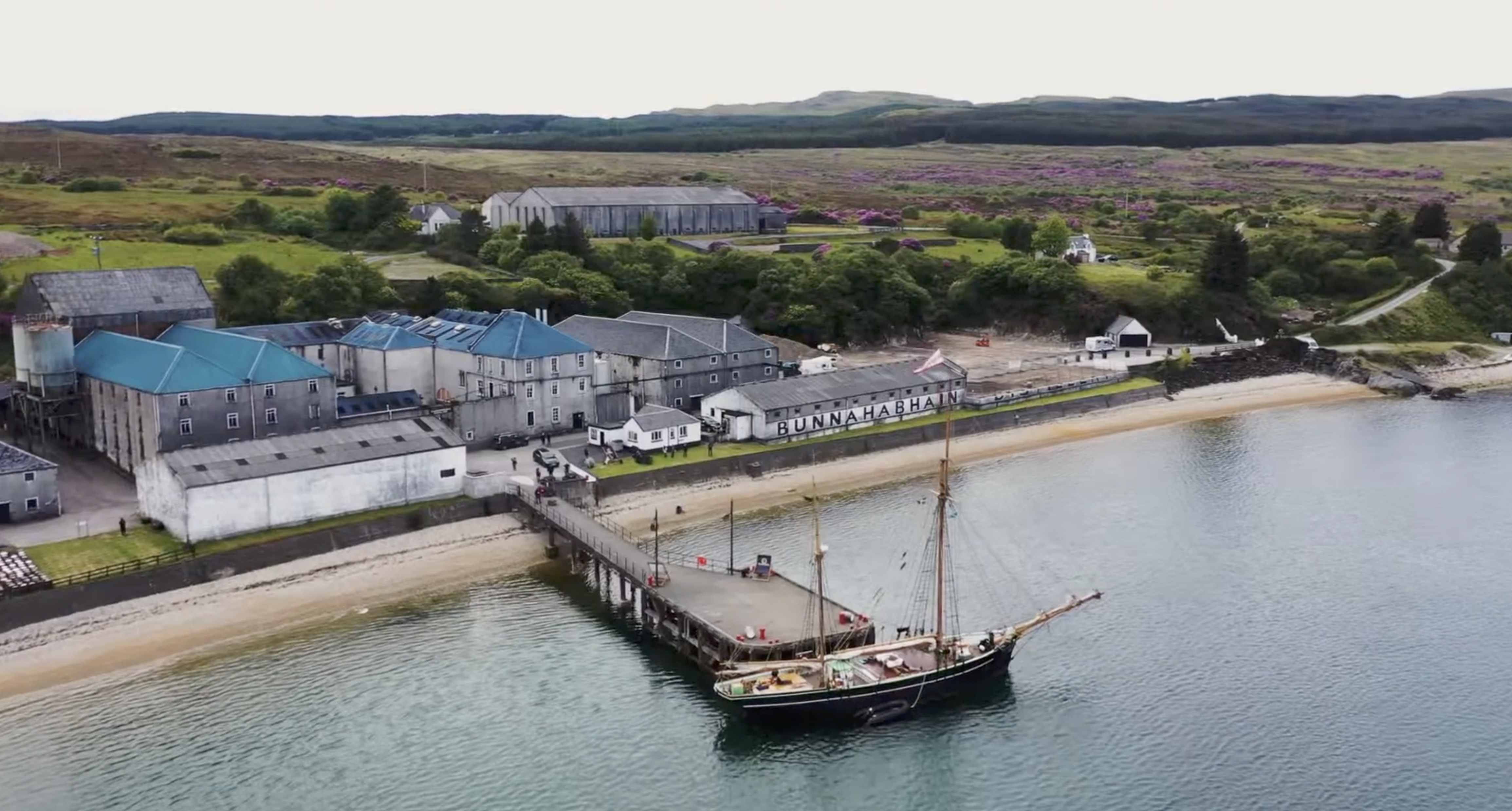
Bunnahabhain Distillery: Islay's Gentle Giant at the End of the Road
Islay's most remote distillery built its name on gentle, nutty, unpeated whisky, then quietly added a smoky alter ego. Here is the full Bunnahabhain story, from the Victorian company village to War...
Read more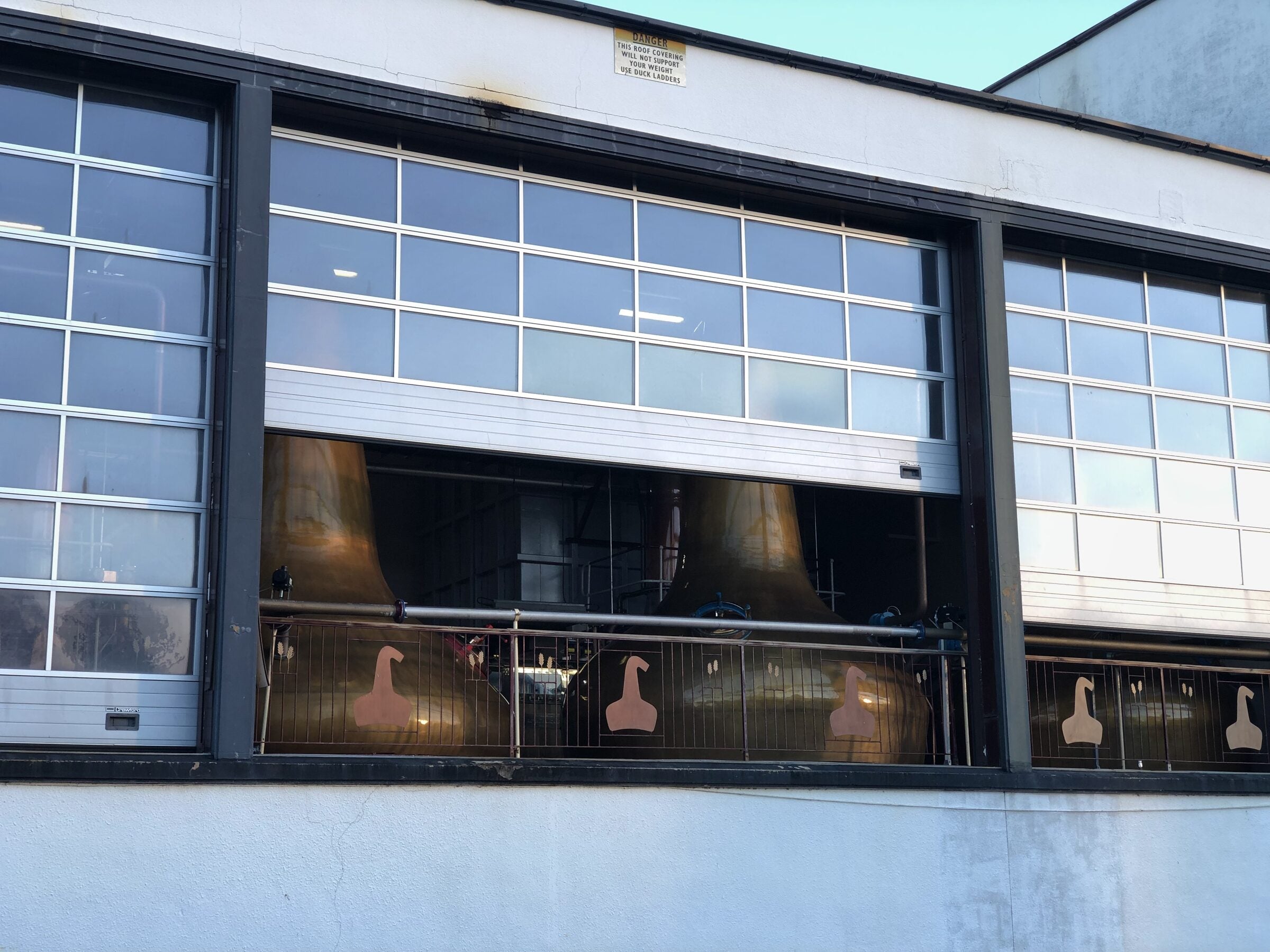
Royal Brackla Distillery: The King's Own Whisky
Royal Brackla near Nairn was the first Scotch whisky ever granted a Royal Warrant, yet most of its elegant, fruity Highland spirit has spent two centuries hidden in Dewar's blends. Our guide covers...
Read more


