
Bunnahabhain Distillery: Islay's Gentle Giant at the End of the Road
Islay is supposed to be about smoke, yet the island's most remote distillery spent most of the last sixty years making whisky with almost none. Bunnahabhain, pronounced "Boo-na-HAH-ven" and meaning "mouth of the river" in Gaelic, sits alone at the end of a single-track road on the Sound of Islay, looking across the water at the Paps of Jura, and it built its reputation on gentle, nutty, sherry-friendly spirit that tastes more of the sea than of the peat bog. Then, in the late 1990s, it quietly started making a peated version too, and today roughly a fifth of what runs off its four big stills is smoky enough to satisfy any Islay purist.
That double life is one reason we like it so much. We have bottled Bunnahabhain in both guises, from Port and Madeira barrels of the unpeated make to heavily peated casks sold under the Staoisha name, and as we write there are still bottles of our 13 year old Bunnahabhain on the shelf, which is not something we can say for many Islay distilleries. This guide covers the history, the way the whisky is made, what it tastes like, and what owning a cask of it actually involves.
Bunnahabhain at a glance
| Region | Islay, on the Sound of Islay north of Port Askaig, facing Jura |
| Founded | 1881 by the Islay Distillery Company (William Robertson of Robertson & Baxter and the Greenlees brothers); first spirit in early 1883 |
| Owner | CVH Spirits (the former Distell Scotch whisky business), part of the Heineken group since 2023 |
| Capacity | Typically quoted at around 2.7 million litres of pure alcohol, with more recent figures of 3 million-plus after upgrades |
| Stills | Four: two wash stills and two spirit stills, among the largest and tallest on Islay, with broad pear-shaped bodies |
| Water source | The Margadale spring, piped to the distillery so that it stays clear of peat, with cooling water from Loch Staoisha |
| Fermentation | Around 52 to 60 hours in Oregon pine washbacks |
| Malt spec | Mostly unpeated (around 1 to 2 ppm); the peated Mòine malt runs at roughly 35 to 45 ppm and makes up about a fifth of production |
| Style | Unpeated: nutty, gentle, sherried, with sea salt and dried fruit. Peated: coastal smoke over the same soft, sweet base |
| Visitor centre | Yes, a new shoreline visitor centre opened as part of the distillery's £11 million redevelopment, with the Warehouse 9 cask tasting as its centrepiece |

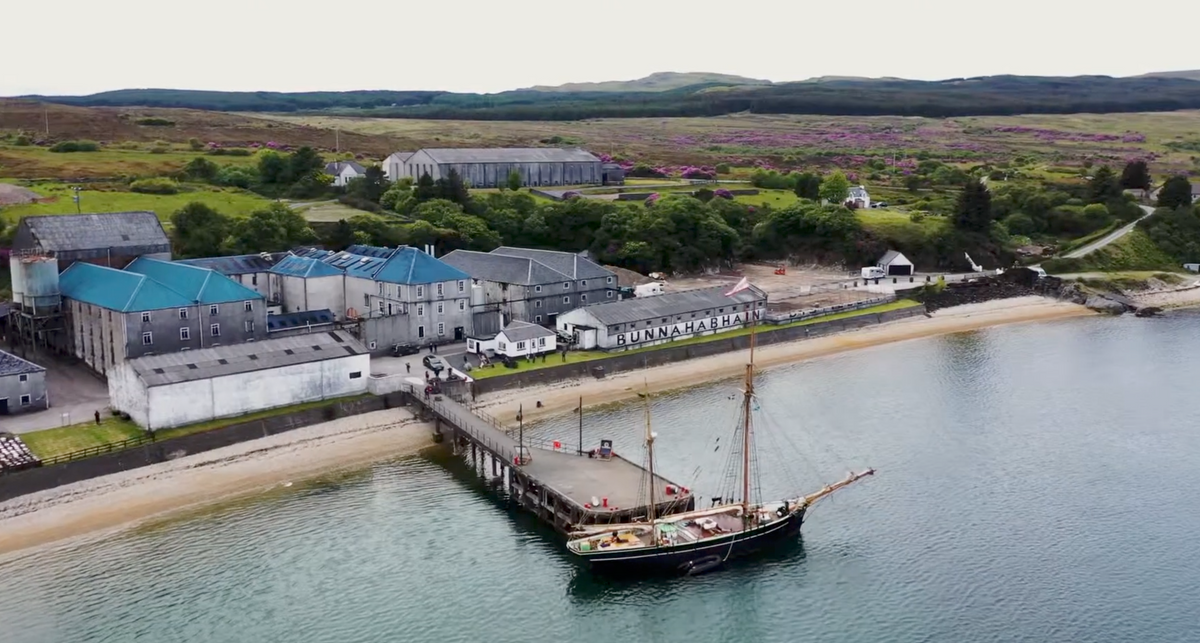
Bunnahabhain from above
Nowhere on Islay rewards a drone quite like Bunnahabhain. We flew ours out over the Sound of Islay to show the distillery the way the ferry to Jura sees it: a cluster of tall, prison-walled Victorian buildings and the little village built for the workers, hemmed in between the hills and the shore, with the Paps of Jura filling the sky across the water. Look closely and you can see the road, the only way in and out, snaking back along the cliff towards Port Askaig.
History of Bunnahabhain
Bunnahabhain is a Victorian company town in miniature. The Islay Distillery Company was put together in 1879 by William Robertson, of the Glasgow blenders Robertson & Baxter, and the brothers James and William Greenlees, and it chose about the least convenient site imaginable: a stretch of empty shore at the mouth of the Margadale River, with no road, no houses and no harbour. Building began in 1881 and the bill came to roughly £30,000, a very large sum for the day, because the company had to build not just a distillery but a pier, a road, a row of workers' cottages and a schoolhouse. Spirit ran in October 1882 and full production followed in January 1883. For the next eighty years almost everything, from barley to casks to people, arrived and left by boat.
In 1887 the Islay Distillery Company merged with William Grant's Glenrothes to form Highland Distilleries, the company that would eventually become Edrington, and Bunnahabhain settled into a long life as a supplier of blending malt, first for Robertson & Baxter's blends and later for Famous Grouse and Cutty Sark. It was one of the earliest distilleries on Islay to have electric light, in the 1890s, but the twentieth century treated it as it treated most Islay distilleries: closed through the Depression from 1930 to 1937, quiet again during the Second World War, and mothballed in the industry slump of 1982 to 1984. A proper road link only arrived in 1960, and the last delivery by ship was in 1993.
The distillery's stills were doubled from two to four in 1963, and it was around this period that the house style changed. Old Bunnahabhain from the 1950s and early 1960s was peated in the normal Islay way; from the mid-1960s the distillery switched to unpeated malt, and it is that gentle, nutty spirit that most people know as Bunnahabhain today. A single-malt bottling appeared in 1979, but the distillery remained a minor priority for Highland Distilleries and later Edrington, who sold it in 2003, along with the Black Bottle blend, to Burn Stewart Distillers for around £10 million.
Burn Stewart, and its later owner the South African group Distell, deserve most of the credit for the modern Bunnahabhain. In 2010 the range was relaunched at 46.3%, non-chill-filtered and naturally coloured, a decision that transformed its reputation among enthusiasts. In 2017 Distell announced a redevelopment of the site costing around £11 million, which over the following years demolished the old shoreline warehouses, built a new visitor centre, upgraded the plant and, in 2022, added a biomass energy centre that made Bunnahabhain the first Islay distillery to run its distillation on renewable heat. Heineken completed its takeover of Distell in 2023, and the Scotch whisky business, Bunnahabhain, Deanston, Tobermory and the Black Bottle and Scottish Leader blends, now trades as CVH Spirits.
How Bunnahabhain makes its whisky
The first unusual thing about Bunnahabhain is the water. Most Islay distilleries draw from lochs and burns stained brown by peat; Bunnahabhain's process water comes from the Margadale spring, which rises through limestone, and it is piped to the distillery so that it never runs over the moss on the way. That is one reason why even the peated version has a cleaner, sweeter backbone than its neighbours. Malt arrives from mainland maltsters: unpeated barley at around 1 to 2 ppm phenols for most of the year, and heavily peated Mòine malt, typically quoted at 35 to 45 ppm, for the roughly twenty per cent of production that goes on to be sold as Bunnahabhain's peated expressions or under the Staoisha name by independent bottlers.
Mashing takes place in a stainless steel lauter tun with a copper canopy, and the worts run into six washbacks of Oregon pine, where they ferment for somewhere between 52 and 60 hours. Then come the stills, which are the second unusual thing. Bunnahabhain's four stills are among the biggest on Islay, tall and broad-shouldered with a pear-shaped bulge, and the wash stills hold in the region of 30,000 litres or more. Big stills mean plenty of copper contact and reflux, and copper strips out the heavier, sulphury compounds, so the new-make comes off light, clean and slightly gingery rather than oily and pungent. It is a spirit designed for elegance rather than muscle, and it explains why Bunnahabhain takes to sherry casks so gracefully.
Wood policy leans heavily on ex-sherry casks, Oloroso and Pedro Ximénez in particular, with ex-bourbon barrels and a steady stream of wine, Port, Madeira and Marsala finishes for limited editions. Around fifteen thousand casks mature on site in the surviving warehouses, breathing the damp air off the Sound of Islay, and Warehouse 9, a dunnage warehouse in what used to be the old maltings, is where visitors are handed a valinch and invited to draw a dram straight from the cask.
What does Bunnahabhain taste like?
The unpeated house style is one of the gentlest on Islay and one of the most food-friendly in Scotland. Expect nuts, hazelnut and almond especially, toffee, malt, a light gingery spice and, running through all of it, a faint tang of sea salt that reminds you where it was made. Put it in good sherry wood and it fills out into dried fruit, dark chocolate, walnut and fruitcake without losing that briny freshness; the 12 year old is the textbook example, and the 18 and 25 year olds show what happens when the salt and the sherry have twenty years to get to know each other. Ex-bourbon and refill casks show a paler side: cereal, honey, lemon and coastal air, closer to a Highland malt than a classic Islay.
The peated make is a different proposition. Mòine and Staoisha bottlings carry proper Islay smoke, ashy and coastal, but the sweetness and the sea salt from the unpeated spirit are still there underneath, which gives them a softer, more rounded character than the Kildalton heavyweights. Sherry-matured peated Bunnahabhain, all bonfire and raisins, is one of the island's great combinations, and Toiteach a Dhà in the official range is a good place to start. Old peated Bunnahabhain from the early 1960s, before the switch to unpeated malt, is a collector's curiosity: waxy, smoky, tropical, and now vanishingly rare.
Bunnahabhain and independent bottlers
Because Bunnahabhain spent a century as a blending distillery, casks moved through brokers in volume, and independent bottlings are plentiful. Gordon & MacPhail, Signatory, Cadenhead, Douglas Laing, Hunter Laing and a long list of smaller houses have all bottled it, and it is one of the few Islay malts that an independent can still buy at reasonable prices at meaningful ages. The peated make, when it turns up independently, is usually labelled Staoisha after the loch that supplies the distillery's cooling water, and Staoisha has developed a following of its own among peat lovers looking for value.
The best independent Bunnahabhain tends to be one of two things: unpeated spirit that has spent its life in a single first-fill sherry or wine cask, which turns the gentle distillate into something dark and chewy, or peated Staoisha at cask strength, where the smoke is bigger and the price is lower than anything on the official shelf. Both are styles we have bottled ourselves.
The Single Cask and Bunnahabhain
Bunnahabhain has been very good to us. In 2010 a parcel of spirit was filled into a family of small first-fill wine casks, and thirteen years later we bottled them one at a time. Bunnahabhain 13 year old, cask 9007302, a first-fill Ruby Port barrel bottled at 58.8% (75 bottles), is still available as we write, and it shows exactly what a good Port cask does to this spirit: red grapes, malt and oak on the nose, then black pepper, dark chocolate, prunes, allspice, dates and honey on the palate. Its sister cask 9007303, a first-fill Madeira barrel at 60.8% (56 bottles), swaps some of the chocolate for cinnamon and nutmeg and is a touch drier; a few bottles remain of that too. Cask 9007304, another Ruby Port barrel at a hefty 65.4% (just 59 bottles), sold out quickly, as did cask 900730, a first-fill Moscatel octave at 56.9% that gave us raisins, sea salt, leather, dark chocolate and demerara sugar.
The pick of the family, for our money, was cask 9007301, an ex-Moscatel octave filled on 10 June 2010 and bottled at 67.9%. Our notes at the time ran to chestnuts roasting on a beach bonfire, toasted coconut, walnut oil, demerara and dark toffee dipped in sea salt on the nose, then a big, chewy palate of almonds, fudge, salted butter on toast and deep fruitcake, finishing on ginger, raisins and toasted walnuts. Only 87 bottles came out of it and, at the time of writing, a single one is left.
On the smoky side we have bottled the peated make several times under the Staoisha name: a 5 year old from ex-bourbon cask 940 (peat smoke, honeycomb, raisins and rum sweetness), a 6 year old finished in a Shiraz barrique (cask 10411, all peat, sea salt, wet sand and cherries), its follow-up 7 year old from a PX hogshead that had previously held Laphroaig (cask 10411A, peat and tropical fruit over burnt caramel and rancio), and a 9 year old from a first-fill Oloroso octave (cask 10523C). Most recently we released a Bunnahabhain 15 year old peated single cask, cask 183, distilled on 11 February 2009 and matured in a hogshead, bottled at 55%. All of the peated bottlings have sold out. If there is a lesson in the list, it is that Bunnahabhain's clean spirit is an extraordinarily willing partner for interesting wood, and we intend to keep testing that.

Collectability and cask ownership
At auction Bunnahabhain is the value Islay. It has never had a Black Bowmore moment, and the everyday official and independent bottlings trade at sensible prices, but the top end has depth: the 40 year old released in the early 2000s, the 1960s vintages that show the old peated style, the Fèis Ìle bottlings that sell out on the day, and older sherried single casks from the 1970s and 1980s all attract serious interest, and the occasional single cask has fetched several thousand pounds. The interest is steady rather than speculative, which, for anyone thinking of owning a cask, is arguably the healthier kind.
Casks of Bunnahabhain, both peated and unpeated, are among the more obtainable on Islay, and that accessibility is a large part of the appeal. The unpeated spirit matures well in almost anything and responds dramatically to sherry, Port and wine casks; the peated make is a rarer thing, sought after by drinkers who want Islay smoke without Islay prices. Both are the kind of casks that reward an owner who wants to bottle something distinctive rather than chase a headline. The usual caveats apply, and we would rather over-state them than under-state them: cask ownership involves risk, values can go down as well as up, storage and insurance are annual costs, provenance must be documented, and none of this is financial advice. Our guide to cask sizes and types explains why our Bunnahabhain octaves and barrels behaved so differently from a standard hogshead.
Visiting Bunnahabhain
Bunnahabhain is the hardest Islay distillery to get to and the one most worth the effort. From Port Askaig, follow the single-track road north for about four miles along the Sound of Islay; the road ends at the distillery, and the view across to Jura is one of the finest in Scotch whisky. The redevelopment gave the distillery a modern visitor centre by the shore, with a shop, a bar and a range of tours, but the experience everyone talks about is Warehouse 9, where you taste from casks drawn by hand in a dunnage warehouse. Come at the end of May for the distillery's Fèis Ìle day and you can add the festival bottling and live music. Caol Ila is a few minutes back down the road towards Port Askaig, and Bowmore and Bruichladdich are half an hour away on the other side of the island.
Bunnahabhain FAQs
Who owns Bunnahabhain distillery?
Bunnahabhain is owned by CVH Spirits, the Scotch whisky business formerly known as Distell International, which became part of the Heineken group when Heineken completed its acquisition of Distell in 2023. Its sister distilleries are Deanston and Tobermory.
Is Bunnahabhain peated?
Mostly not. Since the 1960s the house style has been unpeated, at around 1 to 2 ppm. Since the late 1990s the distillery has also made a heavily peated spirit, sold as Mòine, Toiteach a Dhà and other peated releases, or as Staoisha by independent bottlers, and this accounts for roughly a fifth of production.
How do you pronounce Bunnahabhain?
"Boo-na-HAH-ven". The name is Gaelic, Bun na h-Abhainne, and means "mouth of the river", after the Margadale River that meets the sea beside the distillery.
What does Bunnahabhain taste like?
The unpeated whisky is nutty, gentle and lightly salty, with toffee, malt and dried fruit from its sherry casks. The peated version adds coastal smoke over the same soft, sweet base, and is generally softer than the smoky malts of southern Islay.
Can you visit Bunnahabhain distillery?
Yes. The distillery has a visitor centre on the shore of the Sound of Islay, about four miles north of Port Askaig, offering tours and the Warehouse 9 tasting where whisky is drawn straight from the cask.
Can you buy a cask of Bunnahabhain?
Yes. Bunnahabhain casks, both unpeated and peated, are among the more available on Islay. We have bottled more than a dozen ourselves; contact us and we will tell you honestly what is on the market and what it is likely to become.
Own a piece of Bunnahabhain
A distillery at the end of the road, a spring that never touches peat, stills big enough to make a soft spirit that welcomes any cask you give it, and a peated alter ego for the smoke lovers: Bunnahabhain gives a cask owner more ways to end up with something special than almost anywhere on Islay. If that appeals, start with our plain-English guide to buying a whisky cask, read up on cask sizes and types, and then talk to us. We will tell you what Islay casks are honestly available, what we would do with them, and we will only ever recommend a cask we would be happy to bottle under our own label.
Work with The Single Cask
Buy a whisky cask, bottle under your own label, or store casks in our HMRC approved bonded warehouse in Fife.
Read more
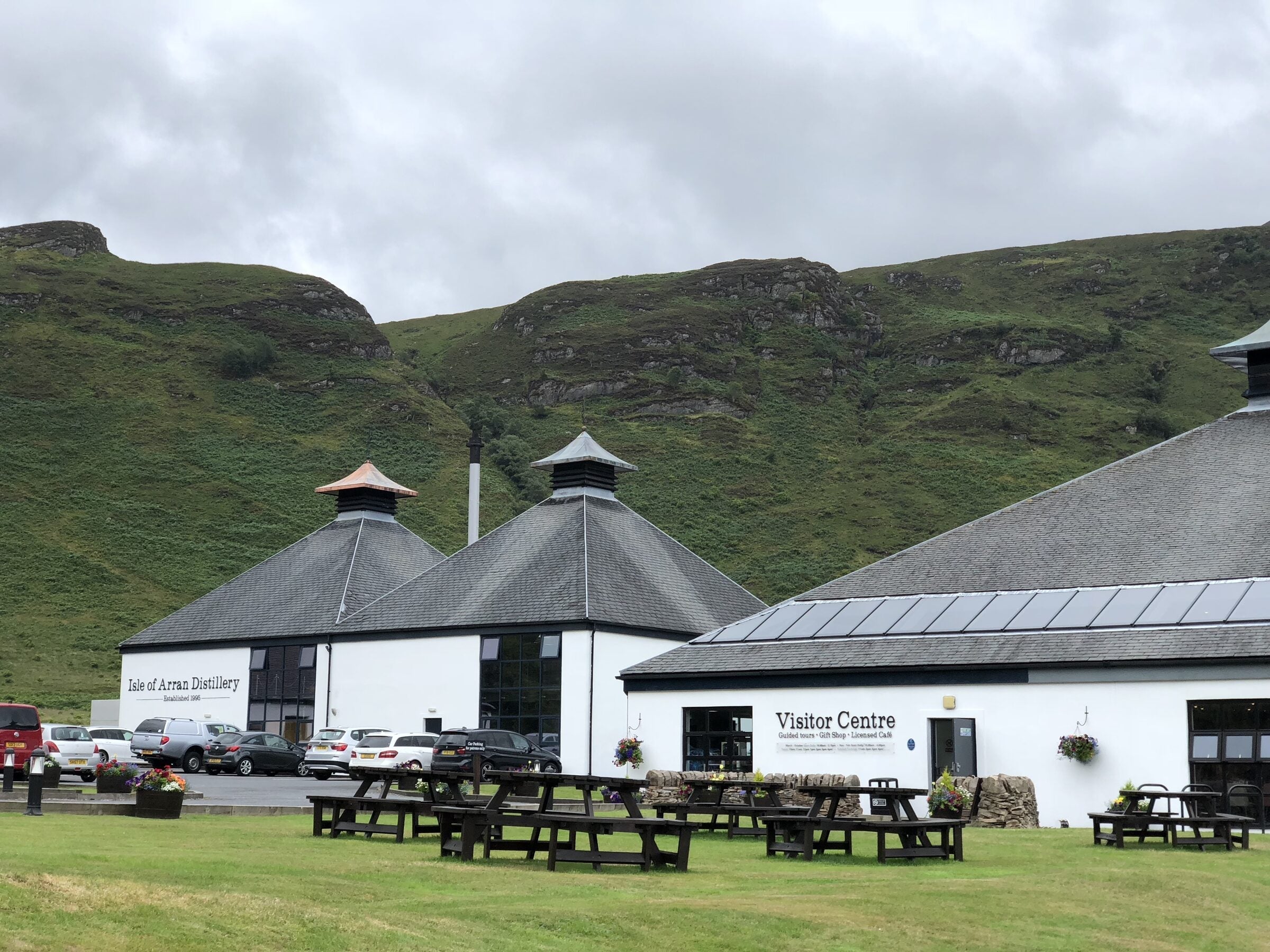
Arran Distillery: The Island That Waited 158 Years for Legal Whisky
Harold Currie, a pair of golden eagles and a north-coast loch gave Arran its first legal distillery since the 1830s. Our guide to Lochranza covers its history, stills, casks, flavour, visiting, and...
Read more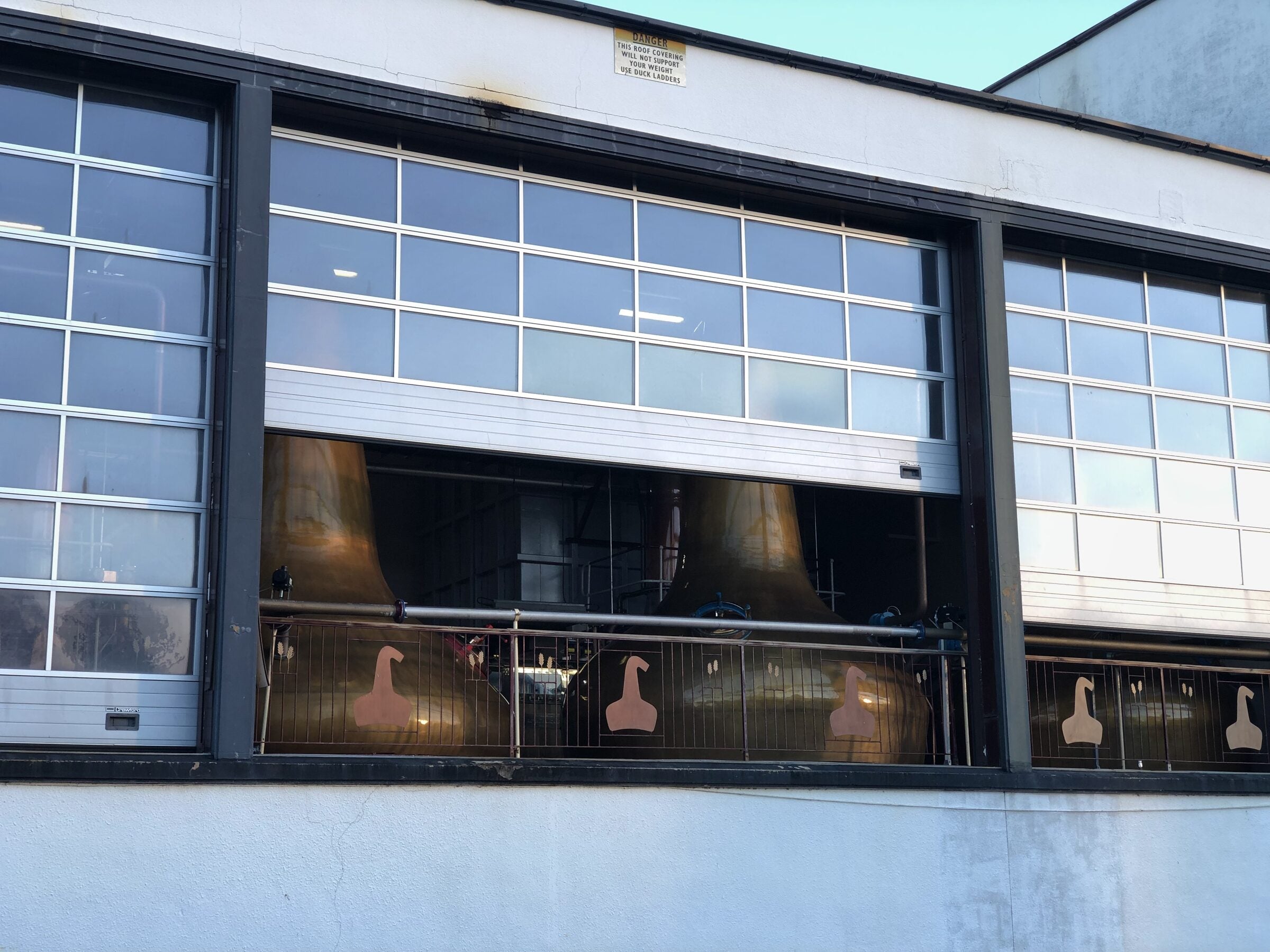
Royal Brackla Distillery: The King's Own Whisky
Royal Brackla near Nairn was the first Scotch whisky ever granted a Royal Warrant, yet most of its elegant, fruity Highland spirit has spent two centuries hidden in Dewar's blends. Our guide covers...
Read more


