
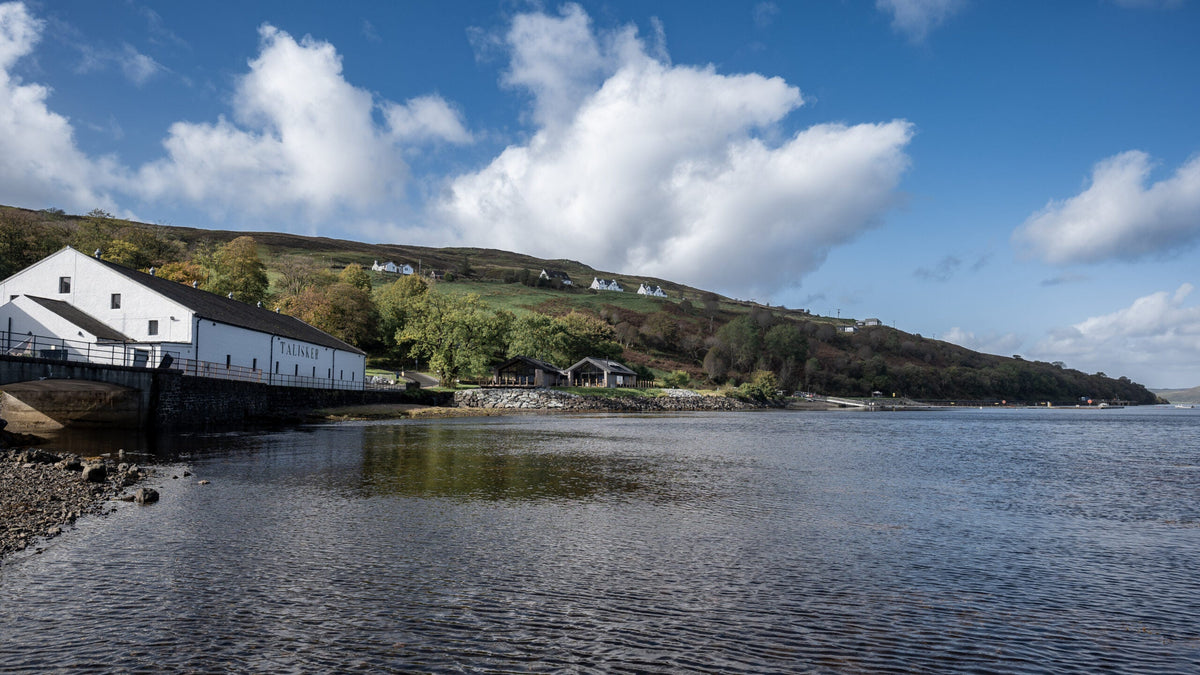
Talisker Distillery: The Peppery King of Skye
A few seconds after you swallow a mouthful of Talisker, something unusual happens: a crackle of black pepper and chilli catches the back of the throat, a signature so reliable that generations of drinkers have learned to wait for it. That peppery afterburn, born of Victorian worm tubs and a stillhouse that was rebuilt in 1962 as an exact replica of the one that burned down, has made the oldest working distillery on the Isle of Skye one of the most recognisable whiskies in Scotland.
Robert Louis Stevenson called Talisker "the king o' drinks" in 1880, and Diageo now sells it in more than a hundred countries under the slogan "made by the sea". For cask buyers, though, Talisker sits in the same frustrating category as Lagavulin: adored, collected, and almost impossible to own by the cask. This guide covers the history, the unusual way the whisky is made, and an honest answer to the question we are asked about most weeks: can you actually buy a cask of Talisker?
Talisker at a glance
| Region | Islands, at Carbost on the shore of Loch Harport, Isle of Skye |
| Founded | 1830 by brothers Hugh and Kenneth MacAskill, licensed as Skye's first legal distillery |
| Owner | Diageo |
| Capacity | Around 3 million litres of pure alcohol a year; sources quote figures between about 2.7 and 3.5 million |
| Stills | Five: two wash stills with distinctive U-bend lyne arms and purifier pipes, and three spirit stills, all running into outdoor worm tubs |
| Water source | Springs on Cnoc nan Speireag, the Hawk Hill, above the distillery, flowing over peat |
| Fermentation | Long, at least 65 hours and often quoted at around 72, in wooden washbacks |
| Malt spec | Medium peated, typically quoted at 18 to 22 ppm, supplied from Glen Ord Maltings |
| Style | Maritime and smoky, with brine, citrus sweetness and that famous black-pepper finish |
| Visitor centre | Yes, extensively refurbished in 2022 |

History of Talisker
The story starts, as many Skye stories do, with the MacLeods and the MacDonalds arguing over land. Talisker House, on the west side of the Minginish peninsula, had been a MacLeod property for centuries when brothers Hugh and Kenneth MacAskill took on its lease in 1825. The MacAskills were sheep farmers as much as distillers, and their part in clearing crofting families off the land to make way for flocks is not a comfortable chapter; some of the labour that built and worked the distillery came from communities the brothers themselves had displaced. In 1830 they took out a licence and built their distillery not at Talisker itself but around the hill at Carbost, on the sheltered shore of Loch Harport, where a pier could serve it. It was the first legal distillery on Skye, and for more than 130 years it would be the only one.
The early decades were hard going. The local Free Church minister famously denounced the distillery as "one of the greatest curses" to befall the parish, the whisky sold slowly, and by 1848 the bank had taken control. Talisker passed through several sets of hands before 1880, when Alexander Grigor Allan and a wine merchant from Aberdeen named Roderick Kemp bought it and set about expansion, extending the buildings and improving the pier; until the road arrived in the twentieth century, every cask of Talisker left the island by boat. Kemp sold out in 1892, reportedly after one too many disagreements about the state of that pier, and used the money to buy a Speyside farm distillery called Macallan. It is one of whisky history's better career moves.
Allan pressed on, merging Talisker with Dailuaine in 1898 to form one of the largest distilling companies of the day. By the 1910s the blending giants had moved in, with John Walker & Sons and John Dewar & Sons among those taking stakes, and in 1925 Talisker was folded into the Distillers Company, the combine that would eventually become Diageo. Along the way the distillery kept one genuine oddity: until 1928 Talisker was triple distilled, a practice more usually associated with the Lowlands, and when it switched to conventional double distillation the stillhouse kept its lopsided count of two wash stills and three spirit stills.
The defining disaster came on 22 November 1960, when a valve on a coal-fired wash still was left open during distillation and the escaping spirit caught fire. The stillhouse burned to the ground. What happened next says everything about how the owners regarded the whisky: rather than modernise, they commissioned five exact replicas of the lost stills, down to the curious kinks in the lyne arms, and reopened in 1962 with the character intact. The distillery's own floor maltings closed in 1972, since when the malt has come from Glen Ord Maltings on the mainland, and in 1988 Talisker 10 was chosen as one of the six founding Classic Malts, the decision that turned a blender's workhorse into a global single malt brand.
How Talisker makes its whisky
Talisker's process reads like a checklist of old-fashioned decisions that no accountant would sign off today, which is precisely why the whisky tastes the way it does. Soft water comes down from springs on Cnoc nan Speireag, the Hawk Hill above the distillery, picking up a little peat along the way. The malt is peated to a moderate 18 to 22 ppm, well short of Islay's heavyweights, and fermentations in wooden washbacks run long, at least 65 hours, building the fruity, citrusy base that sits beneath the smoke.
The stillhouse is where Talisker becomes Talisker. The two wash stills carry an exaggerated U-shaped bend in their lyne arms, and from the top of each bend a purifier pipe returns the heavier vapours to the still to be distilled again; old hands describe the system as distilling the wash two and a half times, a plausible echo of the triple-distillation era. The three smaller spirit stills then run the spirit at a generous cut, and everything is condensed the Victorian way, in worm tubs sitting outside in the cold Skye air. Worm tubs give the vapour far less copper contact than modern condensers, leaving a heavier, slightly sulphury new make that needs time in the warehouse but repays it with texture and that unmistakable peppery bite. Maturation leans on refill and ex-bourbon American oak, with sherry and fortified-wine casks reserved for the likes of the 18 year old, the Distillers Edition and Port Ruighe.
What does Talisker taste like?
Talisker tastes like standing on a harbour wall in weather. The 10 year old opens with woodsmoke, brine and grilled citrus, turns sweeter and maltier in the middle, and then delivers the famous finish: white and black pepper with a flick of chilli, drying to salt and ash. It is smoky, but not in the medicinal, tar-and-iodine register of Islay's south coast; the smoke here is drier and more peppery, wrapped around an orchard-fruit sweetness that keeps the whole thing balanced.
Across the range the voice stays consistent while the volume changes. Storm and the travel-retail Skye push the brine and bonfire harder; Port Ruighe adds red-fruit richness from port casks; 57° North turns the intensity up at navigation-strength; and the 18 year old, once named the best single malt in the world at the 2007 World Whiskies Awards, smooths the pepper into honeyed, gently smoky elegance. If you enjoy coastal whiskies with attitude, from Highland Park's heathery smoke to Caol Ila's grassy peat, Talisker belongs on your shelf.
Talisker and independent bottlers
Independent Talisker was never plentiful, and in the modern era it has all but dried up. Gordon & MacPhail bottled licensed versions generations ago, and older independent casks still surface occasionally at auction, but Diageo now keeps this make firmly within the official range. Talisker is one of its most important single malt brands, and new-make simply does not reach brokers the way malts built for blending do. When aged stock does slip out, it tends to hide behind cover names that gesture at a certain island without saying the word, and such releases are rare enough to cause a genuine stir.
The practical consequence for whisky lovers is that the single cask experience of Skye-style whisky usually has to come from elsewhere: from the island malts of Mull, Orkney and Jura, or from Islay's blending workhorses. That is not a hardship. It is, however, worth knowing before anyone tries to sell you a "rare Talisker cask" at dinner-party prices.
The Single Cask and Talisker
Our cards on the table: we have never bottled Talisker. In all our years of cask hunting we have never once been offered a genuine, sensibly priced parcel of it, and we would treat any such offer with deep suspicion. Diageo does not sell Talisker casks, and honesty about that is worth more to us than a romantic story.
What we can offer is the same weather from different islands. We have bottled Ledaig, the peated make of Tobermory on Mull, several times over the years, from a bright ex-bourbon 10 year old at 58.5% to a pair of remarkable 26 year olds from 1993, and its maritime smoke shares real common ground with Talisker's. Those are now sold out, which tells its own story about island peat. On the current shelf, our Caol Ila 9 year old from cask 321526, distilled in 2014 and bottled at a cask strength of 52.8%, delivers smoke, brine and citrus with no chill filtration and nothing added, for less than half the price a genuine independent Talisker would command if one existed. Coastal character, honestly sourced, is very much our home ground.
Collectability and cask ownership
On the bottle side, Talisker has real collector momentum. The annual cask-strength Special Releases are followed closely, the 25 and 30 year olds hold their reputations well, and the distillery's recent run of ultra-aged statements, the 43 year old Xpedition Oak in 2021 and the 44 year old Forests of the Deep in 2022, its oldest release to date, showed how confidently the brand now plays at the top of the market. Bottles distilled before the 1960 fire are genuine rarities and priced accordingly. As with all collectable whisky, auction values move with fashion and the wider market, and recent years have shown they can fall as well as climb.
On the cask side, we owe you the same straight answer we gave for Lagavulin: genuine Talisker casks are, for all practical purposes, never for sale. Diageo does not sell new-make from Carbost to private buyers, and aged casks do not reach the open market. If someone offers you one, question the provenance hard and take independent advice before any money moves. More broadly, remember that cask ownership involves risk and values can go down as well as up; nothing on this page is financial advice. If you are weighing up cask buying seriously, our guide to cask sizes and types is a sensible place to start, and we will always tell you frankly what is and is not available from the islands.
Visiting Talisker
Talisker sits in the village of Carbost on the B8009, about a 40 minute drive from the Skye Bridge, at the end of a glorious run of single-track road along Loch Harport with the Cuillin ridge filling the windscreen. The visitor centre emerged from a major refurbishment in 2022 with a new bar and shop and a range of tours and tastings, including cask-draw experiences for those who want their Talisker at full strength. Book ahead in summer; Skye's popularity is no secret. The Oyster Shed up the hill pairs local shellfish with a dram very effectively, and the black-sand beach at Talisker Bay, over on the west coast where the distillery got its name, makes the point better than any brand film: this really is whisky made by the sea.
Talisker FAQs
Where is Talisker distillery?
At Carbost on the shore of Loch Harport on the Isle of Skye. Founded in 1830, it was the first legal distillery on the island and remained the only one until recent years.
Who owns Talisker?
Diageo, which traces its ownership back through the Distillers Company to 1925. Talisker 10 was one of the six founding Classic Malts chosen in 1988.
Why is Talisker peppery?
The combination of U-bend lyne arms with purifier pipes on the wash stills and old-fashioned worm tub condensers produces a heavy, characterful spirit that matures into Talisker's trademark black-pepper and chilli finish.
Is Talisker heavily peated?
No. The malt is peated to a moderate 18 to 22 ppm, roughly half the level of Islay's smokiest distilleries. The maritime, peppery character makes it taste smokier than the numbers suggest.
Was Talisker really triple distilled?
Yes, until 1928. The distillery then moved to double distillation, but it kept its unusual layout of two wash stills and three spirit stills, and the purifier system still gives the wash what old distillers called two and a half distillations.
Can you buy a cask of Talisker?
Realistically, no. Diageo does not sell Talisker casks to private buyers and genuine casks do not reach the open market. Treat any offer of one with great caution, and ask us for an honest view before parting with money.
Own a piece of the islands
We would love to sell you a cask of Talisker, and we never will, because nobody honestly can. What we can do is put the same wild coastline in your glass: single casks of island and Islay malt, chosen by people who taste everything they bottle, at natural strength and colour with nothing added. Start with our Caol Ila 9 year old, read our plain-English guide to buying a whisky cask, or get in touch and tell us what kind of coastal whisky you are chasing. If a genuine Talisker cask ever does wash up at honest money, our mailing list will hear about it first.
Work with The Single Cask
Buy a whisky cask, bottle under your own label, or store casks in our HMRC approved bonded warehouse in Fife.
Read more
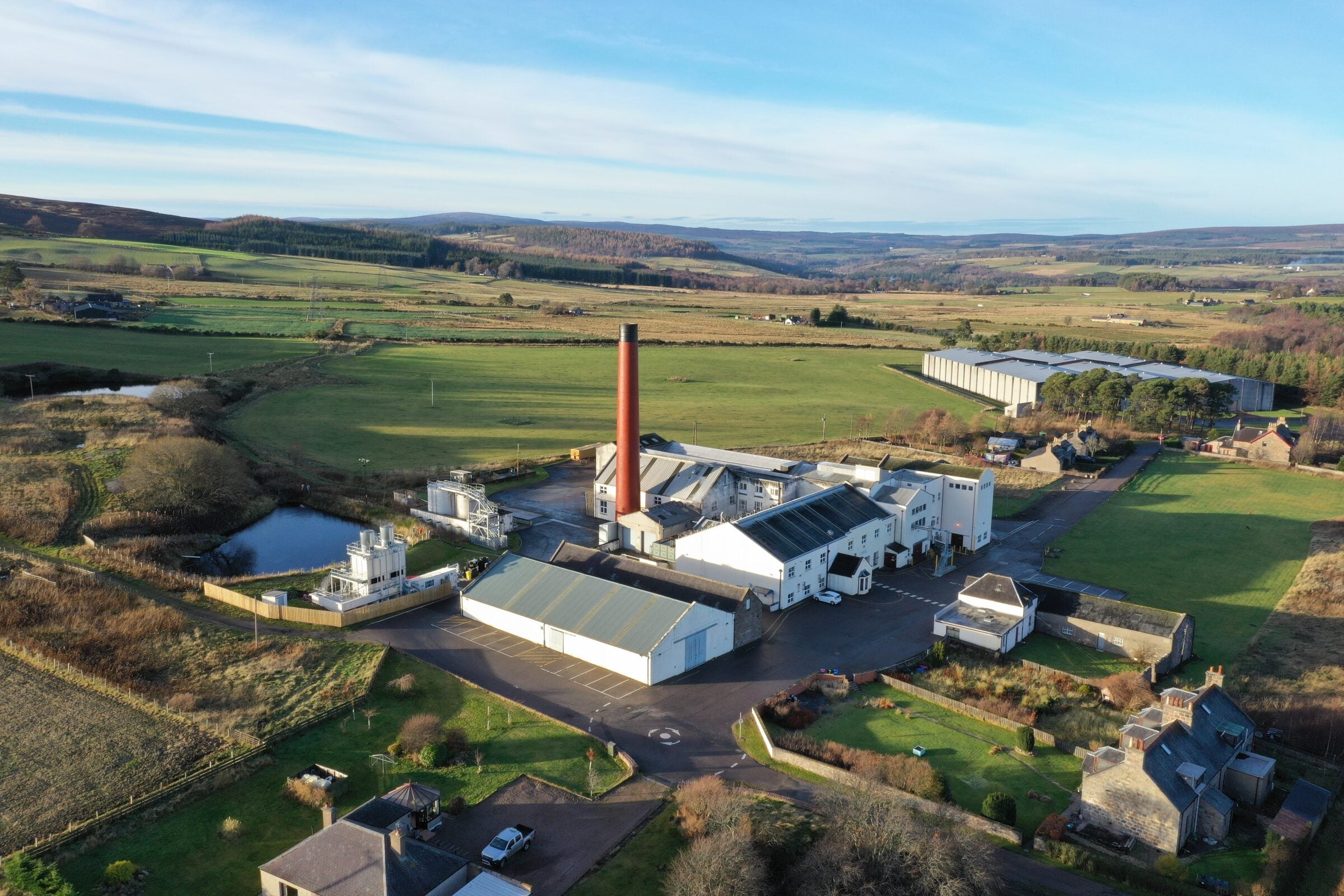
Benrinnes Distillery: Speyside's Meaty Secret
Flooded, burned and rebuilt on the slopes of the mountain that names it, Benrinnes makes Speyside's meatiest malt, almost all of it destined for blends. We have bottled around twenty casks of The B...
Read more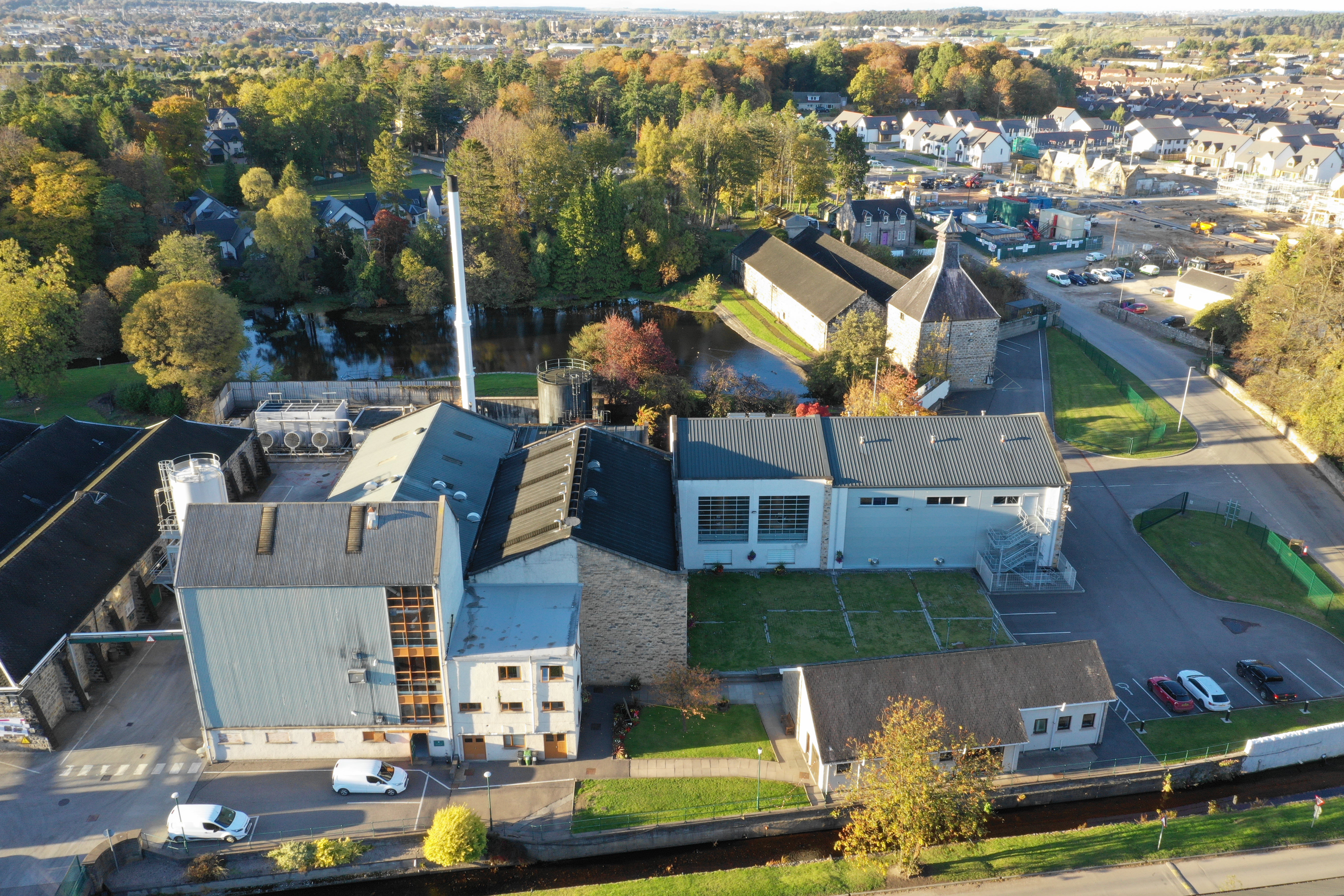
Linkwood Distillery: The Whisky Nobody Was Allowed to Change
Blenders guard Linkwood so jealously that barely a drop reaches bottles under its own name. From the manager who protected the stillhouse spiders to the swans on the dam, here is the full story of ...
Read more


